
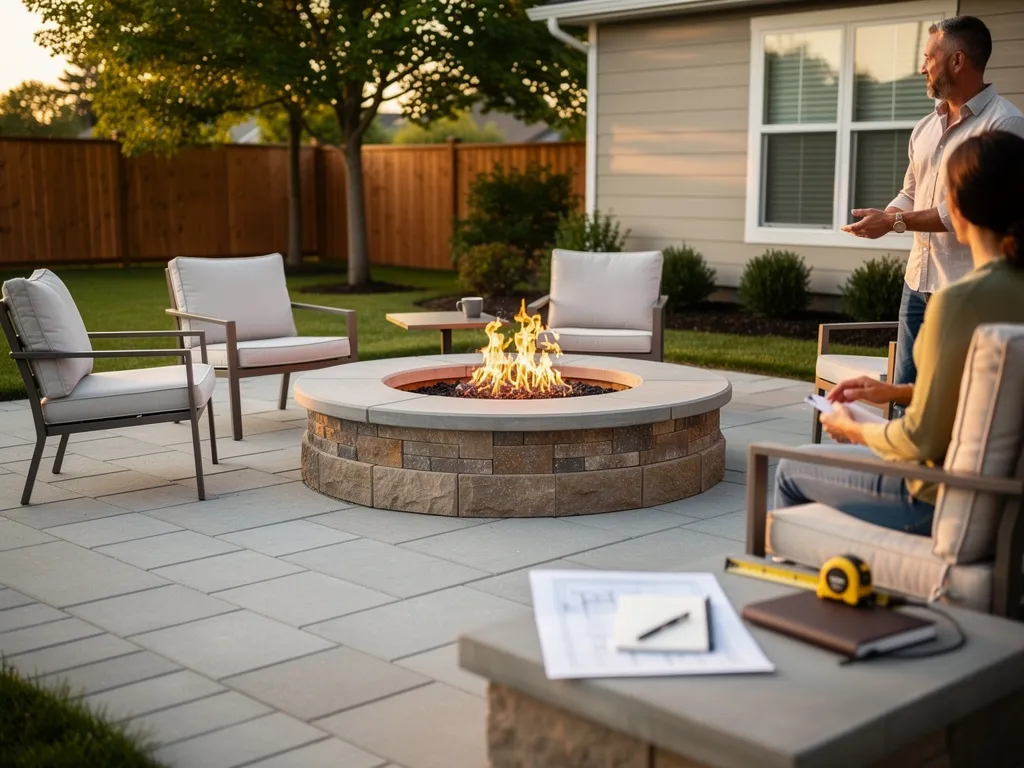
Installing a patio with a built-in fire pit requires smart planning from the start. First, set a firm budget and include a 10–15% buffer for unexpected costs. Second, choose non-combustible materials like concrete pavers, natural stone, or brick to guarantee durability and safety. Third, position your fire pit at least 10 feet from your home, fences, and trees. Keep these tips in mind, and you’ll find even more details ahead to guide your project.
Key Takeaways
Use non-combustible materials like concrete pavers, natural stone, or brick to ensure durability, safety, and heat resistance around your fire pit.
Position the fire pit at least 10 feet from your home, fences, and trees to meet safety and local code requirements.
Center the fire pit within the seating area, avoiding corners to promote proper airflow and prevent smoke buildup.
Set a firm budget before you start, allocating 10–15% for unexpected expenses to avoid costly mid-project decisions.
Obtain at least three contractor quotes and document all agreements in writing to keep the project on track.
Plan Your Budget Before Breaking Ground
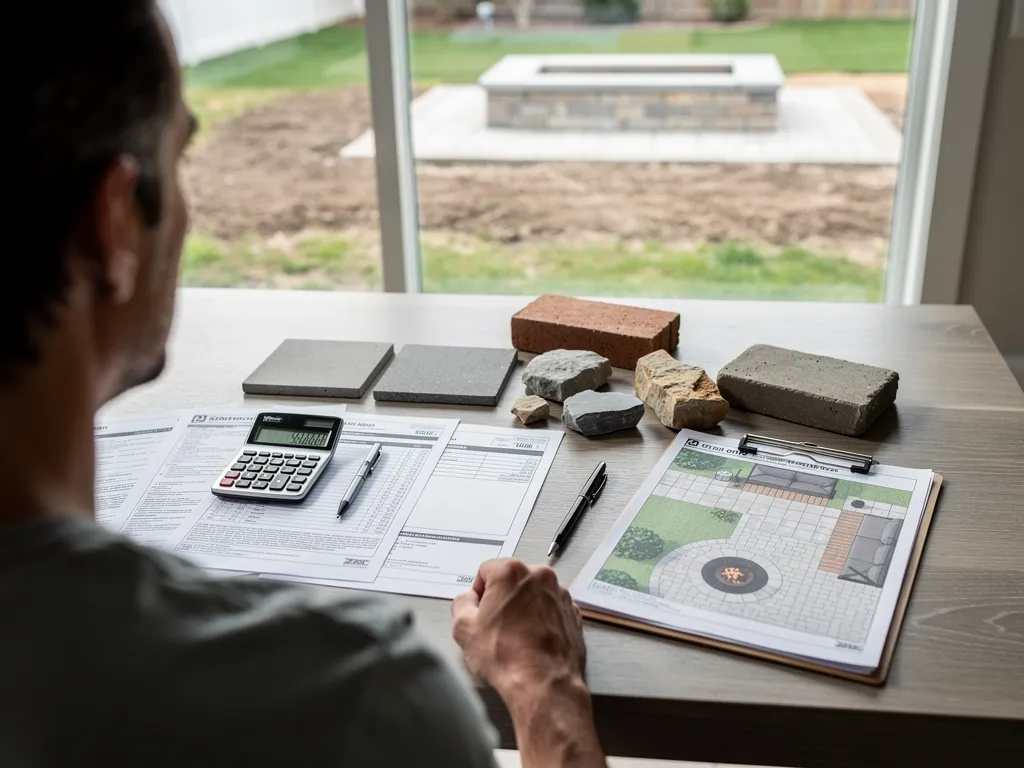
Before you break ground on your patio project, you’ll need a clear budget to guide every decision—from materials to labor.
Research material costs for pavers, concrete, or natural stone, and factor in fire pit components like gas lines or wood-burning inserts.
Get at least three contractor quotes to compare labor pricing. Set aside 10–15% of your total budget for unexpected expenses—excavation surprises happen.
Prioritize must-haves over nice-to-haves, so if costs rise, you know where to cut. A firm budget prevents costly mid-project decisions that delay completion and strain your finances.
Pick the Right Materials for Your Fire Pit Patio
Once your budget’s set, choosing the right materials becomes your next critical decision—and it directly affects your patio’s durability, safety, and appearance.
Not every material handles heat well, so you’ll need options that complement your fire pit safely.
Consider these proven material choices:
Concrete pavers – heat-resistant, durable, and versatile
Natural stone – timeless appearance with excellent heat tolerance
Brick – classic look that withstands high temperatures effectively
Porcelain tile – low-maintenance and moisture-resistant
Avoid wood decking near fire pits entirely.
Instead, prioritize non-combustible materials that create safe buffer zones while enhancing your patio’s overall aesthetic appeal.
Place Your Fire Pit for Safety and Function
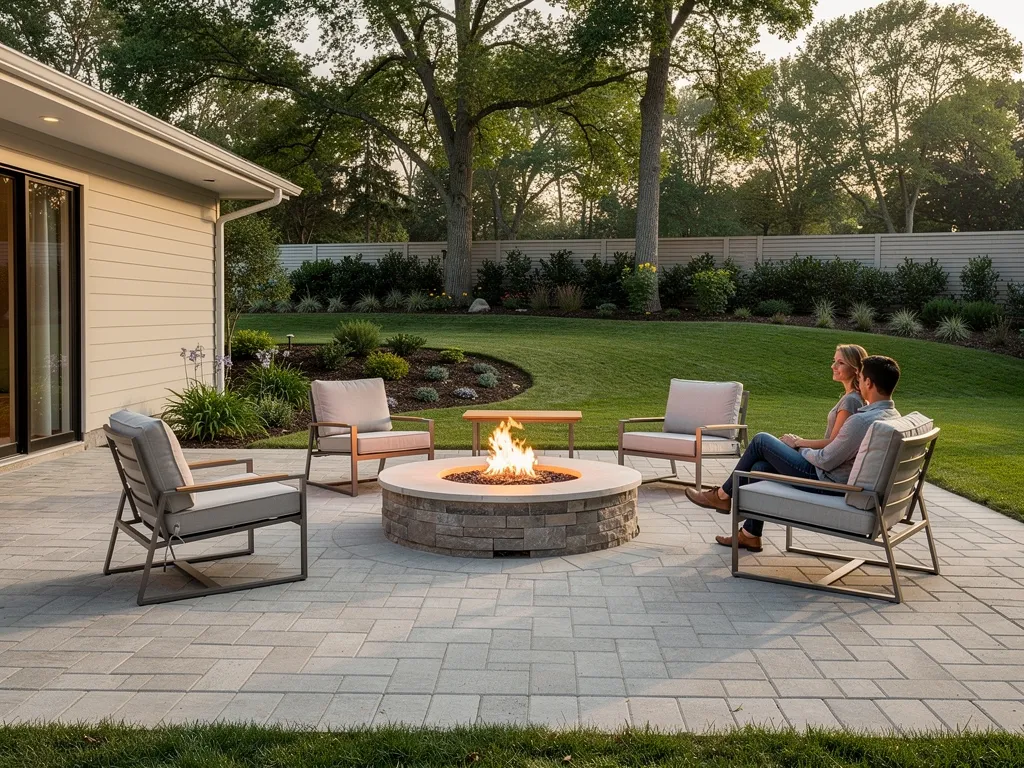
Fire pit placement comes down to two priorities: keeping people safe and making the space functional.
Position your fire pit at least 10 feet from your home, fences, and overhanging trees. Center it within your seating area so everyone sits at a comfortable distance from the heat. Avoid corners where smoke gets trapped and airflow becomes restricted.
Check your local codes before finalizing placement, since setback requirements vary by municipality. If your patio slopes, level the fire pit surface to prevent tipping.
Smart placement lets you enjoy the fire without constantly worrying about hazards.
Frequently Asked Questions
What Permits Are Required Before Installing a Built-In Fire Pit Patio?
Before installing a built-in fire pit patio, check with your local municipality for required permits.
You’ll typically need a building permit, and possibly a zoning permit to guarantee compliance with property setback rules.
If you’re adding a gas line, you’ll also need a gas permit.
Contact your local fire department, as they may require a fire safety inspection before you can use your new fire pit.
How Long Does a Typical Fire Pit Patio Installation Project Take?
A typical fire pit patio installation takes anywhere from 3 to 7 days, depending on your project’s complexity.
If you’re working with a simple design and a small crew, you’ll likely finish closer to three days.
However, if you’re incorporating custom stonework, gas lines, or elaborate seating areas, you’ll need the full week or more.
Weather delays and permit approval waiting times can also extend your timeline considerably.
Can I Install a Fire Pit Patio Myself or Hire Professionals?
You can absolutely tackle a fire pit patio yourself if you’re handy and comfortable with basic construction skills.
DIY saves money but requires careful planning, proper tools, and knowledge of local permits.
However, hiring professionals makes sense if your design is complex, involves gas lines, or requires significant excavation.
Pros guarantee quality workmanship and handle permits efficiently.
Weigh your budget, skill level, and project complexity before deciding which route works best for you.
What Maintenance Does a Built-In Fire Pit Patio Regularly Require?
Your built-in fire pit patio needs consistent upkeep to stay safe and looking great.
Clean out ash and debris after each use, inspect gas lines or wood-burning components seasonally, and seal your patio surface annually to prevent cracking.
Check for any loose stones or mortar around the fire pit regularly, and cover it during harsh weather.
Also test ignition systems and connections each spring before heavy use begins.
Are There HOA Restrictions That Could Affect My Fire Pit Installation?
Yes, HOA restrictions can absolutely affect your fire pit installation.
Review your HOA’s governing documents before breaking ground. Many HOAs regulate fire pit size, fuel type, placement distance from structures, and even aesthetic requirements.
Some communities ban open flames entirely.
Contact your HOA board directly and submit any required approval applications early. Getting written approval protects you from costly removal demands later.
Conclusion
Now that you’ve got these three tips in your back pocket, you’re ready to tackle your patio installation with confidence. You’ll save money by planning your budget early, you’ll build something lasting by choosing the right materials, and you’ll keep everyone safe by positioning your fire pit strategically. Don’t rush the process — take your time, follow these guidelines, and you’ll end up with an outdoor space you’ll love for years.