
The honest answer is that it depends on your borough or township, and anyone who tells you a single number that covers all of Western Pennsylvania is guessing.
But there is a general rule, and it is worth understanding because it is not arbitrary.
The rule of thumb: height
Under about three feet, a wall is usually treated as a garden wall and often does not need a permit.
Past three to four feet, most municipalities want a permit, and the wall generally needs to be engineered. That threshold is where a wall stops being landscaping and starts being a structure.
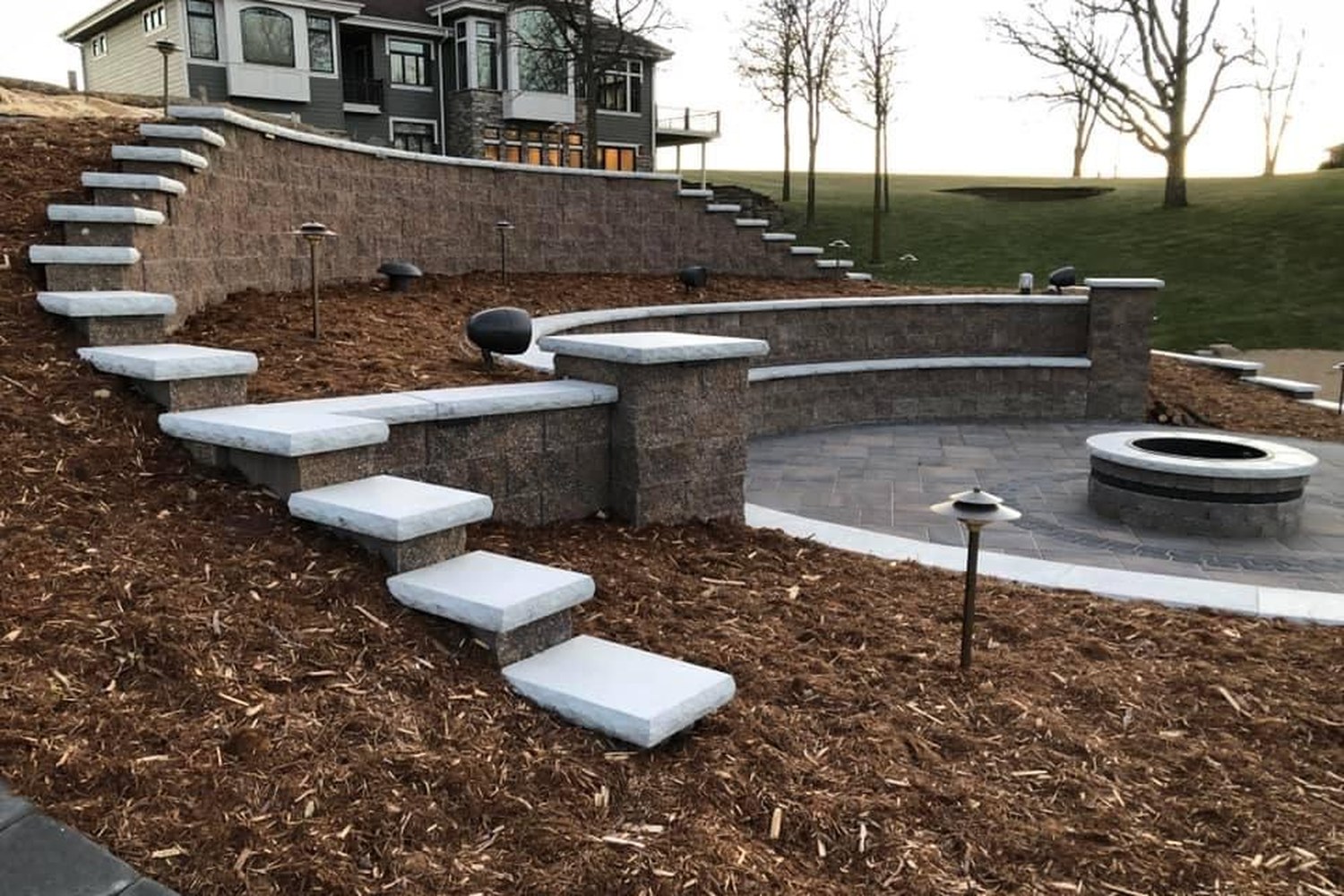
Why the threshold exists
A four foot wall holding back saturated clay is carrying a serious load. Soil is heavy, and wet soil is much heavier. Past a certain height you cannot just stack block and hope. The wall needs geogrid tied back into the hillside so the wall and the soil behave as a single mass, and it needs drainage so water is not adding pressure every time it rains.
The permit is not the point. The engineering is the point. The permit is just how the township checks that someone did the engineering.
What raises the bar further
- A surcharge above the wall: a driveway, a pool, a structure, or another wall. Weight above the wall changes the calculation entirely.
- Tiered walls, which can act as one tall wall rather than two short ones if they are too close together.
- Proximity to a property line or a right of way.
What happens if you skip it
Two things, and the second is worse than the first.
The township can make you tear it out. That is the one people worry about, and it does happen.
The bigger risk is that a wall that needed engineering and did not get it is a wall that is going to fail. Not immediately. In four or five winters, once the clay behind it has been through enough freeze and thaw cycles. And then you are paying to remove a failed wall and build the right one.
We will tell you before we start
Part of quoting your wall is telling you what your municipality requires. We would rather have that conversation at the estimate than after the work is in the ground.
Call (724) 605-4822, or read why retaining walls fail around here.