
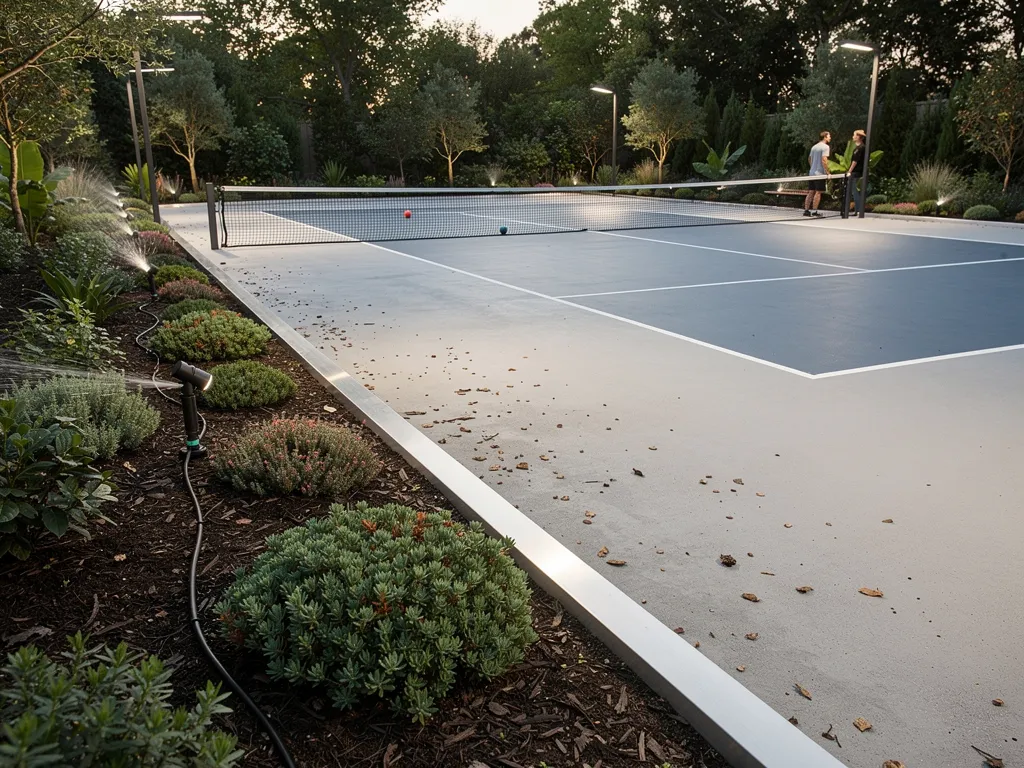
Managing a pickleball court alongside a garden surround takes planning, but it’s absolutely doable. Install deep edging and root barriers to block encroachment, choose low-growing ground covers that won’t creep onto the surface, and direct irrigation away from the court. Use mesh barriers to catch stray balls, keep overhanging growth trimmed, and clear debris regularly. Get these basics right, and the tips ahead will help you refine every detail.
Key Takeaways
Install aluminum or steel edging at least six inches deep to block tree roots from shifting or cracking the court surface.
Use low-growing ground covers like creeping thyme or stonecrop sedum to minimize encroachment and reduce debris on the court.
Place a 12–18 inch mesh barrier along garden edges to catch stray balls without blocking airflow during play.
Direct sprinklers away from the court and use drip irrigation to prevent moisture damage, warping, or surface cracking.
Choose low-glare LED fixtures and regularly clear leaves to keep court conditions safe and well lit near garden surrounds.
Court Edging That Keeps Garden Encroachment Off Your Pickleball Court
If you’ve built a pickleball court near a garden, you already know how quickly grass and plant roots can creep onto the playing surface, crack the pavement, and disrupt the boundary lines.
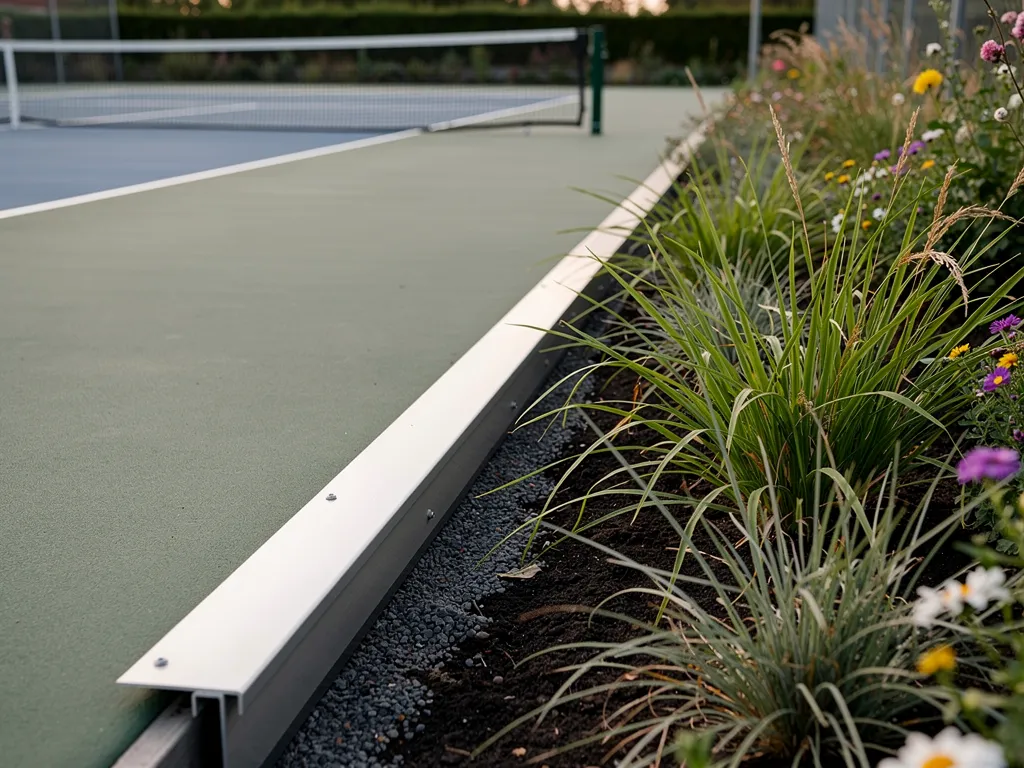
Install a solid aluminum or steel edging strip along the court’s perimeter to block root intrusion effectively. Bury it at least six inches deep to stop underground runners.
Steel or aluminum edging buried six inches deep keeps roots from invading your pickleball court perimeter.
For added protection, lay a root barrier membrane behind the edging before backfilling.
Inspect the edging annually for shifting or gaps, and resecure any loose sections immediately.
Consistent maintenance keeps your court surface clean, stable, and regulation-ready year-round.
Stop Pickleball Balls From Disappearing Into Garden Beds
Keeping balls out of garden beds is just as important as keeping roots off your court. Install a low border fence or mesh barrier along garden edges to intercept stray shots before they disappear into dense planting.
Choose a barrier 12 to 18 inches tall—enough to catch deflected balls without blocking airflow or light to your plants. Dark-colored mesh works best since it won’t distract players during play.
You’ll also want to trim groundcover plants regularly, as sprawling foliage creates perfect hiding spots where balls vanish completely, costing you time and money replacing lost equipment.
Ground Cover Plants That Won’t Creep Onto Your Court Surface
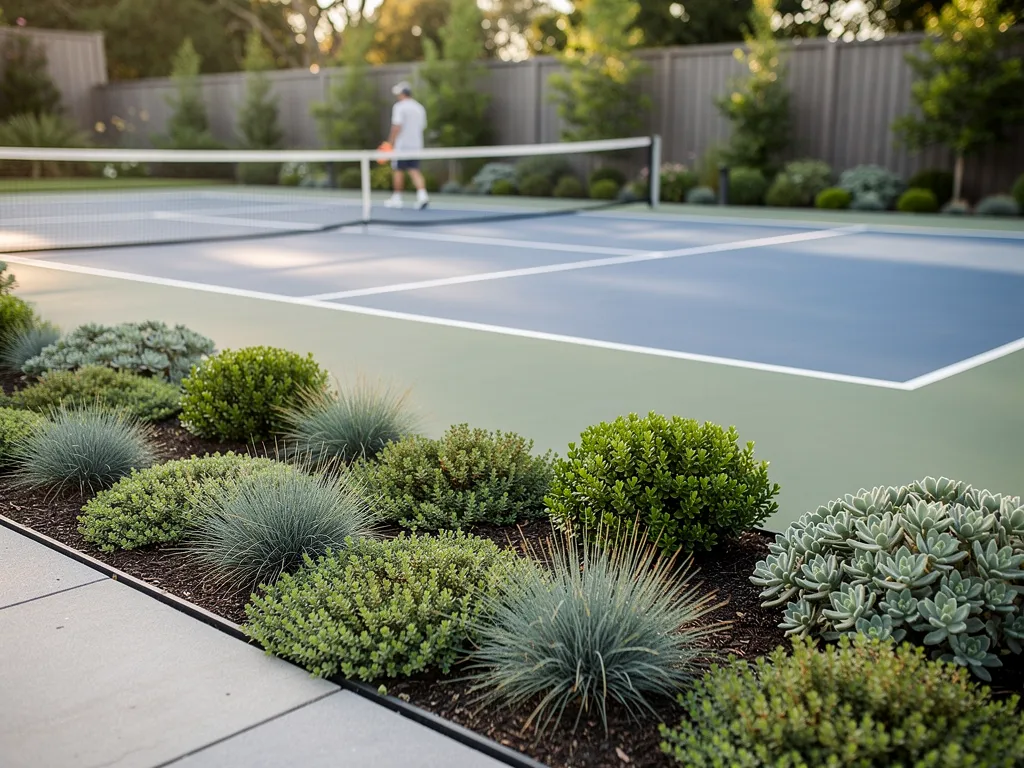
Choosing the right ground cover near your pickleball court saves you constant maintenance headaches.
You’ll want low-growing, clumping plants that stay in their lane, not runners that invade your playing surface.
Strong options include:
Creeping thyme – stays compact, handles foot traffic, and won’t spread aggressively onto hard surfaces
Blue fescue grass – forms tidy clumps that self-contain without sending out runners
Stonecrop sedum – a drought-tolerant succulent that hugs borders without creeping beyond them
Install a clean edging barrier between beds and court to reinforce even the best-behaved plants.
Trim Overhanging Growth Before It Damages the Playing Area
Even the best-behaved border plants won’t save your court if tree limbs and shrubs overhead drop debris, cast uneven shadows, or scrape the surface in the wind. Inspect overhead growth seasonally and trim before damage occurs.
Managing Tree Roots That Threaten Your Pickleball Court Surface
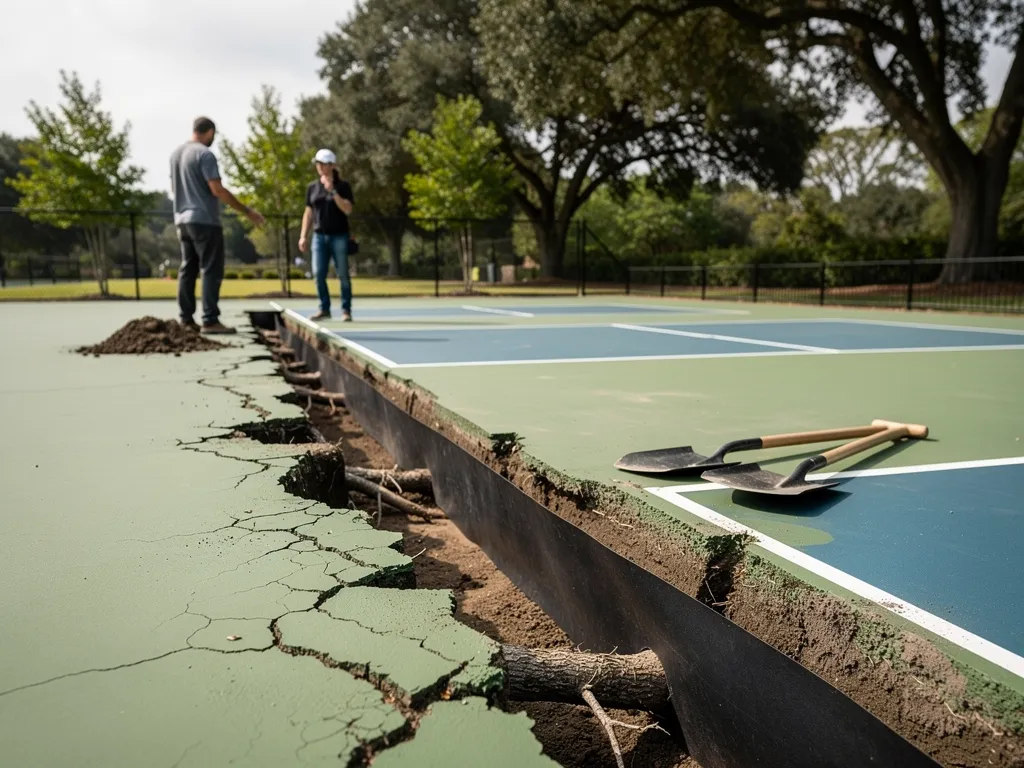
Tree roots are one of the most destructive forces a pickleball court can face, often causing surface cracking and upheaval long before you notice any visible signs above ground.
Act early to prevent costly repairs.
Watch for these warning signs:
Surface bubbling or uneven patches near trees indicate root activity beneath
Root barriers installed 18–24 inches deep redirect growth away from your court
Slow-growing or smaller tree species near courts reduce long-term root pressure considerably
If damage has already started, consult a professional before roots further compromise your court’s structural foundation.
Watering Garden Beds Without Letting Moisture Warp Your Court
Watering garden beds near your pickleball court can introduce moisture problems just as damaging as tree roots if you’re not careful.
Direct sprinklers away from the court surface, and use drip irrigation instead to deliver water precisely to plant roots. Water early in the morning so excess moisture evaporates before it seeps beneath the court.
Establish a buffer zone between garden beds and the court edge using impermeable edging or gravel channels that redirect runoff. Check drainage patterns after heavy watering sessions to ensure water flows away from the surface.
Consistent moisture management prevents warping, cracking, and costly resurfacing later.
Garden-Friendly Fencing That Still Contains Play Effectively
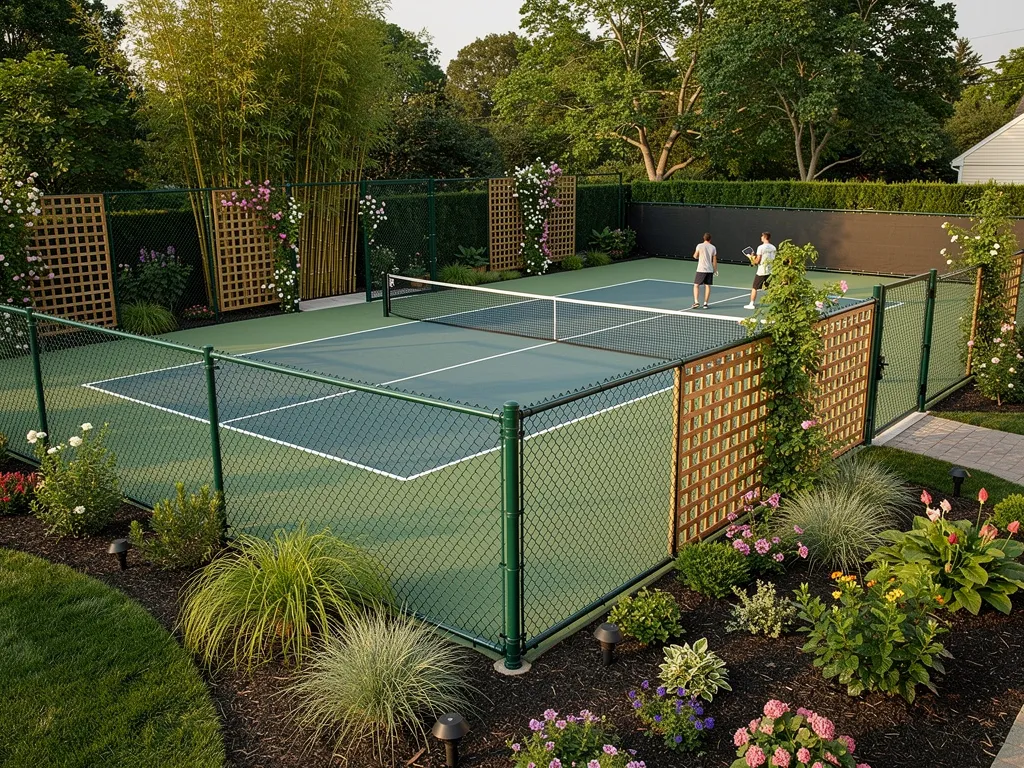
Choosing the right fencing lets you protect your court and complement your garden without sacrificing either.
You’ll want materials and heights that stop errant balls while blending naturally into your landscape.
Vinyl-coated chain-link provides durability and ball containment while resisting rust near irrigated beds.
Bamboo or wooden lattice panels soften the court’s appearance and support climbing plants without weakening structurally.
Dark-colored mesh fencing reduces visual bulk, making it less intrusive against lush greenery.
Anchor fence posts deep so vigorous plant growth along the border doesn’t gradually shift them or compromise structural integrity.
Lighting Your Pickleball Court Without Killing the Garden Aesthetic
Once you’ve sorted the fencing, good lighting becomes your next balancing act—keeping evening play viable without turning your garden into a stadium.
Choose low-glare LED fixtures mounted on slim poles at court-edge height, not towering floodlights. Warm color temperatures (2700K–3000K) blend naturally with garden surroundings and won’t wash out plantings.
Direct light downward onto the court surface, minimizing spillage into beds or neighboring yards. Solar-powered options reduce cable clutter across garden paths.
You’ll also want dimmer controls, so you can drop intensity after play ends and let the garden’s nighttime atmosphere return quickly.
Clearing Leaves and Debris Before They Degrade Court Performance
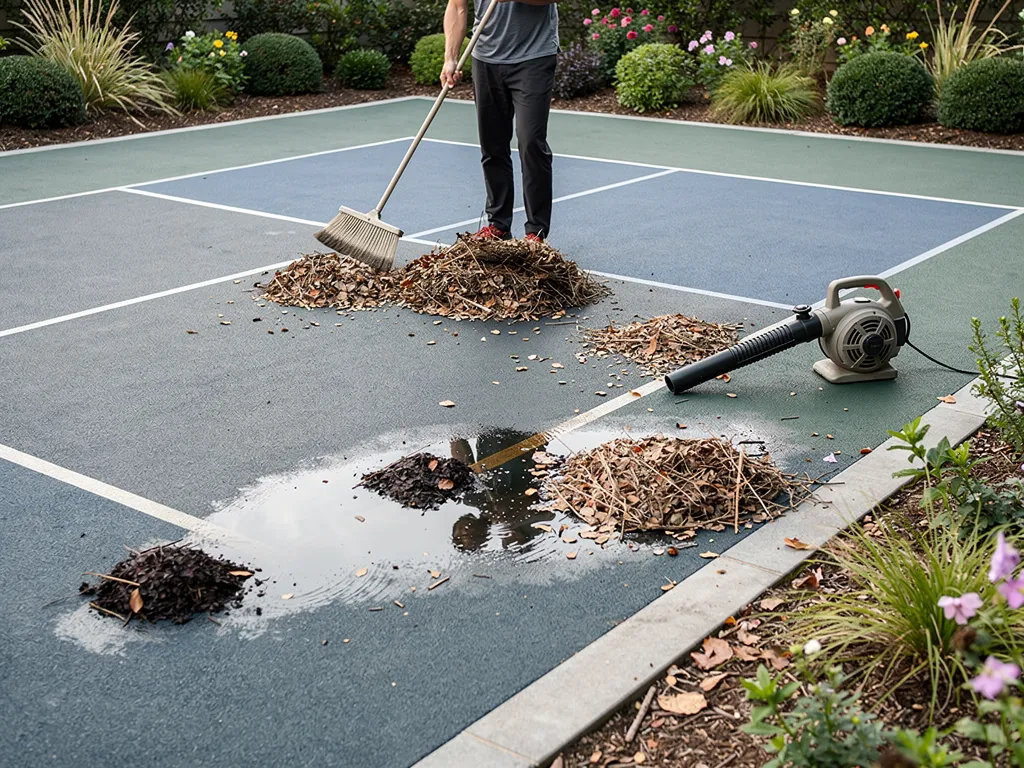
Leaves, twigs, and organic debris settle fast on a pickleball court, and if you let them sit, they’ll break down into a slick, staining film that compromises both traction and surface integrity.
Clear your court regularly, especially after wind events or heavy foliage drop.
Sweep with a soft-bristle push broom after each session
Blow debris toward garden borders rather than drains
Remove wet leaf clumps immediately—they stain acrylic surfaces quickly
Staying consistent prevents buildup from becoming a bigger resurfacing problem later.
A clean court also keeps surrounding garden beds from catching redistributed debris during play.
When Garden and Court Conflicts Require a Professional
Some garden and court conflicts go beyond what regular maintenance can fix, and that’s when you need to call in a professional.
If tree roots are lifting your court surface, cracking the foundation, or disrupting drainage, a contractor can assess the structural damage and recommend solutions.
Tree roots damaging your court surface or foundation call for a contractor’s expert assessment and solutions.
Persistent water pooling that doesn’t respond to simple fixes often signals grading or drainage issues requiring expert correction.
When invasive plants repeatedly breach court borders despite your efforts, a landscaper can install proper root barriers.
Don’t wait until small problems become costly repairs—early professional intervention saves you time and money.
Frequently Asked Questions
Can Scented Garden Plants Near Courts Attract Bees During Play?
Yes, scented garden plants near your pickleball court can absolutely attract bees during play.
Avoid planting highly fragrant flowers like lavender, jasmine, or roses close to the court boundaries. Instead, choose less bee-attractive plants or place fragrant varieties farther away.
If you’re already playing near scented gardens, you’ll benefit from scheduling matches in the early morning, when bees aren’t yet actively foraging.
Does Court Paint Color Affect Surrounding Plant Growth or Health?
Court paint color itself won’t directly harm your surrounding plants.
However, consider that light-colored courts reflect more sunlight and heat, which can stress nearby plants if they’re not heat-tolerant.
Dark-colored courts absorb heat, potentially warming the soil around your garden border.
Also ensure the paint you choose is non-toxic and water-safe, as runoff during rain could affect your plants’ soil chemistry and overall health.
How Do You Handle Wildlife Attracted to Garden Court Surrounds?
Take a proactive approach when wildlife visits your garden court surrounds.
Install motion-activated lights or sprinklers to deter unwanted animals. Use natural repellents like citrus peels or predator scents around garden borders.
Choose plants that naturally discourage pests while attracting beneficial wildlife like pollinators.
Keep food and water sources away from court areas, and consider installing low fencing to redirect larger animals without disrupting your garden’s aesthetic.
Can Pickleball Noise Stress Nearby Plants or Affect Their Growth?
You’ll be glad to know that pickleball noise won’t directly stress your nearby plants or meaningfully affect their growth.
Plants don’t process sound the way animals do, so the popping sounds won’t cause harm.
However, you should consider that repeated foot traffic, vibrations, and soil compaction around court edges can stress root systems.
Keep your garden beds buffered with mulch and maintain clear boundaries between playing surfaces and planted areas.
What Permits Are Needed for Adding Gardens Around Sports Courts?
You’ll likely need several permits before adding gardens around your sports courts.
Check with your local zoning office for landscaping permits, especially if you’re installing irrigation systems, which often require separate plumbing permits.
If you’re adding raised beds or retaining walls over a certain height, you’ll need a building permit.
Always verify with your HOA for additional restrictions.
Contact your local municipality early to avoid costly delays.
Conclusion
You’ve got a beautiful setup when your pickleball court and garden coexist peacefully, but that balance doesn’t happen by accident. You’ll need to stay proactive with edging, trimming, debris clearing, and smart plant choices. Don’t wait for roots to crack your surface or vines to swallow your fence. Keep up with the maintenance, respect the boundaries between play and garden, and you’ll enjoy both spaces for years to come.