
We build both, so we do not have a dog in this fight. When someone asks whether they should put in a deck or a patio, the answer is usually decided by the yard itself: the slope, the grade, and how you get out to it. Here is how we think it through.
The short version
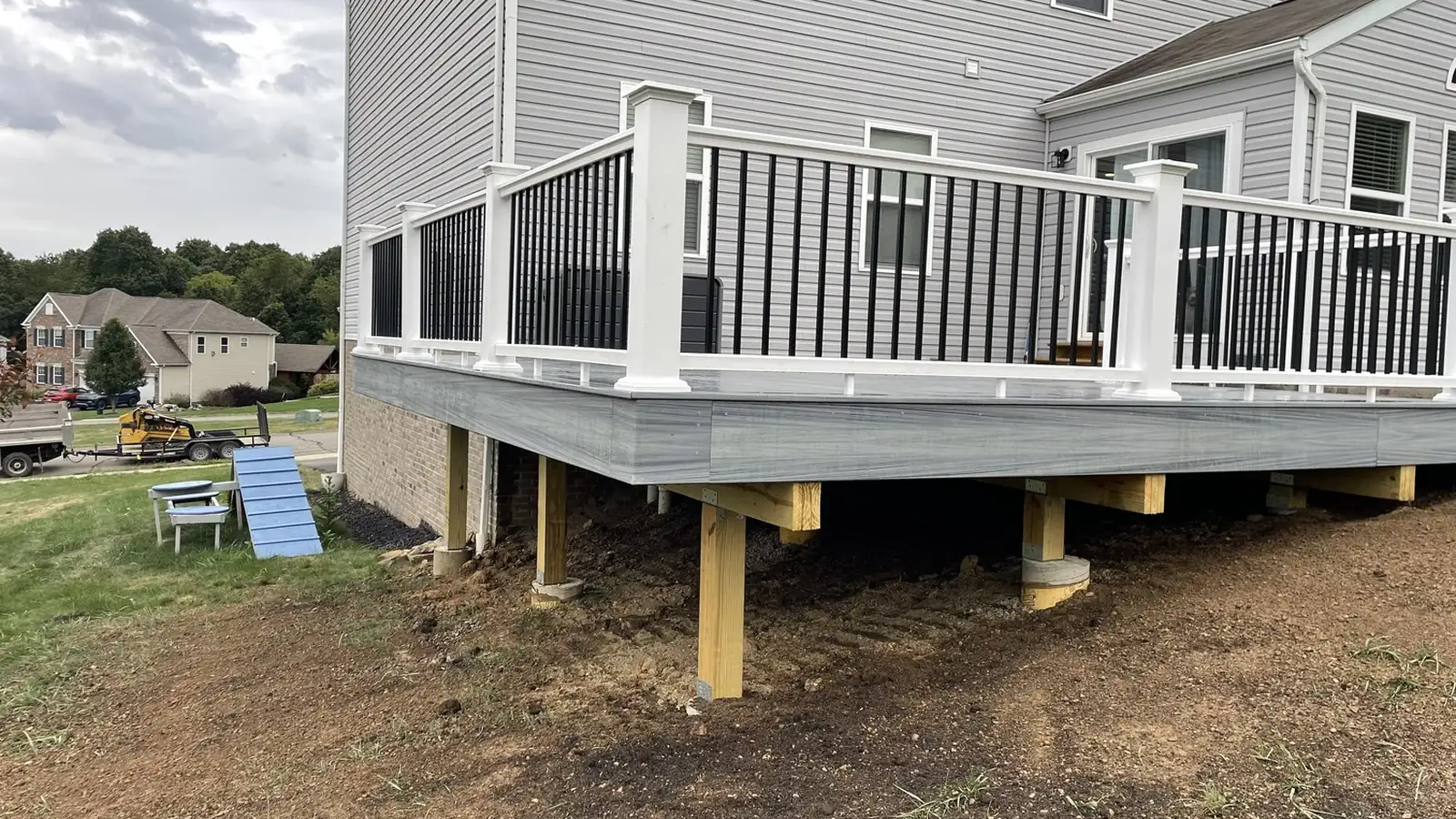
- A deck makes sense on a slope, on a hillside lot, or off a raised floor where you walk straight out at door height.
- A patio makes sense when the ground is flat and near grade, and it is the lower-maintenance surface once it is in.
- Both need a proper foundation for our frost. There is no cheap shortcut that survives a Western Pennsylvania winter.
| Deck | Patio | |
|---|---|---|
| Installed cost | $20 to $40 wood, $30 to $60 composite per sq ft | $12 to $28 pavers per sq ft |
| Lifespan | 10 to 15 yrs wood, 25 and up composite | 30 to 40 years and up |
| Upkeep | seal wood every 2 to 3 yrs; composite wash only | sweep, re-sand joints every few years |
| Best ground | sloped or elevated | flat, on or near grade |
| Permit | usually, over 30 inches or attached | usually not, at grade |
What they cost
A pressure-treated wood deck runs roughly twenty to forty dollars a square foot installed. A composite deck, the Trex and TimberTech type you do not have to stain, runs about thirty to sixty and up. A paver patio lands lower, around twelve to twenty-eight a square foot. As whole projects, a wood deck addition averages around seventeen thousand dollars and a composite one around twenty-four, while most paver patios fall between four and sixteen thousand depending on size and access.
How long each one lasts
A wood deck gives you ten to fifteen years, longer if you stay on top of the sealing. Composite decking runs twenty-five years and up and asks for almost nothing but a wash. A paver patio outlasts both, thirty to forty years and more, because there is nothing in it to rot. The trade is upkeep: wood wants staining and sealing every two or three years, composite wants a wash, and a patio wants its joints re-sanded every few years and the odd weed pulled.
Our frost is what decides the base
This is where corners get cut and where we do not cut them. The frost line around here is about three feet down. A deck’s footings have to sit below that, by code, so the structure clears the heave. A patio has to be dug out and built on a deep, compacted, well-drained base for the same reason: water under a shallow patio freezes, lifts, and buckles the surface, and our clay holds that water and heaves harder than most soil. A patio built on a few inches of loose stone will move. Whichever you choose, the part you cannot see is what makes it last.
What each does for resale
If resale is on your mind, the national numbers put a wood deck at roughly two thirds of its cost back and a composite deck a little lower by percentage, though composite adds more actual dollars. Patios generally land in the same range. One honest caveat for our area: cold-climate markets with a shorter outdoor season recover a little less than the national average on any outdoor project, so we would not build one expecting it to pay for itself.
So which one
If your yard slopes, sits on a hill, or the main floor is up above grade, a deck is usually the answer, because it spans that slope on posts instead of trucking in fill and building walls. If your ground is flat and near the door, a patio is usually the answer, and it is the lower-maintenance surface long term. Plenty of properties around here want both, a patio at grade and a deck stepping down to it, and when that is the case we build them together so the levels and the drainage work as one.
Common questions
Is a deck or a patio cheaper?
A paver patio is usually the cheapest to build, around twelve to twenty-eight dollars a square foot, versus twenty to forty for a wood deck and thirty to sixty for composite. A patio is also the cheapest to maintain over its life. A deck can still be the better value on a sloped lot, where a patio would need expensive fill and retaining walls to sit level.
Do I need a permit for a deck or a patio in Pennsylvania?
A deck generally needs a permit once it is over thirty inches above grade, attached to the house, or larger than two hundred square feet, and anything over thirty inches needs a guardrail. A ground-level paver or stone patio usually needs no building permit unless it is roofed or involves electric or gas. Requirements vary by township, and we confirm what your municipality wants before we start.
Which lasts longer, a deck or a patio?
A paver patio, at thirty to forty years and up, outlasts a wood deck at ten to fifteen years and edges out composite decking at twenty-five to thirty. There is nothing in a masonry patio to rot. The catch is the base: a patio only reaches that lifespan if it is built below the frost line with proper drainage.
Can you build a deck and a patio together?
Yes, and on a lot of properties it is the best answer. A deck off the back door stepping down to a patio at grade gives you two usable spaces and solves the change in level. Building them at the same time means the footings, drainage and grading are planned as one project instead of cutting into finished work later.
Trying to decide for your yard? We build both and will tell you which fits your lot. Call (724) 605-4822 for a free estimate.