
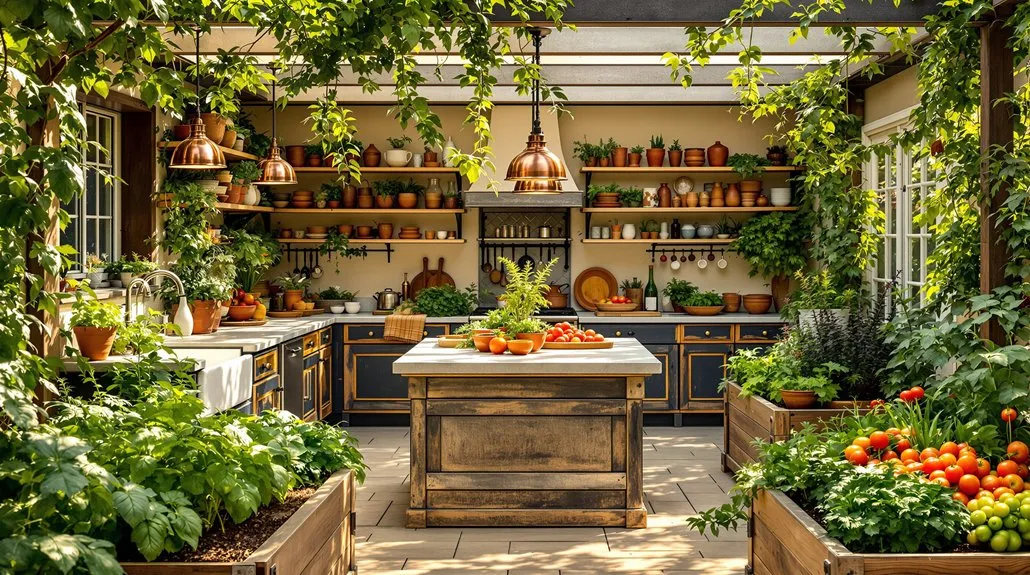
You can blend cooking with garden beds by mounting a living herb wall above your stove, building raised beds into your kitchen island, or installing tiered windowsill planter shelves. You can also add sliding glass walls that open your counter to an outdoor garden, or frame your kitchen entrance with vertical tower gardens. These designs make fresh ingredients always within reach, and there’s even more to discover about transforming your kitchen into a thriving growing space.
Key Takeaways
Mount a living herb wall above your stove using heat-resistant modular planters for quick, fresh ingredient access during cooking.
Integrate raised garden beds into kitchen islands with waterproof liners and grow lights to harvest ingredients directly at your workspace.
Install tiered windowsill planter shelves in south-facing windows, filling them with herbs, chives, and compact cherry tomatoes.
Add sliding glass walls to erase boundaries between kitchen counters and outdoor gardens, enabling direct pass-through harvesting.
Frame kitchen entrances with vertical tower garden beds, creating green archways using self-watering planters for low-maintenance herb growth.
The Indoor Herb Garden Wall Above Your Stove
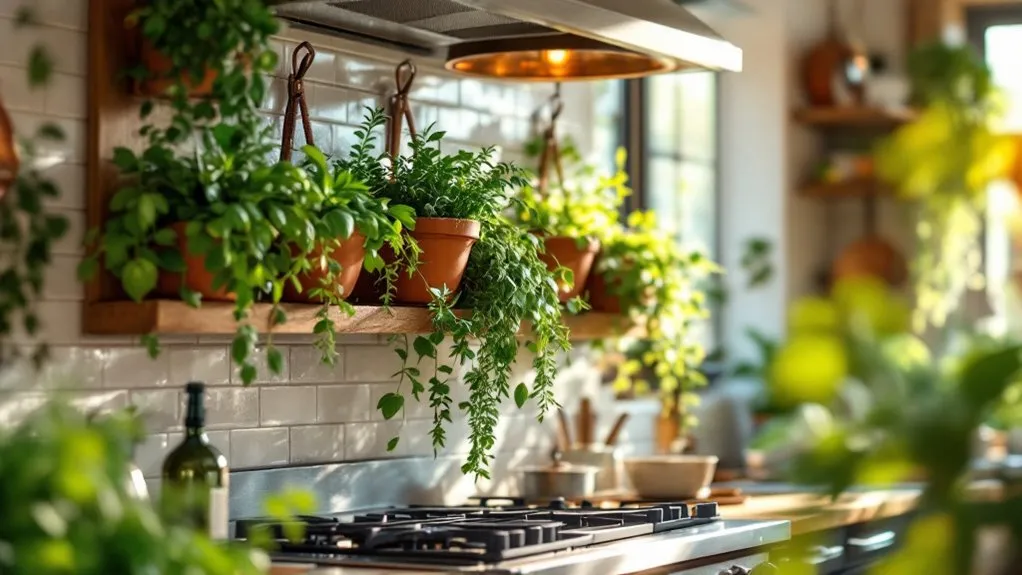
Mounting a living herb wall directly above your stove puts your most-used ingredients within arm’s reach while transforming a blank backsplash into a functional focal point.
Install heat-resistant modular planters with individual drainage to protect both your herbs and your wall. Choose compact varieties like thyme, basil, and chives that thrive under grow lights when natural light falls short.
Water each pocket separately to prevent root rot. You’re fundamentally building a vertical kitchen garden that cuts prep time, reduces grocery trips, and adds genuine life to the most active space in your home.
Raised Garden Beds Built Into Kitchen Islands
Incorporating raised garden beds into your kitchen island takes the herb wall concept further by giving you a dedicated growing zone that doubles as prep space.
You’re combining function with freshness in one structure. Here’s what makes it work:
Combining function with freshness in one structure transforms your kitchen island into a living, working centerpiece.
Choose a waterproof liner to protect the island’s base from moisture damage.
Install grow lights underneath upper cabinets to compensate for limited natural light.
Plant compact varieties like dwarf basil, thyme, or chives that won’t overcrowd your workspace.
You’ll harvest ingredients directly where you’re chopping, making cooking faster and more intuitive.
Windowsill Planter Shelves You Can Harvest From Daily
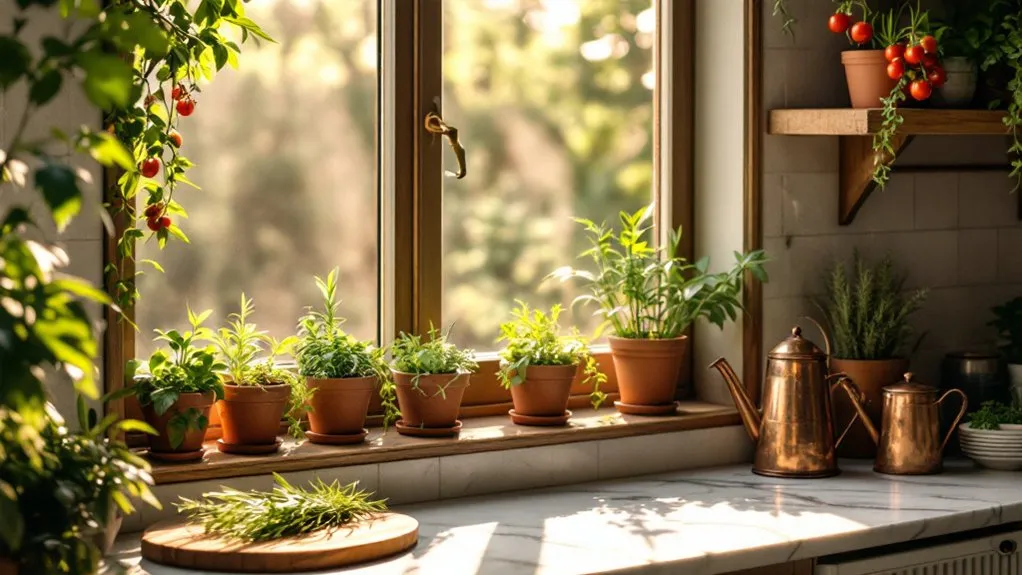
A few well-placed windowsill planter shelves can turn dead sill space into a daily harvest zone without requiring structural changes to your kitchen.
Mount tiered brackets across south-facing windows and fill them with basil, chives, parsley, and cherry tomatoes. You’ll snip what you need directly into the pan without crossing the room.
Choose shallow terracotta pots with drainage trays to protect your sills. Glass shelves maximize light penetration across every tier.
Rotate heavy feeders like mint with lighter herbs seasonally. Once you establish this system, you’ll rarely reach for dried herbs again.
Sliding Glass Walls That Open Your Counter to the Garden
Sliding glass walls do what no window shelf can—they erase the boundary between your counter and the garden entirely.
When you slide the panel open, you’re cooking in the same air your herbs breathe.
Here’s what that design reveals for you:
Pass-through harvesting — snip directly onto your cutting board without stepping outside
Natural ventilation — garden air pulls cooking odors out effortlessly
Extended counter space — your outdoor ledge becomes functional prep area
You’ll cook faster, waste less, and stay connected to what’s actually growing just inches from your knife.
Vertical Tower Garden Beds Framing the Kitchen Entrance
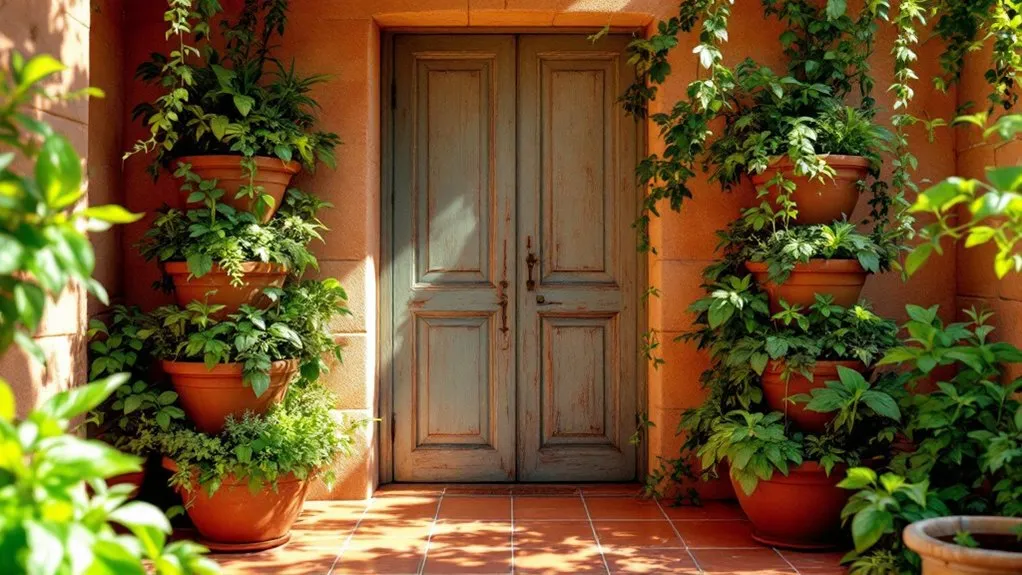
While glass walls open your kitchen to the garden horizontally, vertical tower garden beds frame your kitchen entrance and pull that same living energy upward and inward.
You’ll position stacked planters or modular tower systems on either side of your entrance, creating a green archway effect. Plant herbs like rosemary, thyme, and mint at arm’s reach so you’re grabbing fresh ingredients before you even step inside.
Choose self-watering tower systems to cut your maintenance time considerably. The visual impact is immediate—your kitchen entrance stops feeling like a door and starts feeling like a threshold into something intentional and alive.
Grow-Light Stations Built Into Kitchen Shelving
When natural light falls short, grow-light stations built directly into your kitchen shelving keep herbs and greens thriving year-round.
Ditch the windowsill struggle — embedded grow-light stations keep your kitchen herbs flourishing through every season.
You’ll integrate full-spectrum LED strips beneath each shelf, providing consistent light without consuming counter space. This setup lets you harvest fresh basil, mint, or arugula within arm’s reach while cooking.
Consider these essentials:
Timer controls — automate 14-16 hour light cycles effortlessly
Adjustable shelf heights — accommodate plants as they grow taller
Waterproof fixtures — protect wiring from humidity and spills
You’re fundamentally creating a functional, living display that serves both aesthetic and culinary purposes daily.
Cabinet Composting Stations That Feed Your Kitchen Garden
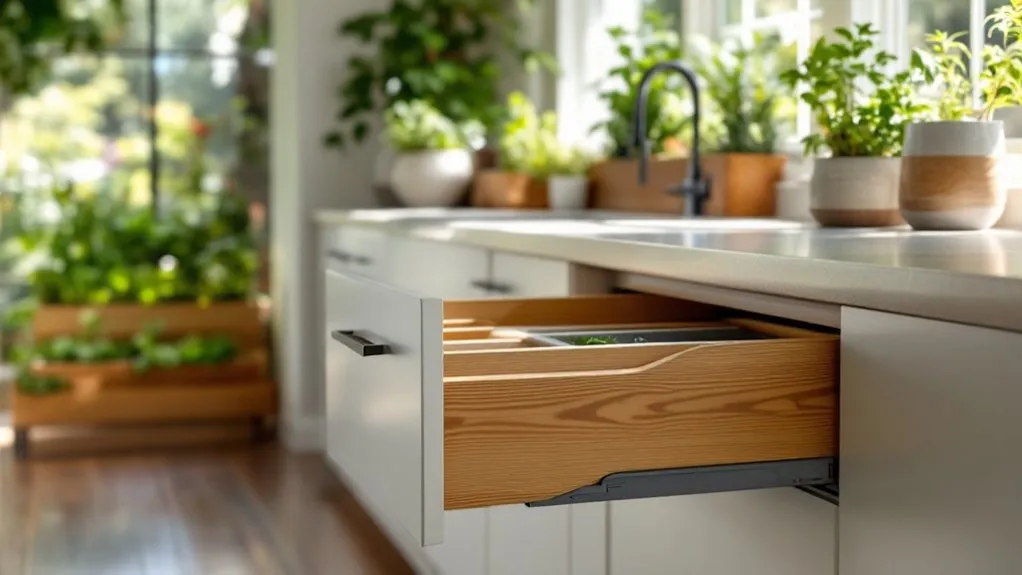
Tucking a composting station inside your lower cabinets closes the loop between kitchen scraps and garden beds, turning food waste into nutrient-rich soil amendment without cluttering your counters.
Choose a pull-out drawer fitted with a ventilated, odor-sealed bin that you can lift directly to your outdoor compost pile or worm farm. Line the bin with compostable bags to simplify transfers.
Position the station beside your prep area so scraping vegetable peels, coffee grounds, and eggshells takes seconds.
When your compost matures, you’re feeding your kitchen garden the same nutrients that started on your cutting board.
Frequently Asked Questions
What Building Permits Are Required for Kitchen-Garden Integration Projects?
You’ll typically need several permits for kitchen-garden integration projects.
Start by checking with your local building department for a general building permit. If you’re adding plumbing or electrical elements, you’ll need separate mechanical permits.
Zoning permits may apply if you’re expanding outdoor structures. Health department approvals might be required if you’re growing food commercially.
Always consult your municipality first, as requirements vary considerably by location.
How Do Kitchen-Garden Designs Affect Home Resale Value?
Kitchen-garden designs can boost your home’s resale value by 5-15%, depending on your market and execution quality.
You’ll attract eco-conscious buyers who actively seek sustainable living features. Well-designed herb walls, indoor raised beds, and seamless indoor-outdoor flow make your property stand out.
However, you’ll want to guarantee the design looks polished rather than DIY, since poorly executed projects can actually deter buyers concerned about maintenance complexity.
Which Plants Are Toxic and Should Never Grow Near Food Prep?
You should never grow oleander, foxglove, or datura near food prep areas, as they’re extremely toxic and can contaminate surfaces.
Keep nightshade, lily of the valley, and castor bean plants far away too.
Rhubarb leaves contain dangerous oxalic acid, so don’t let them spread near cooking zones.
Lantana and wisteria are also serious risks.
Always research every plant before placing it anywhere close to your kitchen garden beds.
How Do You Handle Pest Infestations That Spread Between Garden and Kitchen?
You’ll want to act fast when pests appear in your integrated space.
Install fine mesh barriers between garden beds and kitchen zones to block movement. Use food-safe diatomaceous earth along boundary areas, and introduce beneficial insects like ladybugs to control aphids naturally.
Inspect plants daily, removing affected leaves immediately. Keep your kitchen surfaces sealed and clean, since crumbs attract pests inward.
Neem oil sprays work effectively without contaminating nearby food prep areas.
What Insurance Considerations Apply to Structural Kitchen-Garden Modifications?
You’ll need to notify your homeowner’s insurance provider before making structural kitchen-garden modifications, as undisclosed changes can void your coverage.
You should document all permits, contractor licenses, and architectural plans. Your policy may require riders covering water damage risks from integrated irrigation systems.
You’ll also want liability coverage if guests access garden areas through your kitchen.
Request a property reassessment, since these modifications typically increase your home’s value.
Conclusion
You’ve now seen how seamlessly cooking and gardening can coexist in your kitchen. Whether you’re building herb walls above your stove or installing sliding glass panels that connect your counter to outdoor beds, these designs let you grow what you eat without leaving home. Pick the concept that fits your space, start small if you need to, and you’ll transform your kitchen into a living, growing workspace you’ll never want to leave.