
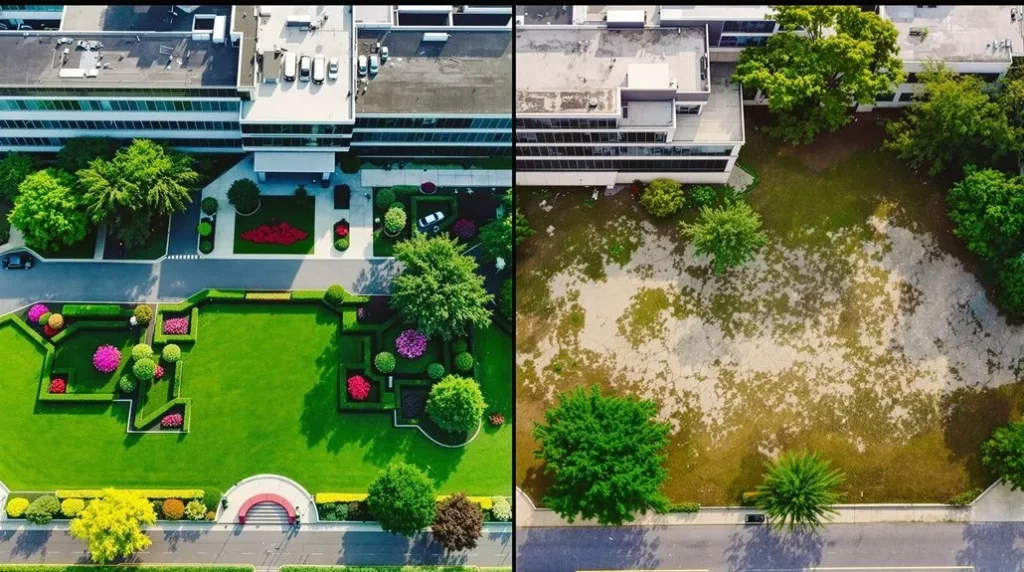
Routine commercial landscape maintenance directly boosts your property value by 15-30% through creating powerful first impressions and signaling quality management. You’ll retain tenants longer, reduce vacancy periods, and attract higher-quality renters when your landscaping stays consistently maintained. Professional maintenance prevents costly emergency repairs while appraisers factor landscape condition into their property assessments. Your investment in regular upkeep delivers measurable returns through higher valuations and greater property desirability. Understanding the psychology and strategies behind effective maintenance will upgrade your property’s profitability.
Key Takeaways
- Professional landscape maintenance creates a positive first impression, leading to higher property valuations and greater market desirability.
- Well-maintained landscapes signal quality management and attention to detail, attracting higher-quality tenants and reducing vacancy periods.
- Routine maintenance prevents costly emergency repairs and preserves existing property investments through proactive seasonal care schedules.
- Property appraisers factor landscaping condition into assessments, with professional services typically yielding 15-30% higher value increases.
- Consistent landscape upkeep builds trust with prospective tenants and customers, encouraging longer site visits and more positive decisions.
How Professional Landscape Maintenance Directly Increases Commercial Property Values
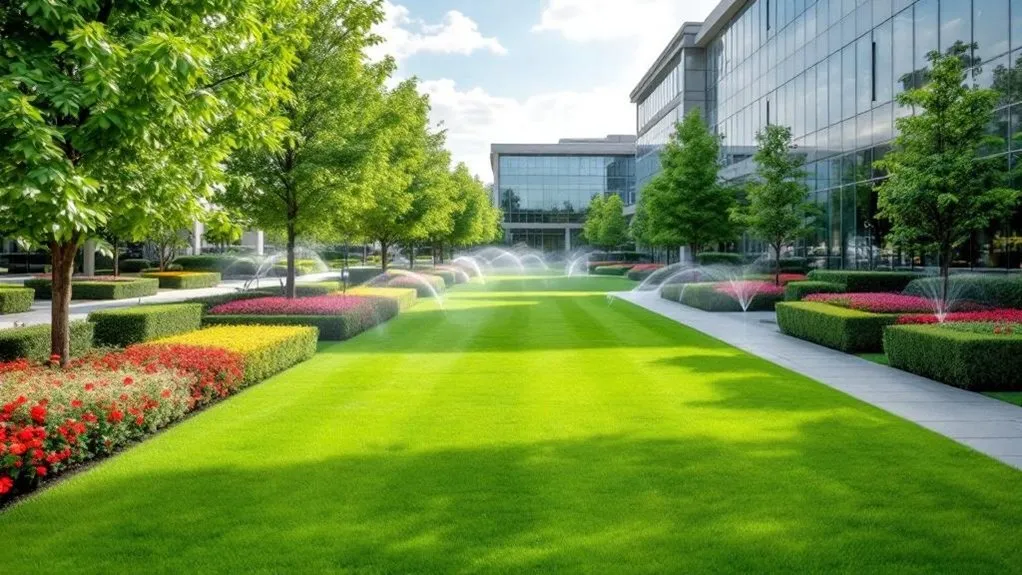
When potential tenants or buyers first encounter your commercial property, they’re making snap judgments about its value within seconds of arrival.
Professional landscape maintenance creates an immediate positive impression that translates directly into higher property valuations. Well-maintained grounds signal quality management and attention to detail, making your property more desirable than competitors with neglected landscapes.
Regular maintenance prevents costly emergency repairs and replacements while preserving existing investments. You’ll see increased tenant retention rates and reduced vacancy periods.
Appraisers consistently factor landscaping condition into their assessments, meaning your maintenance investment yields measurable returns through enhanced market value and rental income potential.
First Impressions Matter: The Psychology Behind Landscape Appeal for Tenants and Customers
The human brain processes visual information in just 13 milliseconds, and your commercial property’s landscape is often the first thing people notice.
This split-second judgment affects how tenants, customers, and visitors perceive your business’s professionalism and attention to detail.
Well-maintained landscapes trigger positive psychological responses that influence decision-making:
- Trust Building – Manicured grounds signal reliability and quality management, making prospects more likely to lease space or conduct business.
- Stress Reduction – Green spaces lower cortisol levels, creating comfortable environments that encourage longer visits.
- Social Proof: Attractive landscaping signals success and stability, attracting higher-quality tenants and customers.
Cost-Effective Strategies for Maintaining Commercial Landscapes Year-Round
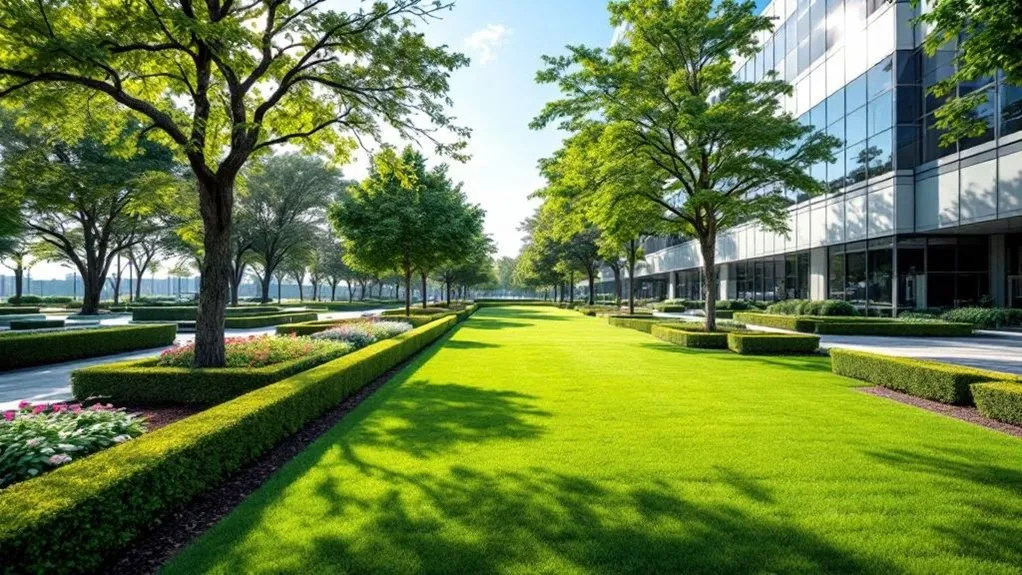
Smart property managers recognize that effective landscape maintenance doesn’t require breaking the budget, it demands strategic planning and year-round consistency.
You’ll maximize value by implementing preventive care schedules that address seasonal needs before problems emerge. Focus your resources on high-impact areas, such as entrances and main walkways, where visibility is most critical.
You can reduce costs by selecting native plants that thrive in your climate with minimal water and fertilizer requirements. Establish relationships with reliable contractors who offer all-inclusive service packages rather than piecemeal solutions.
Regular soil testing, proper mulching, and strategic pruning prevent expensive replacements while maintaining professional appearance standards.
Common Landscape Maintenance Mistakes That Decrease Property Value
Even well-intentioned property managers can inadvertently damage their investment’s appeal through landscape maintenance missteps that drive down curb appeal and market value.
Three Critical Mistakes You’re Likely Making:
- Over-pruning trees and shrubs – Excessive cutting creates unsightly, unnatural shapes that take years to recover, making your property look neglected rather than well-maintained.
- Inconsistent watering schedules – You’ll create brown patches, encourage weed growth, and stress plants, resulting in an unprofessional appearance that signals poor management to potential tenants.
- Ignoring seasonal plant requirements – Planting incompatible species or failing to adjust care routines seasonally leads to plant death and constant replacement costs.
ROI Analysis: Comparing DIY Landscape Care vs. Professional Services
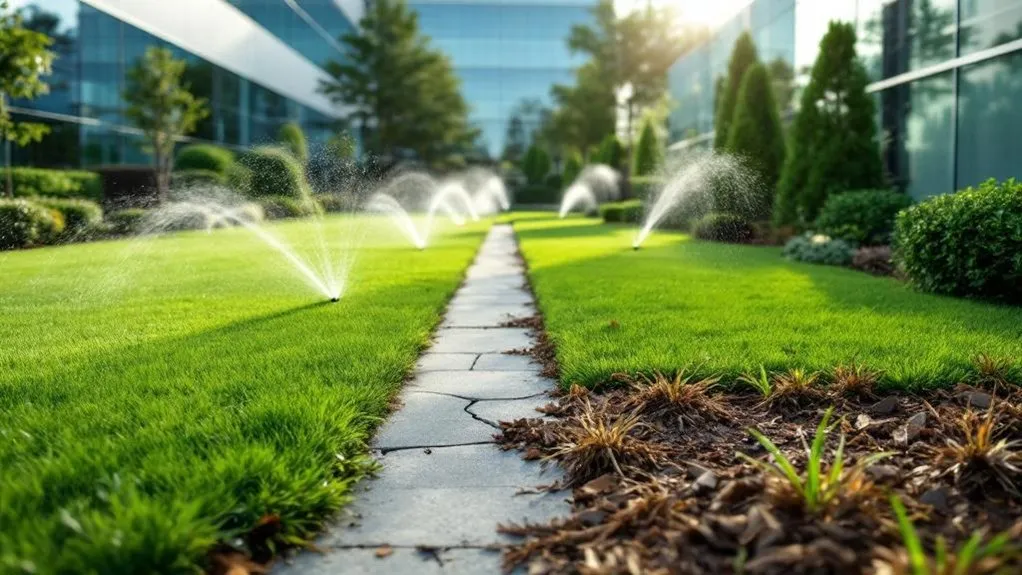
While avoiding common maintenance mistakes protects your property value, determining whether to handle landscape care yourself or hire professionals requires a thorough cost-benefit analysis that considers both immediate expenses and long-term returns.
DIY maintenance costs include equipment purchases, materials, training time, and potential repair expenses from inexperienced mistakes.
Professional services offer specialized expertise, appropriate equipment, and guaranteed results but require ongoing fees.
Calculate your property’s square footage, maintenance frequency, and complexity of needs.
Professional services typically deliver 15-30% higher property value increases compared to DIY efforts, making them cost-effective for most commercial properties.
Essential Elements of a Comprehensive Commercial Landscape Maintenance Program
After deciding to invest in professional landscape services, you’ll need a structured maintenance program that addresses every aspect of your property’s outdoor spaces.
Your comprehensive program should include regular scheduling, preventive care, and seasonal adjustments to maintain optimal curb appeal year-round.
Essential components include:
- Weekly lawn care – Mowing, edging, and debris removal to maintain a professional appearance
- Monthly plant health assessments – Pruning, fertilization, and pest control to prevent costly replacements
- Seasonal enhancement services – Mulching, flower bed updates, and irrigation system maintenance
This systematic approach ensures consistent property presentation and protects your landscape investment through proactive maintenance rather than reactive repairs.
Frequently Asked Questions
How Often Should Commercial Landscape Maintenance Contracts Be Reviewed and Updated?
You should review your commercial landscape maintenance contract at a minimum of annually.
However, it’s smart to evaluate it semi-annually or whenever significant changes occur to your property, budget, or landscaping needs.
Don’t wait for the contract to expire to make necessary adjustments.
Regular reviews ensure you’re getting optimal value, that services match your current requirements, and that pricing remains competitive.
You’ll catch potential issues early and effectively maintain your property’s appearance and value.
What Insurance Coverage Should Commercial Properties Have for Landscape Maintenance Accidents?
You’ll need thorough general liability insurance covering bodily injury and property damage from landscaping activities.
Make sure your policy includes professional liability for design errors, workers’ compensation for crew injuries, and commercial auto coverage for equipment transport.
Don’t forget environmental liability protection for chemical applications or tree removals.
Verify your landscaping contractor carries adequate insurance too, and require them to name you as an additional insured on their policy.
Are There Tax Deductions Available for Commercial Landscape Maintenance Expenses?
Yes, you can deduct commercial landscape maintenance expenses on your taxes.
You’ll typically classify these costs as ordinary business expenses under property maintenance and repairs. This includes lawn care, tree trimming, seasonal plantings, and irrigation system upkeep.
Keep detailed records of all services and receipts.
However, major landscape installations that add property value might need to be capitalized and depreciated over time rather than deducted immediately.
How Does Seasonal Weather Impact Commercial Landscape Maintenance Scheduling Requirements?
Seasonal weather drastically affects your maintenance scheduling.
You’ll need frequent mowing and irrigation during spring’s growth spurts, while summer requires drought management and heat-stress monitoring.
Fall demands leaf removal, pruning, and winterization prep.
Winter focuses on protecting vulnerable plants.
You must adjust your service frequency, timing, and crew size based on weather patterns.
Flexible scheduling prevents property damage and maintains curb appeal year-round despite changing conditions.
What Permits Are Required for Major Commercial Landscape Renovation Projects?
You typically need building permits for hardscape installations, including retaining walls, walkways, and irrigation systems.
Tree removal permits are often required for mature specimens, while environmental permits may be necessary near wetlands or protected areas.
You’ll also need electrical permits for lighting installations and, in some cases, zoning approvals for significant design changes.
Contact your local planning department early, as permit processing can take weeks or months, depending on project scope.