
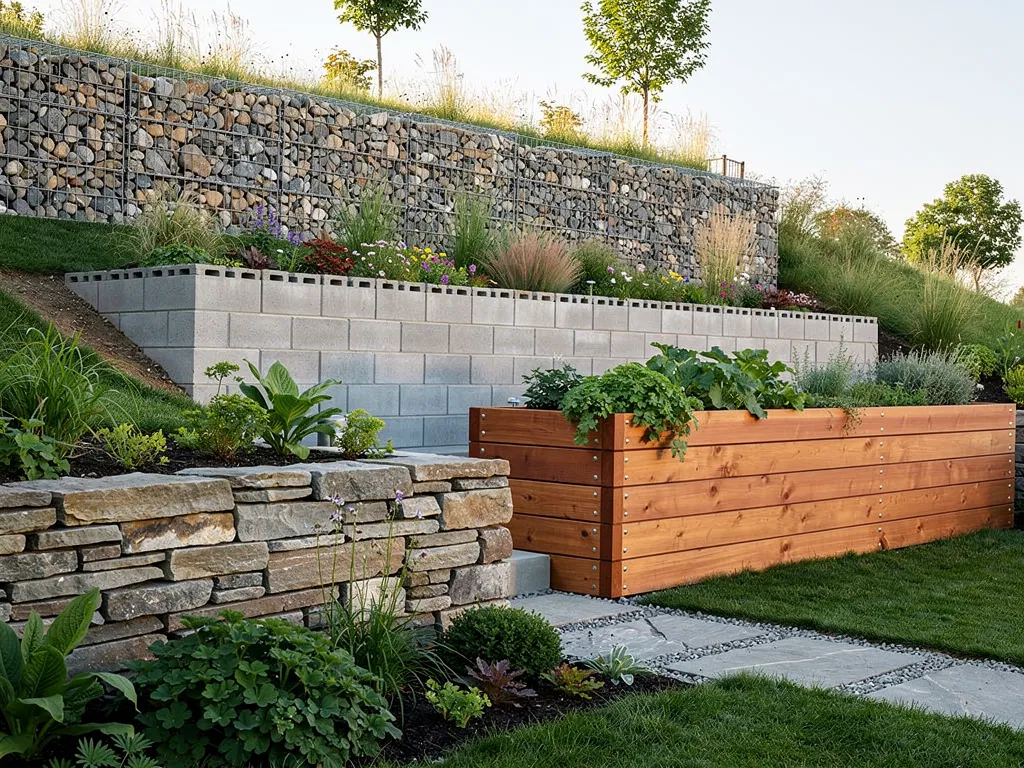
When planning a terraced garden retaining wall, consider your budget, soil type, slope steepness, and local building codes before choosing a material. Natural stone, concrete blocks, timber, gabion, brick, and interlocking pavers all offer unique benefits for different yard conditions and styles. Some prioritize strength for steep terrain, while others add rustic or classic charm to gentler slopes. Each option has distinct advantages worth exploring before you commit to a design.
Key Takeaways
Natural stone walls offer timeless aesthetics and durability, require minimal maintenance, and provide excellent drainage through gaps between stacked stones.
Concrete block walls are budget-friendly, customizable, and ideal for terracing steep slopes with interlocking designs that eliminate the need for mortar.
Timber walls add rustic charm to terraced gardens but should stay under 4 feet tall, reinforced with deadman anchors every 6–8 feet.
Gabion walls provide industrial-chic appeal, naturally managing water drainage while allowing plant growth to soften their appearance in terraced gardens.
Interlocking concrete pavers offer a beginner-friendly terracing solution, requiring no mortar and providing a structured, visually appealing garden retaining wall.
How to Choose the Right Terraced Garden Retaining Wall for Your Yard
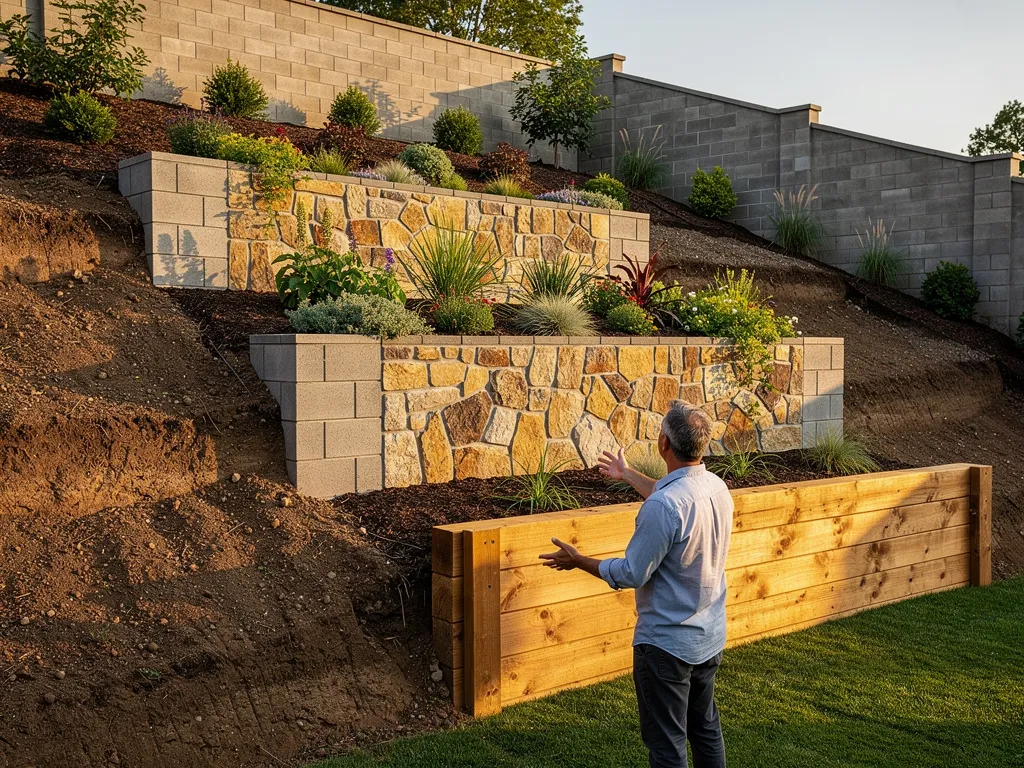
Choosing the right retaining wall for your terraced garden comes down to four key factors: your budget, the wall’s intended height, your soil type, and the overall aesthetic you’re going for.
Concrete blocks handle heavy loads and suit clay-heavy soils well. Natural stone costs more but delivers timeless visual appeal. Timber works for shorter walls on tighter budgets, though it degrades faster.
If your slope is steep, prioritize structural strength over style. Always check local building codes before committing to a design, since walls exceeding certain heights often require permits and professional engineering sign-off.
Natural Stone Terraced Retaining Walls for a Timeless, Low-Maintenance Look
Natural stone retaining walls age beautifully, blending into the landscape rather than fighting it.
Limestone, granite, and fieldstone require minimal upkeep while delivering lasting structural support. Unlike timber or concrete block, natural stone doesn’t rot, crack, or fade.
To maximize your stone wall’s performance, follow these principles:
Stack stones with a slight backward lean to improve stability against soil pressure.
Use larger base stones to distribute weight evenly.
Leave small gaps between stones to allow natural drainage and prevent hydrostatic pressure buildup.
Choose natural stone for durability and timeless character.
Concrete Block Terraced Walls: Affordable, Strong, and Customizable
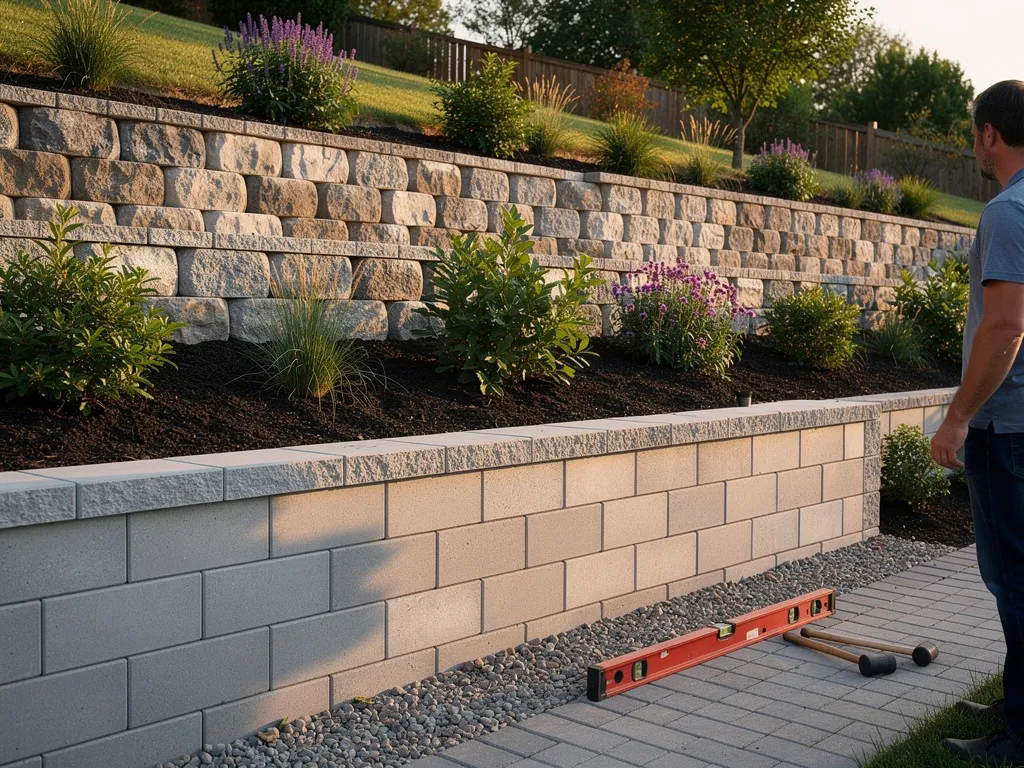
Concrete block retaining walls give you a cost-effective, structurally sound alternative to natural stone, and you can customize them with various textures, colors, and finishes to match your landscape’s aesthetic.
Interlocking blocks are particularly useful because they don’t require mortar, making installation straightforward for DIYers. Stack them in terraced tiers to manage steep slopes while creating planting beds between levels.
Choose tumbled blocks for a rustic look or smooth-faced blocks for a modern finish. Seal your concrete walls periodically to prevent moisture damage and efflorescence, extending their lifespan considerably while keeping maintenance minimal throughout the years.
Timber Retaining Walls: Best for Gentle Slopes and Rustic Gardens
Timber retaining walls bring a warm, natural charm to rustic gardens while handling gentle slopes with ease.
Timber retaining walls add rustic warmth and natural beauty while taming even the most challenging garden slopes.
Treated railroad ties or pressure-treated lumber work best for durability. Avoid using untreated wood since it rots quickly.
Keep these essentials in mind:
Drainage – drill weep holes to prevent water buildup behind the wall
Height limits – keep timber walls under 4 feet for structural stability
Anchoring – use deadman anchors every 6 to 8 feet for reinforcement
With proper installation, your timber wall will last decades while complementing your garden’s natural aesthetic.
Gabion Retaining Walls: The Industrial-Chic Option for Steep Terrain
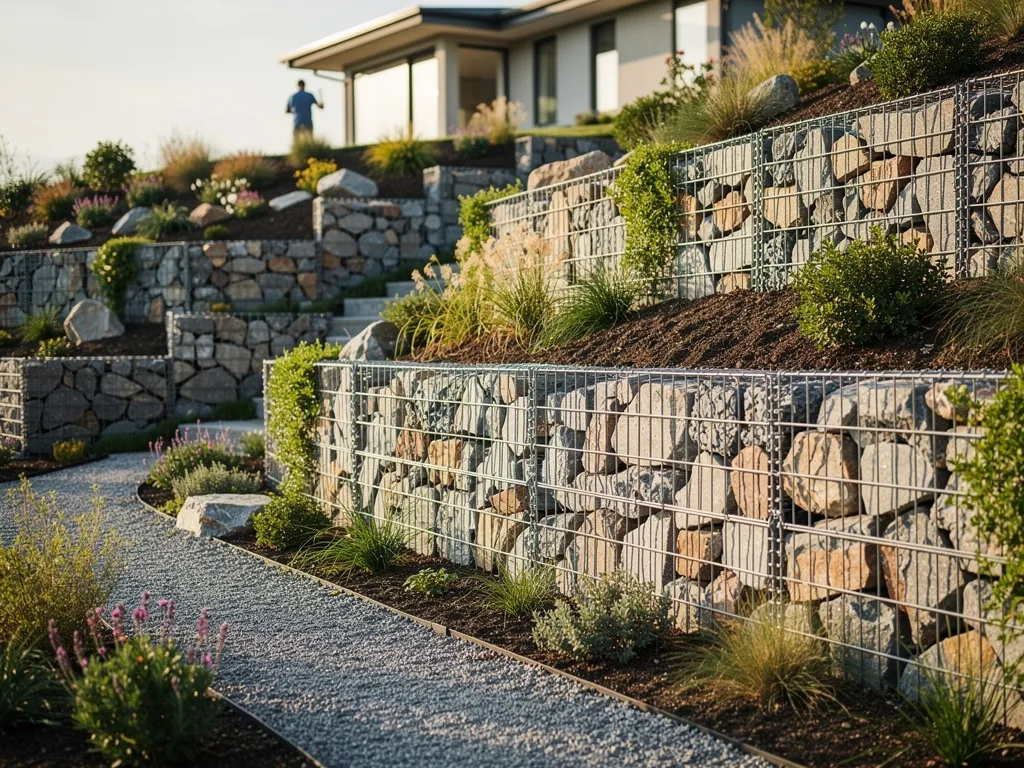
Gabion walls give steep terrain a bold, industrial-chic look while delivering serious structural strength. You fill wire mesh cages with rocks, gravel, or even recycled concrete, then stack them to create terraced levels.
They’re incredibly durable, handle heavy water drainage naturally, and resist shifting soil better than most alternatives. You don’t need mortar, specialized tools, or professional installation for smaller projects.
The open structure allows plants to weave through gaps over time, softening the industrial aesthetic if you prefer a greener finish. For steep slopes where other materials fail, gabion walls offer both reliability and striking visual impact.
Brick Terraced Retaining Walls for Traditional Landscaping Styles
Brick terraced retaining walls bring a timeless, classic look that gabion’s industrial edge simply can’t match. They suit cottage gardens, formal landscapes, and heritage-style homes beautifully.
Build correctly to get durability alongside aesthetics.
Prioritize these three essentials:
Proper drainage — Install gravel backfill and weep holes to prevent water pressure buildup.
Solid footing — Lay your base below the frost line to avoid shifting and cracking.
Mortar quality — Use weather-resistant mortar mixes designed for outdoor retaining applications.
Brick’s natural color variation also lets you complement existing hardscaping without forcing a match.
Interlocking Concrete Pavers: The Easiest DIY Retaining Wall Option
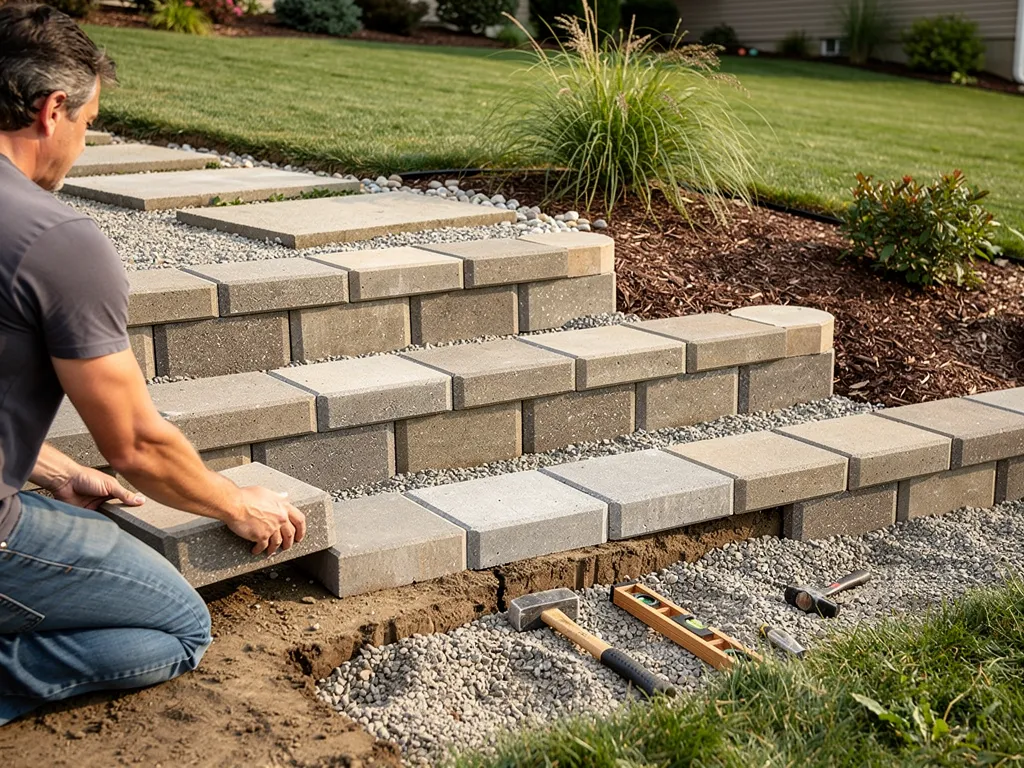
If you want the most beginner-friendly terraced retaining wall option, interlocking concrete pavers are hard to beat.
They’re designed to lock together without mortar, so you don’t need specialized masonry skills. You simply excavate, add a gravel base, and stack the pavers according to the manufacturer’s pattern.
Most systems include corner pieces and capstones, making clean finishes straightforward. They’re also durable, frost-resistant, and available in various colors and textures.
If a paver shifts or cracks years later, you can replace individual pieces without dismantling the entire wall—a practical advantage that brick and poured concrete simply can’t match.
Frequently Asked Questions
Do Terraced Retaining Walls Require Building Permits Before Construction Begins?
Yes, you’ll likely need a building permit for terraced retaining walls, depending on your local regulations.
Most municipalities require permits for walls over 3-4 feet tall. Contact your local building department before starting construction to confirm specific requirements.
Even if your wall falls below the height threshold, check for additional rules on drainage, setbacks, and soil conditions to avoid costly violations later.
How Do I Maintain Proper Drainage Behind My Terraced Retaining Wall?
Install a gravel drainage layer directly behind each wall tier before backfilling with soil.
Place perforated drain pipes at the base of every wall section, sloping them away from the structure.
Cover your gravel with landscape fabric to prevent soil migration.
Make sure you’re creating weep holes every 4-6 feet along the wall face, allowing trapped water to escape freely and preventing dangerous hydrostatic pressure buildup.
Can Terraced Retaining Walls Increase My Property’s Overall Resale Value?
Yes, terraced retaining walls can absolutely boost your property’s resale value!
They transform unusable slopes into functional, attractive outdoor living spaces that buyers love. You’ll add curb appeal, create additional usable square footage, and demonstrate smart land management.
Well-designed terraces with proper drainage and quality materials signal to buyers that you’ve invested thoughtfully in your property.
Real estate experts suggest landscaping improvements like these can increase your home’s value by 10-15%.
How Long Does a Typical Terraced Retaining Wall Last Before Needing Replacement?
Your terraced retaining wall’s lifespan depends heavily on the materials you choose.
If you use concrete or natural stone, you’ll typically enjoy 50-100 years of durability.
Timber walls typically last about 20 years before they need replacement.
Brick walls fall somewhere in between, giving you roughly 25-40 years.
You’ll extend any wall’s life considerably by ensuring proper drainage, using quality materials, and scheduling regular inspections to catch minor issues before they become costly problems.
Are Terraced Retaining Walls Safe to Build Near Underground Utility Lines?
Never build a terraced retaining wall near underground utility lines without calling 811 first. This free service marks all buried lines on your property before you dig.
You’ll avoid dangerous contact with gas, water, or electrical lines that could cause serious injury or costly damage. Keep your wall footings at least 18 inches away from marked lines, and always consult a licensed contractor if you’re uncertain about safe clearance distances.
Conclusion
Whether you’re working with a steep slope or a gentle grade, there’s a terraced retaining wall solution that fits your yard, budget, and style. You’ve seen how natural stone, concrete blocks, timber, gabions, brick, and interlocking pavers each bring something different to the table. Now it’s time to assess your terrain, set your budget, and start planning. The right wall won’t just hold your soil — it’ll transform your outdoor space entirely.