
We tear out more retaining walls than we would like to. Almost every one of them failed for the same reason, and it is almost never the block that let go.
It is water.
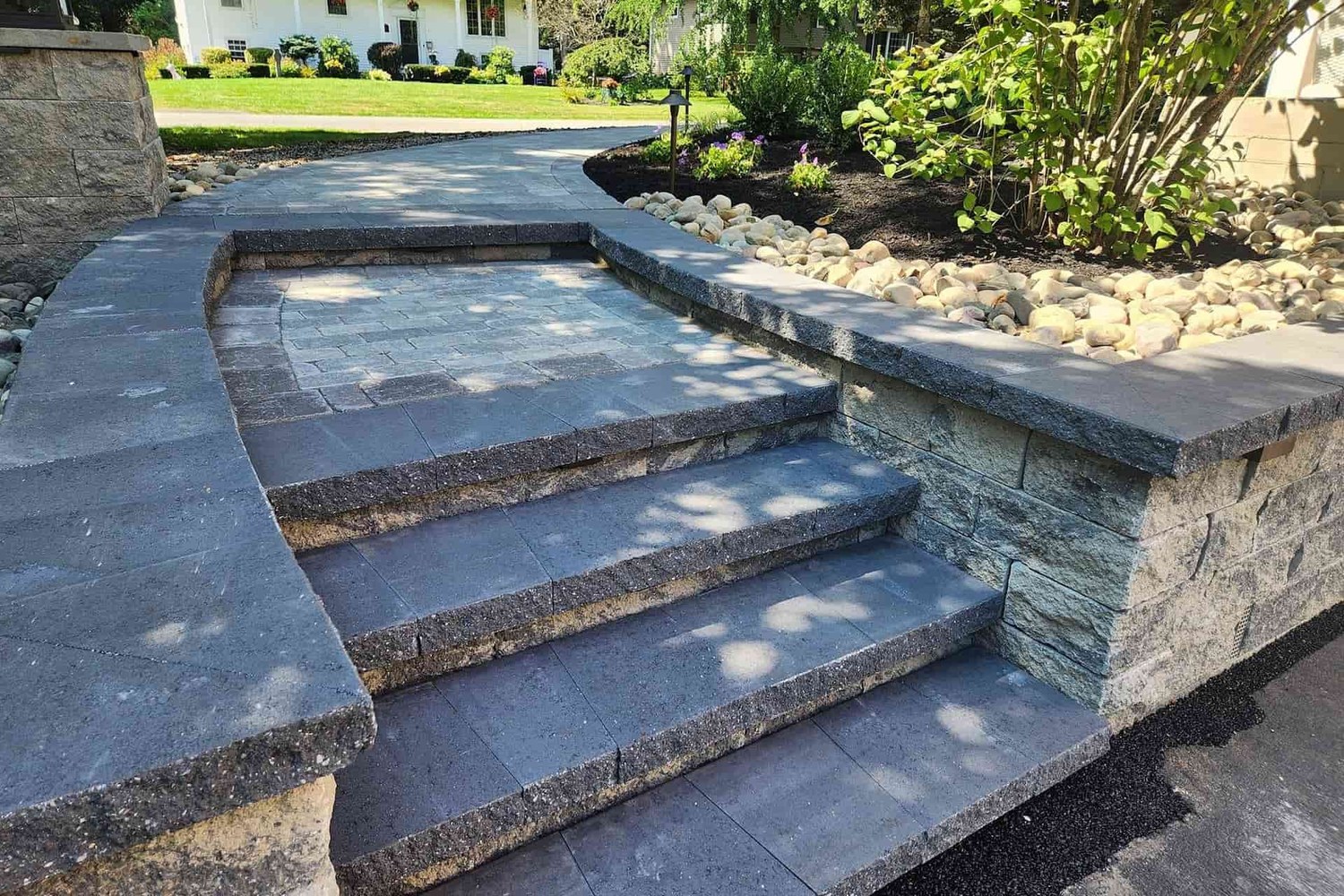
Clay holds water, and water is heavy
Western Pennsylvania ground is heavy clay over shale. Clay does not drain. When it rains, the soil behind your wall soaks up water and holds it, and saturated soil is far heavier than dry soil. All of that extra weight pushes horizontally against the back of the wall.
Then it freezes. Water expands when it turns to ice, and it has nowhere to go except into the wall. That cycle repeats every winter. A wall built without a way for water to escape is being slowly pushed over, one freeze at a time.
What a properly built wall has behind it
The parts that decide whether a wall lasts are the parts you cannot see once it is finished. That is exactly why they get skipped on a cheap bid:
- A compacted stone base, excavated below grade. The first course sets the whole wall.
- Clean drainage stone behind the wall, so water can move instead of pressing.
- A perforated drain pipe at the bottom, so the water that collects actually has somewhere to go.
- Geogrid on taller walls, tied back into the hillside, so the wall and the soil behave as one mass.
None of that shows up in a photo of a finished wall. All of it shows up four winters later.
How to tell if your wall is going
Walk out and look at it. These are the signs, roughly in the order they show up:
- Leaning. Put a level against the face. A wall that is tipping outward is not going to correct itself.
- Bulging in the middle. The wall is holding at the ends and losing in the centre, which means pressure behind it.
- Blocks separating or steps pulling away from the wall.
- Cracking that runs in a stair-step pattern.
- Water staining, or standing water at the base after rain. If water is coming through the face rather than out of a drain, there is no drain.
- Soil settling or a dip in the ground above the wall.
A wall that is leaning does not go back. Once the soil behind it has moved, the geometry has changed, and re-stacking the blocks on the same failed base just buys you a couple of years.
Height is the other thing
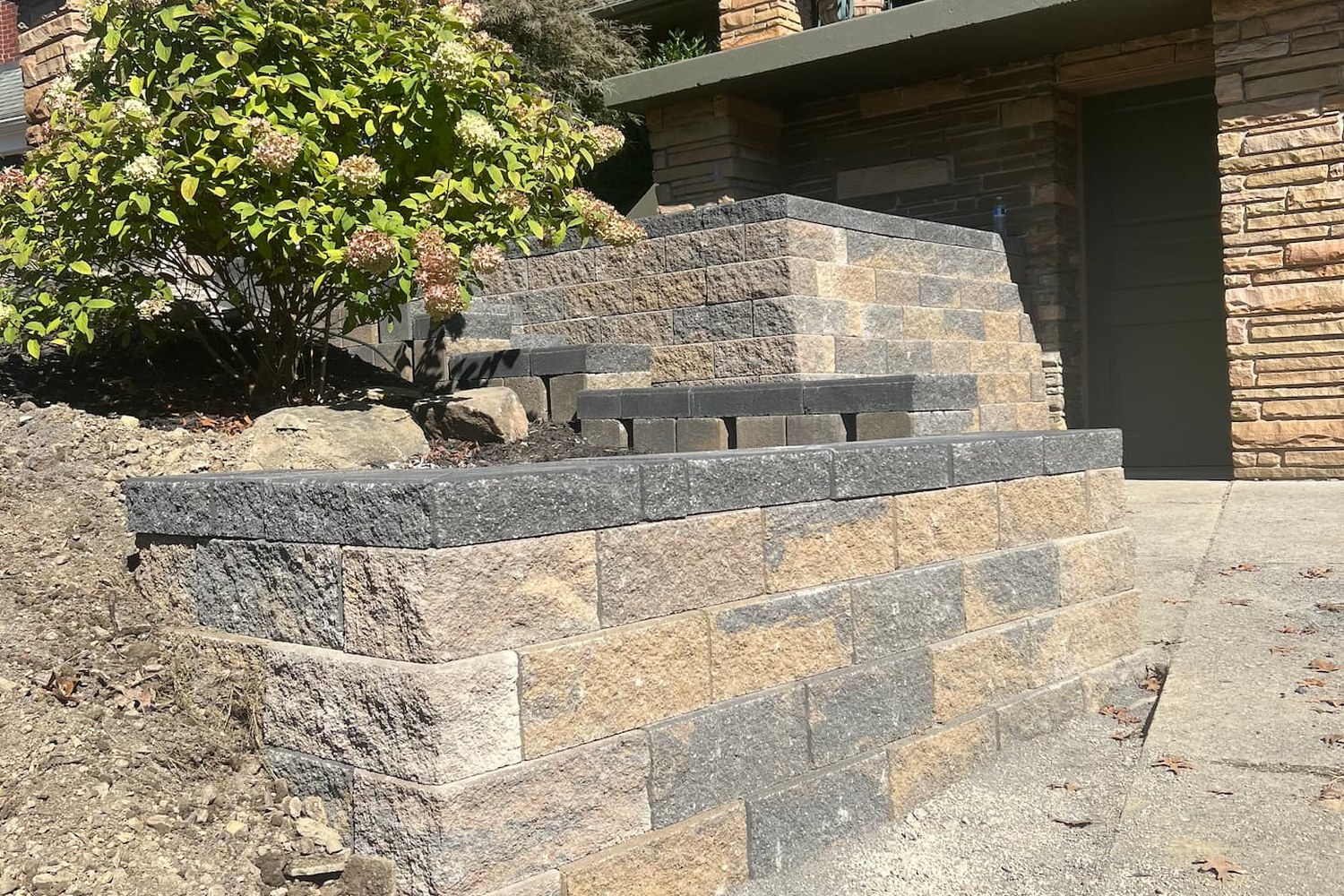
Under about three feet, a wall is usually straightforward. Past three or four feet you are into engineering, geogrid and generally a permit. That is not paperwork for its own sake. A four foot wall holding back a saturated clay hillside is a structure, and it is holding a lot of weight.
If a contractor quotes you a six foot wall with no mention of engineering, drainage or a permit, you have learned something useful about that quote.
What it costs to do it properly
Segmental block walls in this market typically run $35 to $75 per face foot, and natural stone or engineered walls run $40 to $100 or more. Geogrid on a taller wall can add half again to the labour.
A rebuild costs more than the original wall did, because the failed wall and the disturbed soil have to come out first. That is the real cost of a cheap bid: you do not pay less, you pay twice.
More on pricing in our Greater Pittsburgh cost guide, and more on how we build them on our retaining wall page.
If yours is leaning
Call us at (724) 605-4822 and we will come look at it. We will tell you honestly whether it can be saved or whether it needs to come out, because we would rather turn down a repair that will fail than do it and get called back.