
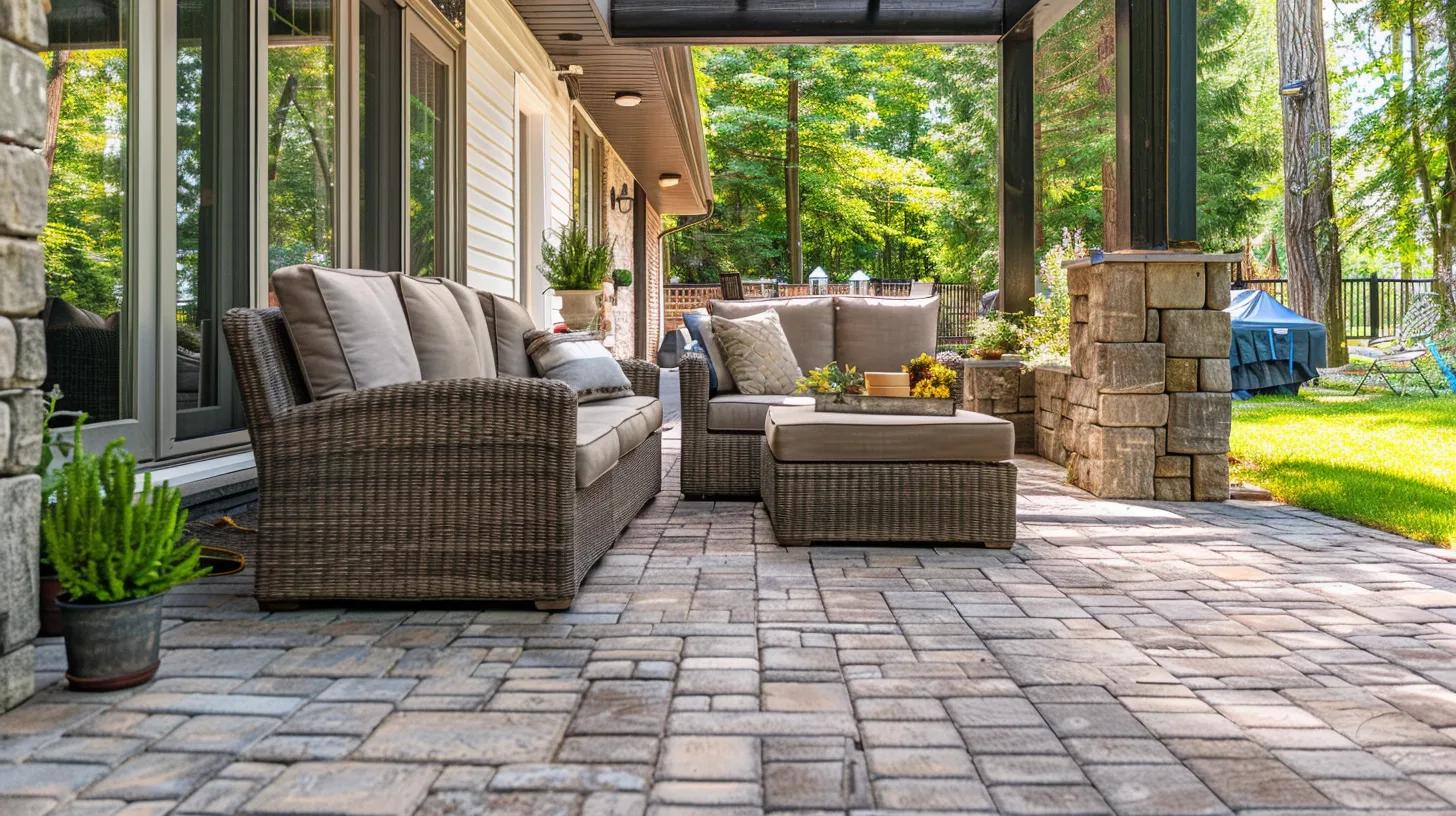
You’ll build a durable patio by excavating to a depth of 6-8 inches, removing all organic matter, and creating a 1/4-inch-per-foot slope away from your house. Install a 4-6-inch compacted base of crushed stone, then choose climate-appropriate materials, such as frost-resistant pavers for cold regions or light-colored surfaces for hot areas. Proper drainage with perforated pipes prevents water damage, while regular sealing and maintenance preserve your investment. Follow these foundational steps to discover the specific techniques that guarantee decades of performance.
Key Takeaways
- Excavate to a depth of 6-8 inches and create a proper drainage slope of 1/4 inch per foot away from the house.
- Install a 4-6 inch compacted base of angular crushed stone, compacting in 2-inch lifts for stability.
- Choose climate-appropriate materials, such as frost-resistant pavers for cold regions or light-colored stone for hot areas.
- Apply landscape fabric before material installation to prevent weeds and maintain structural integrity over time.
- Perform annual maintenance, including sealing, cleaning, drainage inspection, and prompt repair of any cracks or stains.
Essential Site Preparation and Excavation Techniques
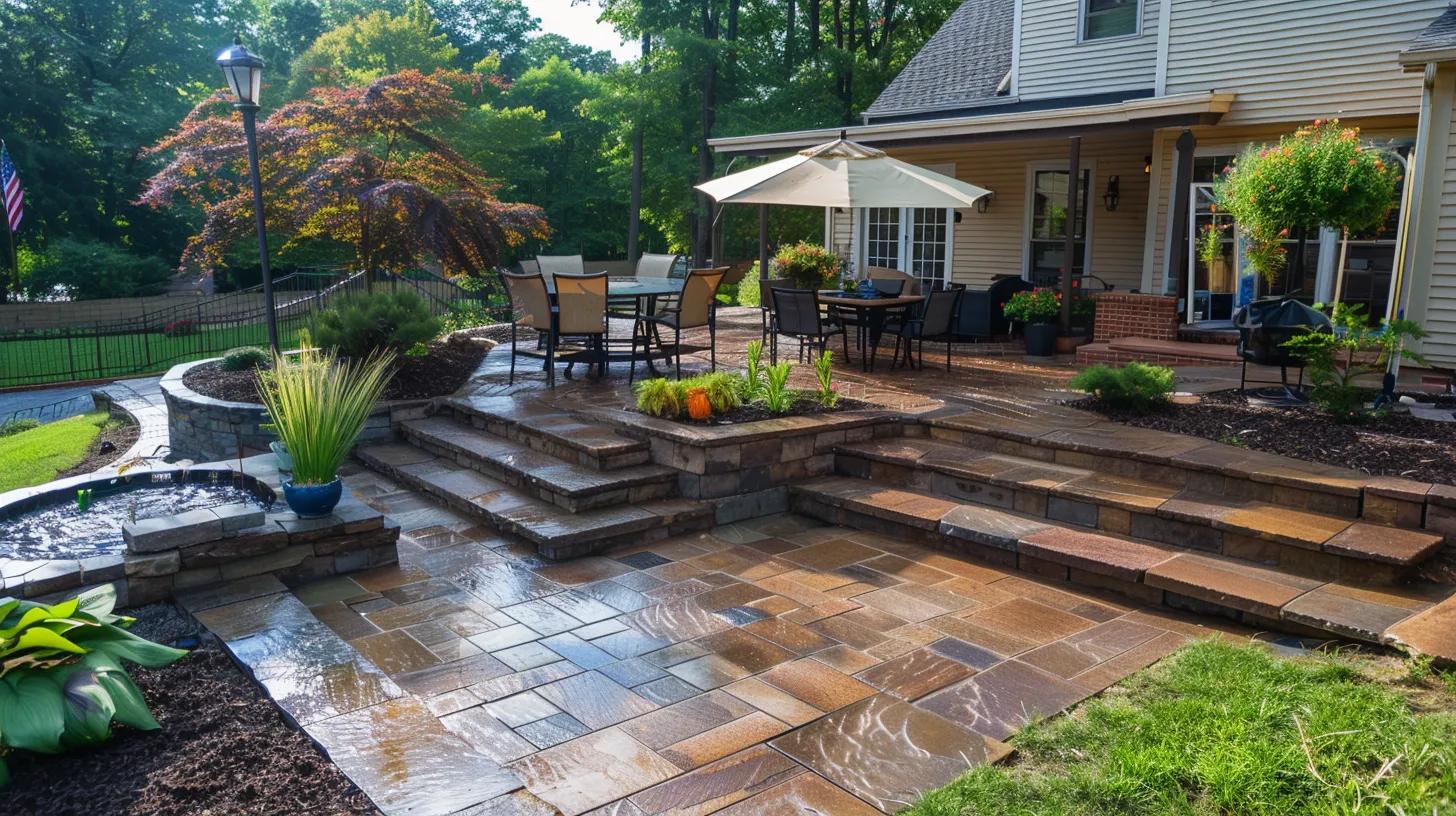
Before you can lay your first paver or pour concrete, you’ll need to excavate your patio area to the proper depth and create a stable foundation.
Mark your patio boundaries with spray paint or stakes. Dig down 6-8 inches for pavers or 4-6 inches for concrete slabs. Remove all grass, roots, and organic matter that could decompose and cause settling.
Check the excavated depth frequently with a measuring tape. Create a slight slope away from your house, about 1/4 inch per foot, to guarantee proper drainage.
Compact the soil using a plate compactor to prevent future settling and maintain structural integrity.
Creating a Rock-Solid Foundation Base
After completing your excavation, you’ll typically need to install a base layer of crushed stone or gravel to create the foundation for your patio.
Choose angular crushed stone between ¼-inch and ¾-inch in diameter for ideal compaction and drainage. Spread the material evenly across your excavated area, maintaining a thickness of 4-6 inches for most residential patios.
Use a plate compactor or hand tamper to compress the base in 2-inch lifts, working systematically across the entire surface. Check for proper slope and level frequently during compaction.
A well-compacted base prevents settling, cracking, and premature patio failure over time.
Mastering Proper Drainage and Water Management
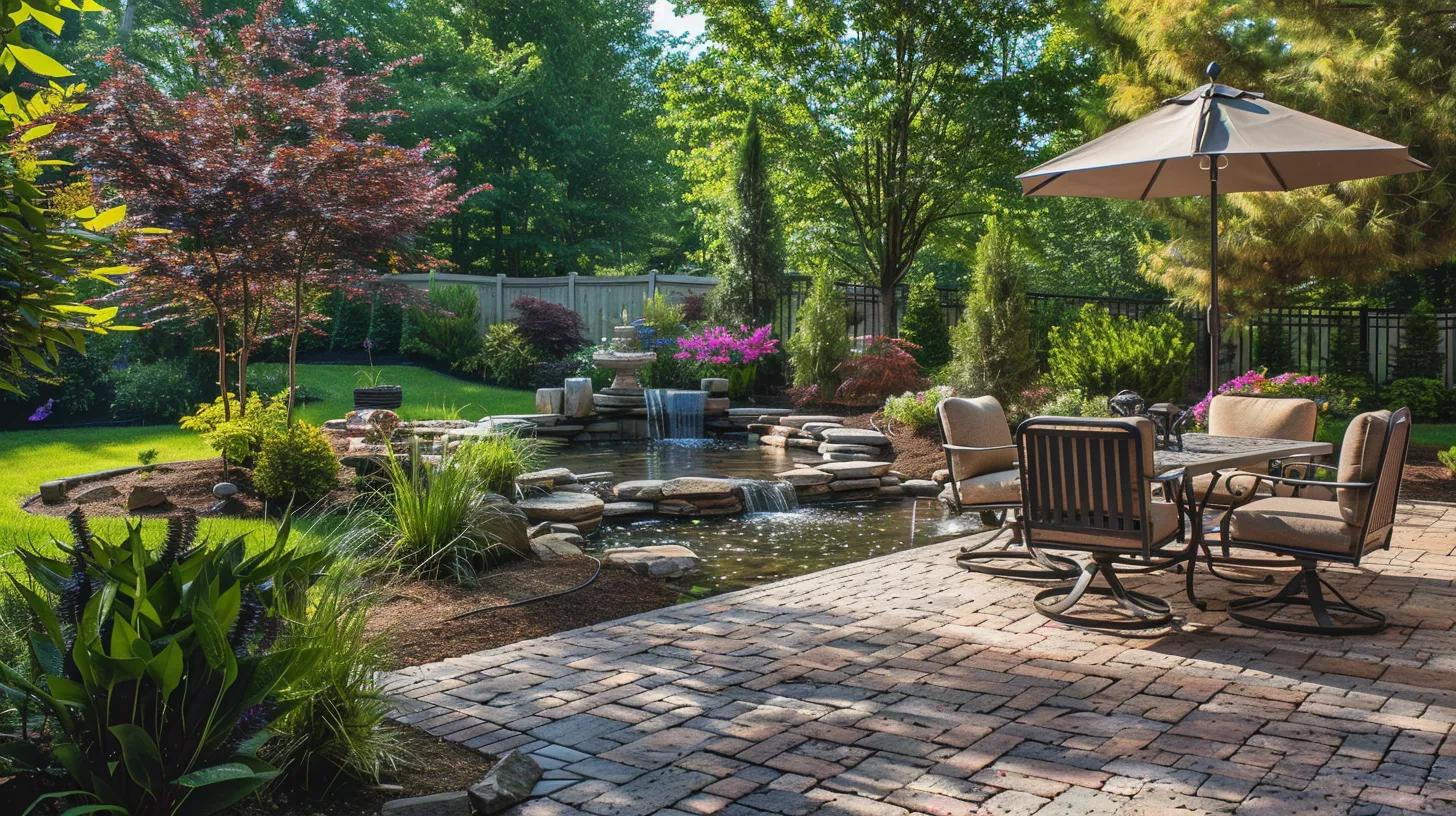
While your compacted base provides structural stability, effective drainage guarantees your patio won’t become a waterlogged disaster during heavy rains.
Install a slight 1-2% slope away from your house to direct water flow naturally. You’ll need proper grading before laying materials, use a string line and level to verify consistent pitch.
Create drainage channels along patio edges using perforated pipes wrapped in landscape fabric. Fill the surrounding areas with gravel for absorption.
Don’t forget to add weep holes between retaining elements. Test your drainage system with a garden hose before finalizing installation to prevent costly future repairs.
Selecting the Right Materials for Your Climate
Since your patio’s longevity depends heavily on how well materials withstand local weather conditions, you’ll want to choose options that can handle your region’s specific climate challenges.
In freeze-thaw climates, select frost-resistant materials such as natural stone, concrete pavers, or porcelain tiles that won’t crack as water expands.
For hot, sunny areas, choose light-colored materials that reflect heat and won’t become scorching underfoot.
In humid regions, opt for non-porous surfaces like sealed concrete or composite materials that resist mold and mildew.
Always verify material ratings match your local temperature ranges and precipitation levels before purchasing.
Professional Installation Methods and Best Practices
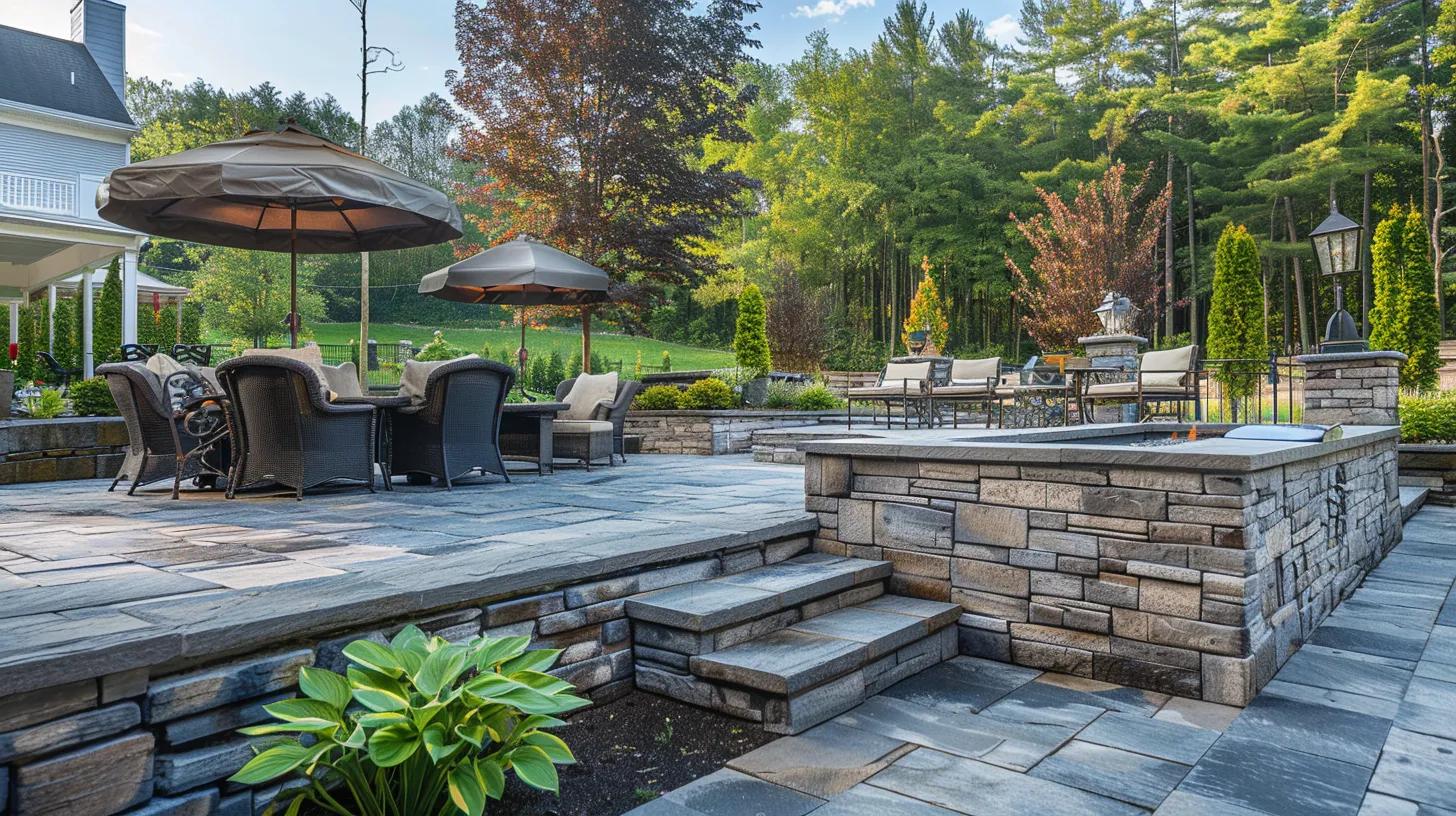
Even with the best materials selected for your climate, improper installation will undermine your patio’s durability and lead to costly repairs down the road.
You’ll need to excavate to the proper depth, typically 6-8 inches for pedestrian traffic. Install a compacted gravel base using a plate compactor, ensuring uniform thickness.
Apply landscape fabric to prevent weed growth. Add a sand leveling layer, screed it flat, then lay your pavers or stones with consistent joints. Use edge restraints to prevent shifting.
Compact the entire surface with fine sand, sweeping it into the joints. Proper drainage slopes away from structures at ¼ inch per foot.
Long-Term Maintenance Strategies for Maximum Longevity
After your patio’s properly installed, you’ll extend its lifespan considerably through consistent maintenance practices that address wear patterns before they become major problems.
Clean surfaces monthly using appropriate cleaners for your material, pressure-wash concrete, use gentle soap for natural stone, and use specialized products for pavers.
Seal surfaces annually or biannually, depending on climate exposure.
Inspect drainage systems regularly, clearing debris from channels and checking for standing water.
Address cracks immediately with proper fillers to prevent expansion.
Repoint joints when mortar shows wear.
Remove stains promptly before they penetrate.
These proactive measures prevent costly repairs and maintain structural integrity.
Frequently Asked Questions
How Much Does It Typically Cost to Build a Durable Patio?
You’ll typically spend $8- $ 25 per square foot for a durable patio, depending on the materials you choose.
Concrete costs $8-12 per square foot, while natural stone runs $15-25 per square foot.
For a 200-square-foot patio, expect to pay $1,600- $ 5,000 in total.
You can save money by doing prep work yourself, but don’t skimp on quality materials or proper drainage.
Higher upfront costs for durable materials like stamped concrete or pavers will save you money in the long term.
Do I Need Permits or Approval From My HOA Before Construction?
You’ll typically need both permits from your local building department and HOA approval before starting patio construction.
Check with your city’s permitting office first, as requirements vary by location and patio size.
Then review your HOA’s covenants and submit your plans for architectural approval.
Don’t skip these steps, building without proper permits can result in fines, forced removal, or complications when selling your home later.
How Long Does the Entire Patio Construction Process Usually Take?
You’ll typically need 3-7 days for a basic patio project, though it can extend to 2-3 weeks for complex designs.
Weather delays, permit approval time, and material availability affect your timeline.
Simple concrete slabs take 3-4 days, while intricate stone or brick patterns need 1-2 weeks.
You’ll spend day one on excavation, days two to three on base preparation, and the remaining time on installation and finishing touches.
Can I Build a Durable Patio Myself or Should I Hire Professionals?
You can build a durable patio yourself if you’re comfortable with excavation, leveling, and heavy lifting.
However, you should hire professionals for complex projects involving electrical work, drainage issues, or if you lack experience with concrete or stone installation.
DIY works well for simple pavers or flagstone patios on level ground.
Consider your skill level, available time, and local building codes before deciding.
Professional patio installation guarantees proper foundation work and long-term durability.
What’s the Best Time of Year to Start Patio Construction?
You’ll want to start patio construction in late spring or early summer, when temperatures are consistently warm, and rainfall is minimal.
This timing gives you several months of favorable weather to complete the project before winter arrives.
Avoid starting during fall or winter when freezing temperatures can damage fresh concrete and make excavation difficult.
If you’re in a warmer climate, you’ve got more flexibility, but spring remains ideal for the best curing conditions.