
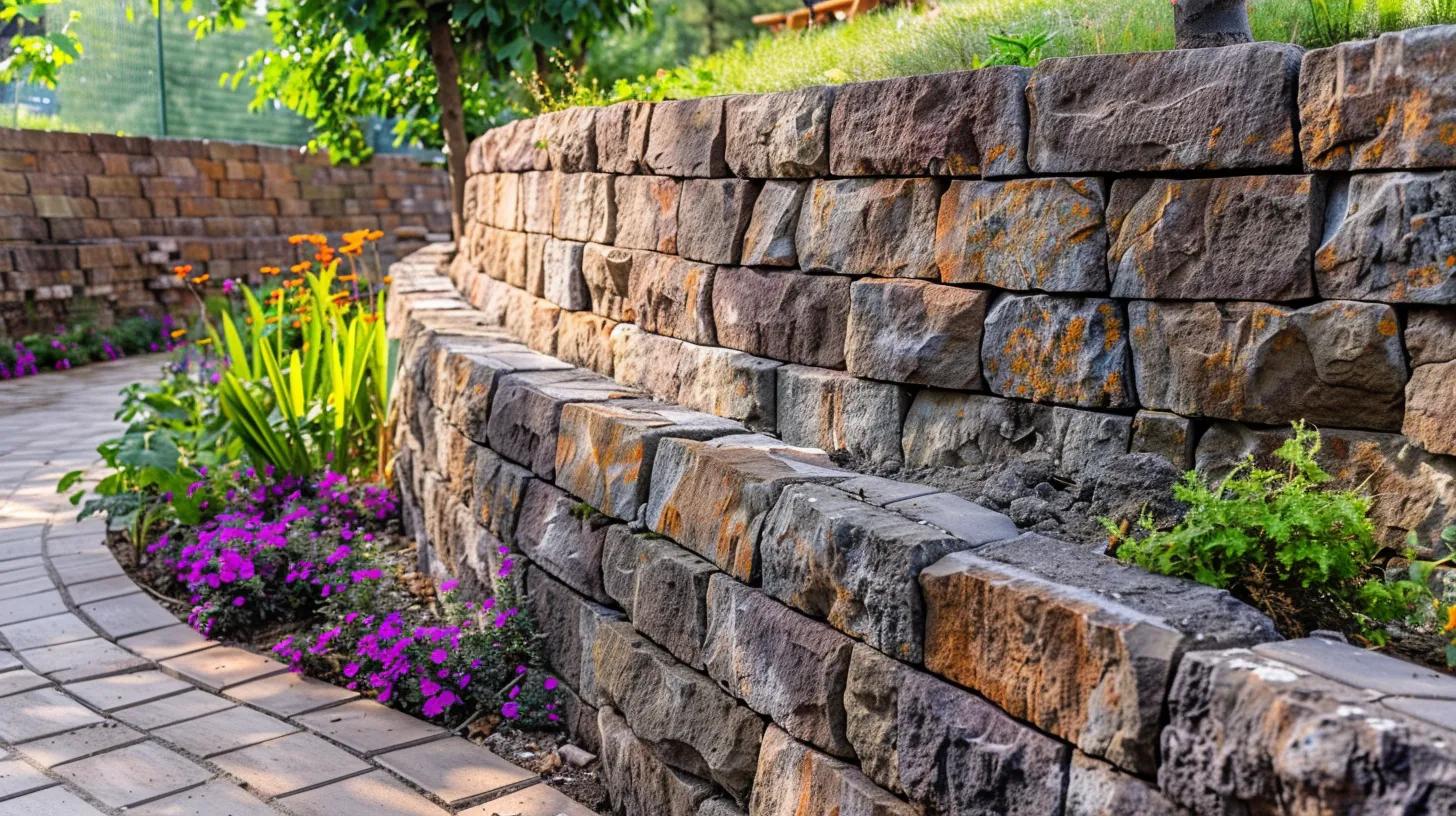
You’ll encounter five main retaining wall types when tackling slope stabilization projects. Gravity walls use massive weight and materials like concrete or stone for high-strength applications. Cantilever walls feature L-shaped reinforced concrete designs that reach 25 feet efficiently. Anchored walls employ steel cables for extreme conditions and tall installations. Sheet pile walls maximize space with interlocking barriers, while gabion walls offer natural rock aesthetics with excellent drainage. Each type addresses specific terrain challenges, costs, and space constraints that determine your best choice.
Key Takeaways
- Gravity walls use massive weight for stability, ideal for high applications but require significant space and materials.
- Cantilever walls feature L-shaped reinforced concrete design, reaching 25 feet efficiently using soil weight for self-anchoring stability.
- Anchored walls utilize steel cables extending into stable ground, perfect for extreme conditions and heights exceeding 20 feet.
- Sheet pile walls drive interlocking materials vertically, maximizing efficiency in tight spaces but facing rocky soil challenges.
- Gabion walls use rock-filled wire baskets, offering natural aesthetics and flexibility up to 10 feet with excellent drainage.
Gravity Retaining Walls: Strength Through Weight and Mass
When you’re dealing with significant soil pressure and heavy loads, gravity retaining walls rely on their substantial weight and mass to resist lateral earth forces.
You’ll find these walls constructed from concrete, stone, or masonry materials that create impressive thickness at the base. They’re perfect when you need maximum stability for high retaining applications or unstable soil conditions.
You won’t need specialized construction techniques, making them cost-effective for many projects. However, you’ll require significant space due to their large footprint, and material costs can escalate quickly with height increases beyond eight feet.
Cantilever Retaining Walls: Engineering Efficiency With Reinforced Concrete
Unlike gravity walls that depend on sheer mass, cantilever retaining walls use engineering principles and reinforced concrete to achieve superior structural efficiency.
You’ll find these walls feature an L-shaped design with a vertical stem and horizontal base that extends beneath the retained soil. The soil’s weight actually helps stabilize the structure, creating a self-anchoring system.
You can build cantilever walls up to 25 feet high while using considerably less material than gravity alternatives. They’re ideal for residential applications, commercial developments, and situations where you need maximum height with minimal footprint and material costs.
Anchored Retaining Walls: Maximum Support for Challenging Terrain
Anchored retaining walls represent the heavy-duty solution for extreme soil pressures and unstable ground conditions that would overwhelm conventional designs.
You’ll find these walls equipped with steel cables or rods that extend deep into stable soil or rock behind the structure, creating anchor points that dramatically increase holding power.
You’ll typically see anchored walls in challenging applications like highway cuts, basement excavations in dense urban areas, and waterfront construction.
They’re your go-to choice when space constraints prevent wider footings or when you’re dealing with particularly tall walls exceeding twenty feet in height.
Sheet Pile Retaining Walls: Ideal Solutions for Tight Spaces
Since space limitations often dictate your retaining wall options, sheet pile walls deliver maximum efficiency in minimal footprints.
You’ll drive interlocking steel, vinyl, or wood sheets directly into the ground, creating a continuous barrier that’s perfect for waterfront applications and urban environments.
You can install these walls in narrow corridors where equipment access is limited. They’re excellent for temporary excavations and permanent shoreline protection.
However, you’ll face height limitations and potential corrosion issues with steel varieties. The installation requires specialized driving equipment, and you might encounter difficulties in rocky soil conditions that resist penetration.
Gabion Retaining Walls: Natural Stone Aesthetics With Modern Function
When aesthetics matter as much as structural performance, gabion retaining walls offer you the perfect blend of natural beauty and engineering reliability.
These wire mesh baskets filled with rocks create stunning visual appeal while providing excellent drainage and flexibility. You’ll appreciate their cost-effectiveness and eco-friendly nature since they use locally sourced materials.
Gabion walls excel in areas requiring natural aesthetics, such as residential landscapes and parks.
They’re particularly effective for heights up to 10 feet and can withstand ground movement better than rigid structures. However, you’ll need adequate space since they require stepped construction for stability.
Segmental Retaining Walls: Modular Blocks for DIY-Friendly Installation
If you’re looking for a retaining wall solution that combines professional results with homeowner-friendly installation, segmental retaining walls deliver exactly what you need. These modular concrete blocks interlock without mortar, creating sturdy structures through engineered design and gravity.
You’ll appreciate their uniform appearance, built-in drainage channels, and step-by-step installation guides. Most manufacturers offer extensive support systems including caps, corners, and curves for professional-looking results.
Choosing the Right Retaining Wall for Your Specific Project Needs
Understanding your project requirements helps narrow down the best retaining wall option from the many available types.
You’ll need to take into account wall height, soil conditions, drainage requirements, and budget constraints. For walls under four feet, gravity walls or segmental blocks work well. Taller structures require reinforced concrete or engineered solutions.
Poor soil conditions demand deeper foundations and better drainage systems. Take maintenance requirements into account too, natural stone needs periodic repointing, while concrete blocks require minimal upkeep.
Your aesthetic preferences and local building codes also influence your choice. Consulting a structural engineer guarantees you’re selecting the most appropriate and safe option.
Frequently Asked Questions
Do I Need a Building Permit to Construct a Retaining Wall?
You’ll likely need a building permit for retaining walls over 4 feet tall, though requirements vary by location.
Some areas require permits for walls over 3 feet or any wall supporting structures. You should check with your local building department since regulations differ between municipalities.
Even if you don’t need a permit, you’ll want to call 811 before digging to locate underground utilities and guarantee you’re complying with setback requirements.
How Much Does It Typically Cost to Build a Retaining Wall?
You’ll typically spend $15-50 per square foot for a retaining wall, depending on materials and complexity.
Basic concrete block walls cost $15-25 per square foot, while natural stone runs $25-50.
Timber walls are cheapest at $10-20 per square foot.
You’ll pay more for taller walls, complex designs, or challenging terrain.
Labor accounts for 50-70% of total costs.
Don’t forget to budget for permits, drainage, and potential excavation work.
What Drainage Systems Are Required Behind Retaining Walls?
You’ll need a drainage system to prevent water buildup that can damage your retaining wall.
Install a perforated drain pipe at the base, surrounded by gravel, and backfill with free-draining materials like crushed stone.
Add weep holes every 6-8 feet to allow water escape.
Consider installing a French drain system for larger walls.
Don’t forget waterproof membrane behind the wall to direct moisture away from the structure.
How Long Do Different Types of Retaining Walls Typically Last?
You’ll find concrete and stone retaining walls last 50-100 years with proper construction and drainage.
Timber walls typically survive 10-20 years before requiring replacement due to rot and insect damage.
Interlocking block walls generally endure 25-50 years depending on material quality.
Steel walls can reach 30-60 years but need rust protection.
Your wall’s lifespan ultimately depends on drainage effectiveness, soil conditions, freeze-thaw cycles, and maintenance quality you provide throughout its service life.
Can I Build a Retaining Wall on a Sloped Property Myself?
You can build a retaining wall on a sloped property yourself, but it depends on the wall’s height and complexity.
DIY projects work best for walls under 4 feet tall using materials like interlocking blocks or timber.
However, you’ll need proper drainage, foundation preparation, and grading knowledge.
For taller walls or steep slopes, hire a professional since structural failure risks property damage and safety hazards.