
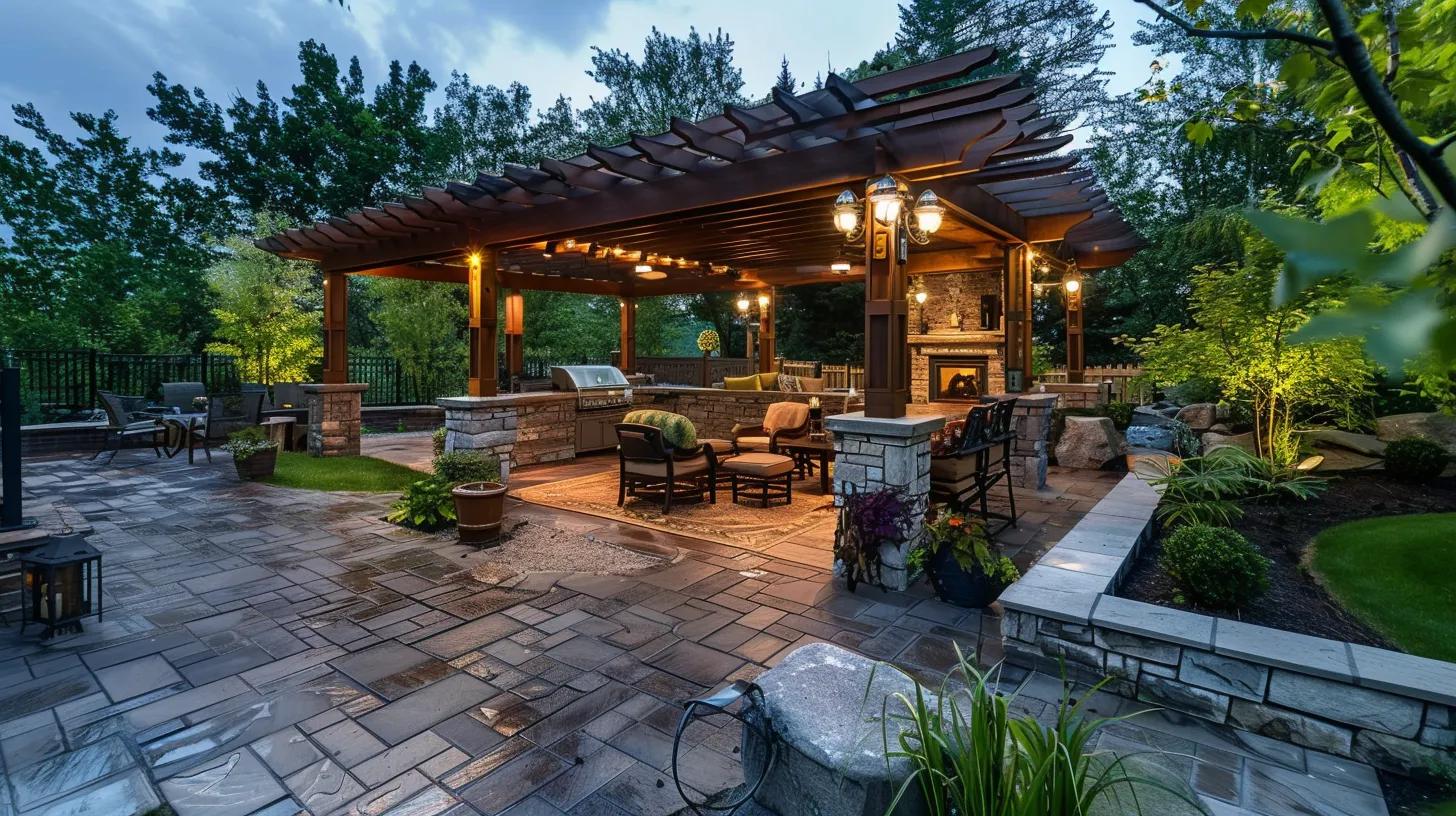
Turn your patio into an inviting outdoor retreat by selecting weather-resistant furniture arranged in intimate conversation zones. Layer different lighting sources like string lights, lanterns, and fire pits to create an ambiance that extends evening use. Add container gardens with climate-appropriate plants for natural beauty, and use outdoor rugs or planters to define functional areas for dining and lounging. Install shade solutions, such as pergolas or retractable awnings, for added comfort. These strategic upgrades will reveal your space’s full potential.
Key Takeaways
- Select weather-resistant furniture, such as teak or aluminum, and arrange seating in intimate conversation groupings with varying heights.
- Layer lighting sources, including string lights, lanterns, and fire pits, to create ambiance and extend evening use.
- Use container gardens and vertical planters with climate-appropriate plants to add natural beauty and flexible seasonal arrangements.
- Define functional zones for dining, lounging, and activities using outdoor rugs, planters, or screens as visual separators.
- Install shade solutions like retractable awnings, pergolas, or cantilever umbrellas to provide adjustable weather protection.
Choosing the Right Furniture and Seating Arrangements
How do you turn an empty patio into an inviting outdoor retreat?
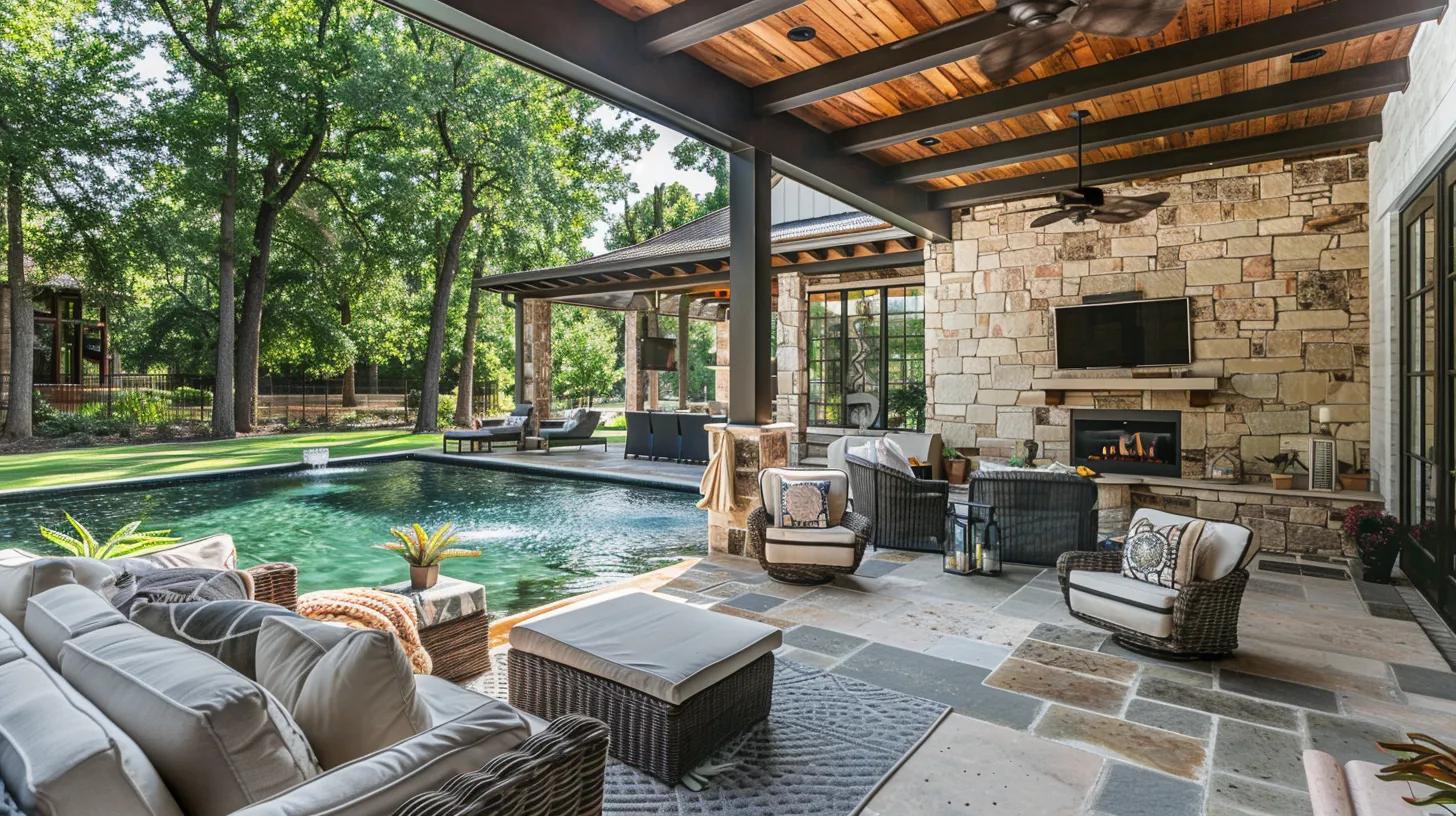
Start with furniture that matches your space’s size and purpose. Choose weather-resistant materials like teak, aluminum, or all-weather wicker that’ll withstand the elements.
Create conversation zones by arranging seating in intimate groupings rather than pushing everything against walls. Mix different seating heights with lounge chairs, dining sets, and accent stools for visual interest.
Don’t forget comfort, add outdoor cushions and pillows in fade-resistant fabrics.
Consider multifunctional pieces like storage ottomans or extendable tables that maximize your patio’s potential while keeping the layout flexible for entertaining.
Creating Ambiance With Lighting and Fire Features
Once you’ve arranged your furniture, the right lighting and fire features will turn your patio from a simple outdoor space into an enchanting evening destination.
String lights create instant warmth overhead, while lanterns provide intimate table lighting. Solar path lights guide guests safely through your space.
Consider installing a fire pit as your centerpiece, it’ll draw people together and extend your outdoor season. Wall-mounted torches add dramatic flair, and candles offer flickering romance.
Layer different light sources at varying heights to create depth. These elements don’t just illuminate; they craft an atmosphere that makes every evening feel special.
Incorporating Plants and Greenery for Natural Beauty
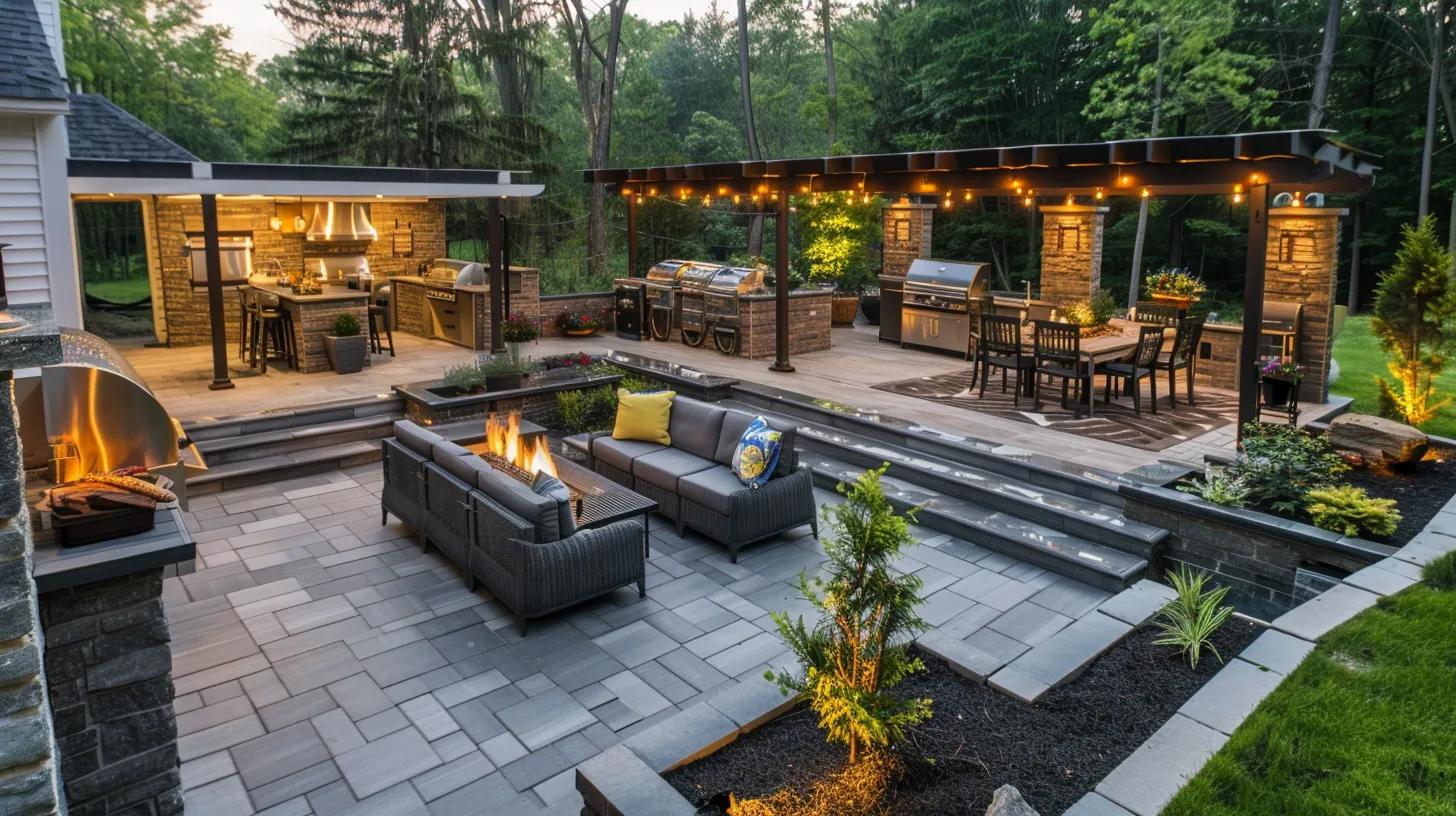
Plants breathe life into your patio design, softening hard surfaces while creating natural boundaries and focal points.
You’ll find container gardens offer flexibility, move them seasonally or rearrange for fresh looks. Consider vertical planters or living walls to maximize space in smaller patios.
Choose plants that thrive in your climate and light conditions. Mix textures with ornamental grasses, broad-leafed hostas, and flowering perennials.
Create layers using tall planters, medium shrubs, and ground-covering varieties. Don’t forget herbs, they’re practical and fragrant.
Add trailing plants like ivy or petunias to spill over edges, creating depth and visual interest throughout your outdoor space.
Defining Functional Zones for Entertainment and Relaxation
Creating distinct zones turns your patio from a single-purpose space into a versatile outdoor living area that serves multiple needs.
You’ll want to designate specific areas for dining, lounging, and activities. Position your dining table near the house for easy access to the kitchen, while placing comfortable seating farther away for quiet relaxation.
Use outdoor rugs, planters, or decorative screens to visually separate each zone without blocking flow between areas. Consider adding a fire pit area for evening gatherings or a corner bar cart for entertaining.
Strategic furniture placement and varying heights create natural boundaries while maintaining an open, cohesive feel.
Adding Shade and Weather Protection Element
While your newly defined zones provide excellent functionality, they’ll only reach their full potential when protected from the elements.
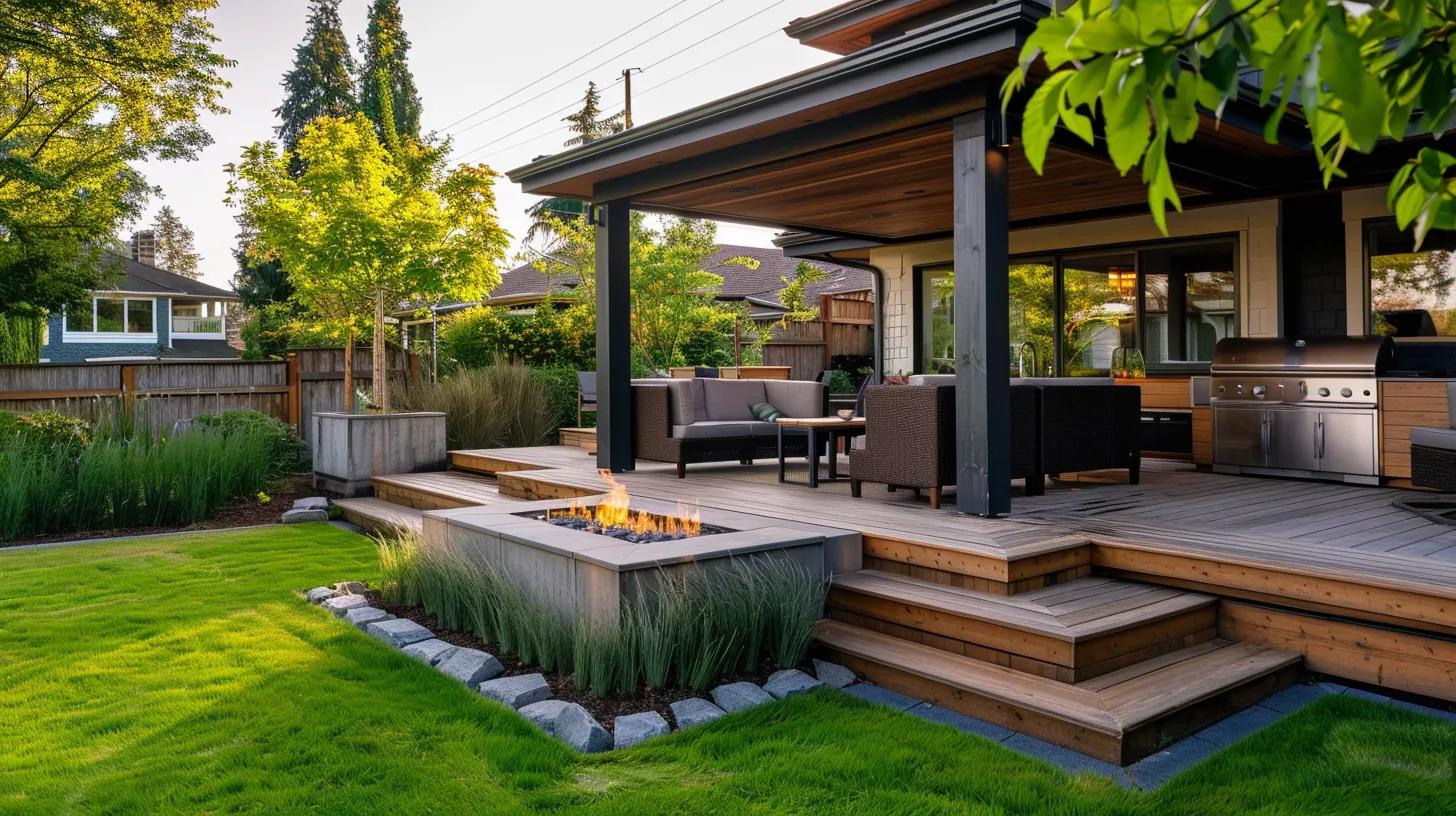
Install retractable awnings above dining areas for adjustable coverage during meals. Consider pergolas with climbing vines for natural shade that evolves with the seasons.
Cantilever umbrellas offer flexible positioning without central posts interfering with furniture arrangements. For year-round protection, add outdoor curtains or roll-up screens to block wind and rain.
Pop-up gazebos provide temporary shelter for special events.
Strategic placement of these elements ensures you’ll enjoy your patio comfortably in any weather, extending your outdoor living season considerably.
Maximizing Storage and Organization Solutions
Beyond weather protection, your patio’s functionality depends heavily on keeping outdoor essentials organized and easily accessible.
Install built-in benches with hidden storage compartments for cushions, games, and seasonal items. Wall-mounted cabinets protect grilling tools and entertaining supplies from the weather while maximizing floor space.
Consider storage ottomans that double as extra seating during gatherings. Vertical solutions like hanging baskets and wall hooks use unused space to store gardening tools and outdoor accessories.
Rolling carts provide portable storage that you can move where you need it. Strategic placement of weatherproof containers keeps everything tidy while maintaining your patio’s aesthetic appeal.
Frequently Asked Questions
What Permits Do I Need for Patio Construction or Major Renovations?
You’ll typically need building permits for structural changes, electrical work, or plumbing additions to your patio.
Check with your local building department since requirements vary by location and project scope.
Simple surface-level renovations like replacing pavers usually don’t require permits, but major construction involving foundations, roofing, or utilities will.
Contact your municipality early in the planning process to understand specific requirements and avoid costly delays or violations.
How Much Does a Typical Patio Renovation Cost?
You’ll typically spend $3,000 to $15,000 on a patio renovation, depending on the scope of your project.
Simple updates like new furniture and plants cost $1,000-$3,000, while mid-range renovations with new flooring and lighting run $5,000-$10,000.
Major overhauls involving structural changes, premium materials, or expanded square footage can reach $15,000-$25,000 or more.
Your final cost depends on the materials chosen, labor rates in your area, and the complexity of the work.
What Are the Best Patio Flooring Materials for Different Climates?
You’ll want concrete or porcelain tile for hot, dry climates since they resist cracking and stay cooler.
In wet regions, choose composite decking or textured concrete to avoid slippery surfaces.
For freeze-thaw areas, opt for natural stone, such as flagstone, or thick porcelain pavers that handle temperature fluctuations well.
Avoid wood in humid climates unless it’s pressure-treated, and skip thin tiles where freezing occurs regularly.
How Do I Prepare the Ground Before Installing Patio Flooring?
You’ll need to excavate the area to a depth of 6-8 inches, then level and compact the soil thoroughly.
Add a 4-inch base layer of crushed gravel or sand, depending on your flooring choice. Use a plate compactor to create a firm foundation, then add a 2-inch sand leveling layer for pavers or stones.
Install landscape fabric to prevent weeds, and guarantee proper drainage by sloping away from structures at 1/4 inch per foot.
Can I Build a Patio on Uneven or Sloped Terrain?
Yes, you can build a patio on uneven or sloped terrain, but it’ll require extra work.
You’ll need to level the area by excavating high spots and filling low spots, or by creating terraced sections for steep slopes.
Consider retaining walls for significant grade changes.
You might also build a raised deck-style patio instead.
While it’s more challenging and costly than flat ground, proper grading and drainage make it totally achievable.