
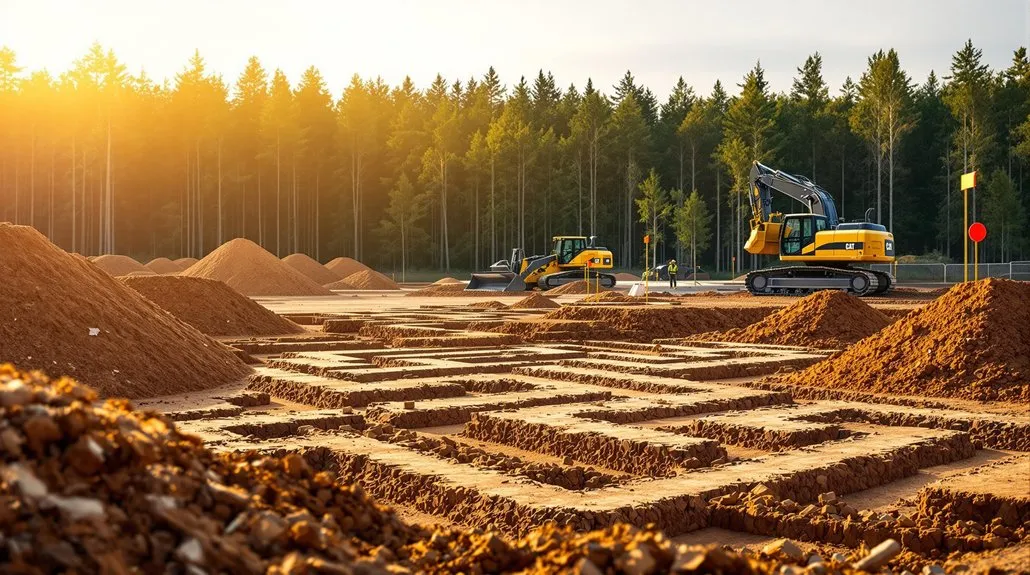
Professional land clearing prepares your property by conducting thorough site assessments to evaluate soil composition, drainage patterns, and topographical features. You’ll get systematic vegetation removal using specialized equipment, proper soil grading for foundation stability, and strategic drainage systems to channel water away from structures. Professional contractors handle environmental compliance, secure necessary permits, and implement safety protocols while selecting appropriate equipment for your terrain. These extensive steps guarantee you’re building on stable, code-compliant ground, setting your project up for long-term success.
Key Takeaways
- Professional site assessment identifies soil conditions, drainage patterns, and regulatory requirements to establish optimal building placement and clearing strategies.
- Systematic tree removal and vegetation management using specialized equipment ensures safe, efficient clearing while protecting nearby structures and utilities.
- Expert soil preparation and grading create stable, level surfaces with proper compaction to prevent future foundation settling issues.
- Strategic drainage system installation channels water away from buildings, preventing costly water damage and foundation problems.
- Environmental compliance expertise secures necessary permits and ensures all clearing activities meet federal, state, and local regulatory requirements.
Strategic Site Assessment and Planning Before Groundbreaking
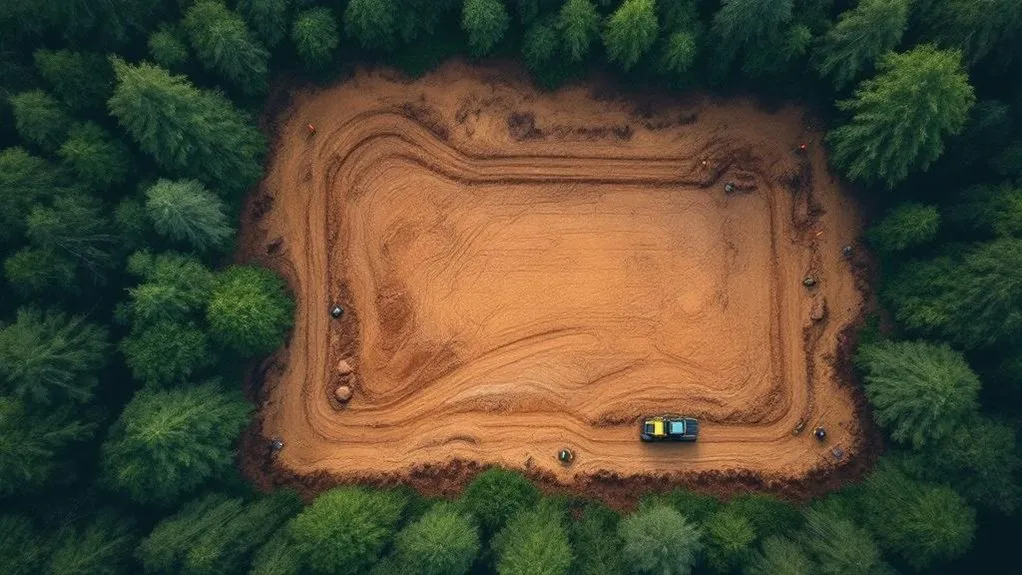
Before you break ground on any construction project, you’ll need to conduct a thorough site assessment that evaluates soil composition, drainage patterns, existing vegetation, and potential environmental constraints.
This analysis determines ideal building placement, identifies areas requiring special attention, and reveals hidden challenges that could derail your timeline.
You’ll examine topographical features, utility locations, and property boundaries to create an effective clearing strategy.
Professional surveyors and engineers map critical elements like wetlands, steep slopes, and protected trees.
This extensive planning prevents costly mistakes, guarantees regulatory compliance, and establishes the most efficient clearing approach for your specific site conditions.
Proper Tree Removal and Vegetation Management Techniques
Once your site assessment identifies which trees and vegetation require removal, you’ll implement systematic clearing techniques that prioritize safety, efficiency, and environmental responsibility.
You’ll start by removing smaller vegetation and undergrowth before tackling larger trees. Professional crews use specialized equipment such as excavators with mulching heads, stump grinders, and chainsaws to ensure precise cuts and complete root removal.
You’ll direct trees away from structures and utilities during felling operations. Proper debris management involves chipping organic material for mulch or hauling it off-site.
You’ll preserve valuable trees whenever possible and maintain erosion control throughout the clearing process.
Soil Preparation and Grading for Optimal Foundation Stability
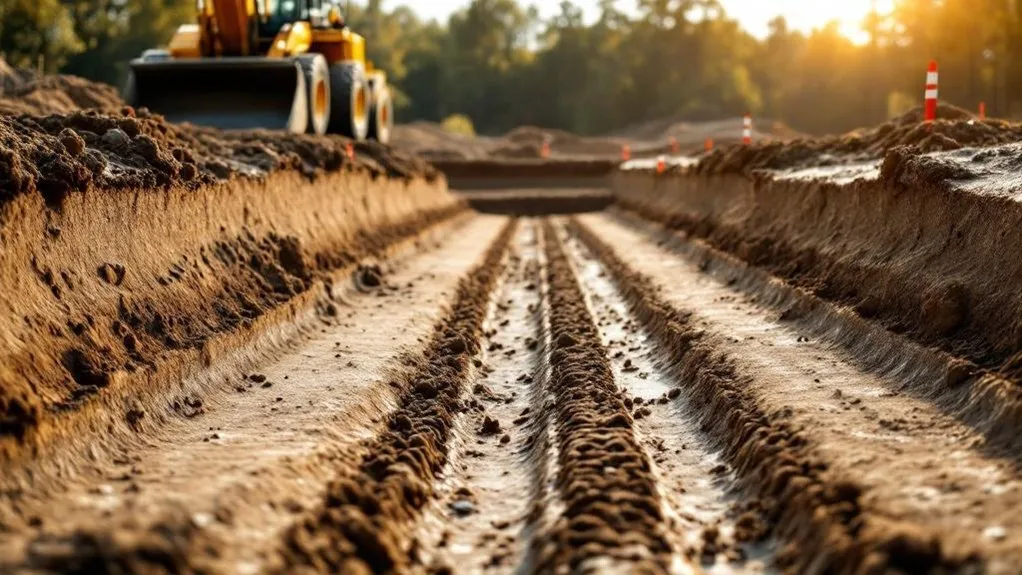
After clearing trees and vegetation from your construction site, proper soil preparation becomes your next priority for establishing a stable foundation.
You’ll need thorough soil testing to identify composition, bearing capacity, and drainage characteristics. Professional grading ensures proper water runoff patterns while creating level surfaces for access by construction equipment.
Compaction eliminates air pockets that could cause future settling, while strategic fill material addresses low spots or unstable areas.
You’ll also need the proper excavation depth to meet local frost lines and building codes. These critical steps prevent costly foundation problems, such as cracking, shifting, or water infiltration, that compromise your building’s structural integrity in the long term.
Drainage Systems and Water Management Solutions
While soil preparation creates your foundation’s base, effective drainage systems protect your entire construction project from water damage. You’ll need proper water management to prevent flooding, erosion, and structural issues. Professional land clearing establishes drainage patterns that channel water away from buildings and critical areas.
Proper drainage planning during clearing saves you costly repairs later.
Environmental Compliance and Permit Navigation
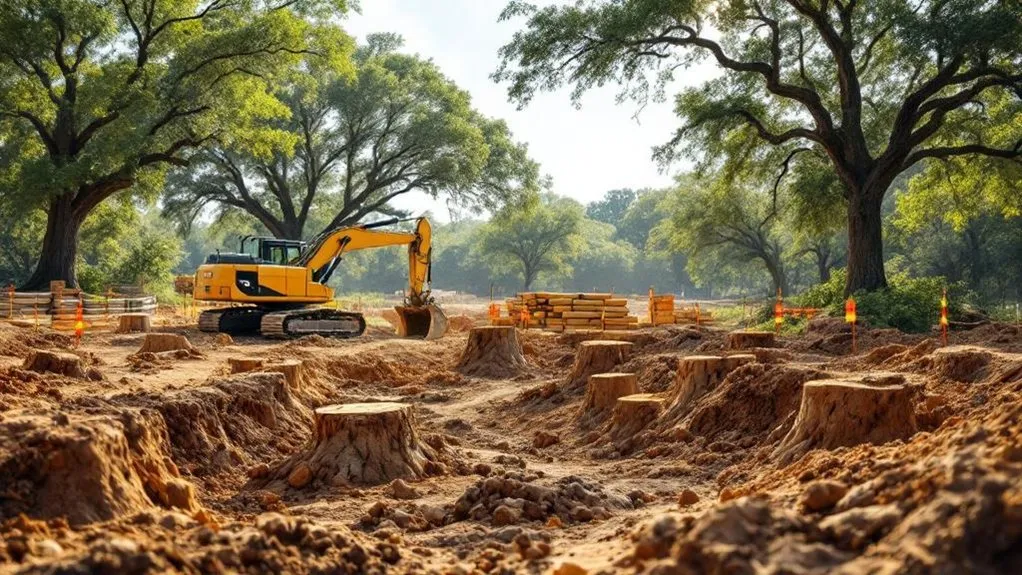
Before you can break ground on your project, you’ll need to navigate complex environmental regulations and secure the proper permits.
Professional land-clearing contractors understand the federal, state, and local requirements governing tree removal, wetland protection, and endangered species habitats. They’ll handle permit applications, environmental impact assessments, and compliance documentation on your behalf.
These experts know which projects require archaeological surveys, soil contamination testing, or wildlife habitat evaluations. By working with experienced professionals, you’ll avoid costly violations, project delays, and legal complications.
They’ll guarantee that your land-clearing activities meet all regulatory standards while keeping your timeline on track.
Equipment Selection and Safety Protocols for Efficient Clearing
Once you’ve secured the necessary permits, your project’s success depends on selecting the right equipment and implementing rigorous safety protocols.
Professional contractors choose machinery based on terrain, vegetation density, and project timeline. Bulldozers handle heavy timber and steep slopes, while mulchers work efficiently on dense brush. Excavators provide precision for selective clearing around valuable trees.
Safety protocols include establishing clear work zones, conducting daily equipment inspections, and requiring personal protective equipment. Operators must maintain safe distances from power lines and underground utilities.
Regular safety briefings guarantee all team members understand emergency procedures and communication signals for accident-free operations.
Frequently Asked Questions
What Is the Typical Cost per Acre for Professional Land Clearing Services?
Professional land clearing typically costs you $1,500 to $5,000 per acre, depending on your property’s terrain, vegetation density, and tree size.
You’ll pay less for light brush clearing and more for heavily wooded areas with large trees.
Factors like accessibility, soil conditions, and disposal requirements also affect your final price.
Getting multiple quotes helps you find competitive rates, and you can reduce costs by bundling services or clearing during off-peak seasons.
How Long Does the Land Clearing Process Usually Take for Residential Properties?
The land clearing process typically takes 1-3 days for most residential properties, depending on your lot size and complexity.
You’ll find smaller lots under an acre often clear in just one day, while larger properties with dense vegetation or difficult terrain can take up to a week.
Factors like tree density, slope, accessibility, and whether you need stump removal will affect your timeline.
Weather conditions can also slightly extend the process.
Can I Stay on My Property During the Land Clearing Process?
You’ll typically need to relocate temporarily during land clearing for safety reasons.
Heavy machinery, falling trees, and debris pose serious hazards, making it dangerous to stay on-site. Most contractors require you to vacate the immediate work area during active clearing operations.
However, you can often stay in a safe zone away from the work if your property’s large enough, or return each evening when crews aren’t working.
What Happens to the Cleared Trees and Debris After Removal?
After removal, your cleared trees and debris typically get processed into useful materials.
Professional crews often chip smaller branches into mulch you can use for landscaping. Larger logs might be sold to lumber mills or kept for firewood if you want them.
Some companies haul everything to recycling facilities where it’s turned into biomass fuel or construction materials.
You’ll usually discuss disposal options with your contractor beforehand to determine what works best for your project.
Do I Need Insurance Coverage During the Land Clearing Project?
Yes, you’ll need insurance coverage during land clearing.
Your homeowner’s policy mightn’t cover commercial operations on your property, so check with your insurer first.
Verify that your land clearing contractor carries extensive general liability and workers’ compensation insurance.
Request certificates of insurance before work begins.
This protects you from potential accidents, property damage, or injuries that could occur during the clearing process on your land.