
Retaining walls is essential for improving drainage and curbing erosion in your Zelienople landscape. They stabilize soil by holding back earth and guiding surplus water away from sloped areas, which prevents runoff and minimizes hydrostatic pressure. With options like gravity and anchored walls, you can tailor your solution to fit your terrain and aesthetic needs. Proper material selection enhances durability, while maintenance guarantees long-term effectiveness. By reinforcing drainage systems, you protect your landscaping and promote healthy ecosystems. There’s much more to explore about optimizing your landscape for beauty and resilience.
Key Takeaways
- Retaining walls effectively hold back soil, reducing erosion risk by stabilizing slopes in Zelienople landscapes.
- Directing water flow away from walls, minimizing hydrostatic pressure, and preventing soil erosion improves drainage.
- Using geotextiles and grasses with retaining walls enhances soil retention and promotes healthy vegetation growth.
- Regular maintenance of retaining walls ensures proper drainage and prevents water buildup, safeguarding the landscape’s integrity.
- Choosing durable materials for retaining walls improves longevity, enhancing functionality and aesthetics while preventing erosion.
Understanding Retaining Walls
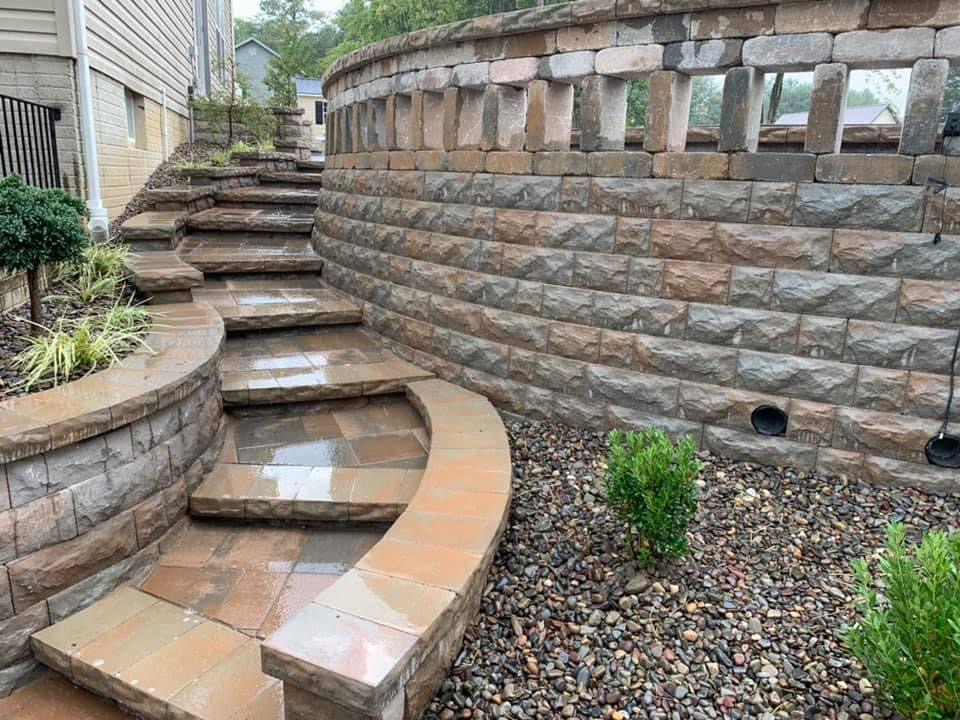
Retaining walls are essential structures designed to hold back soil and prevent erosion, making them important for landscaping and construction projects.
When considering wall design, it’s imperative to understand the various retaining wall types available. Gravity walls rely on their weight to resist pressure, while cantilever walls use leverage for stability. For a more flexible approach, you might opt for anchored walls, which employ cables for additional support.
Each type has distinct design considerations, including material choice and height limits, influencing performance and aesthetics. Selecting the appropriate retaining wall type can effectively manage soil retention and enhance your landscape’s overall integrity.
Understanding these nuances will empower you to make informed decisions for your projects.
Benefits of Improved Drainage
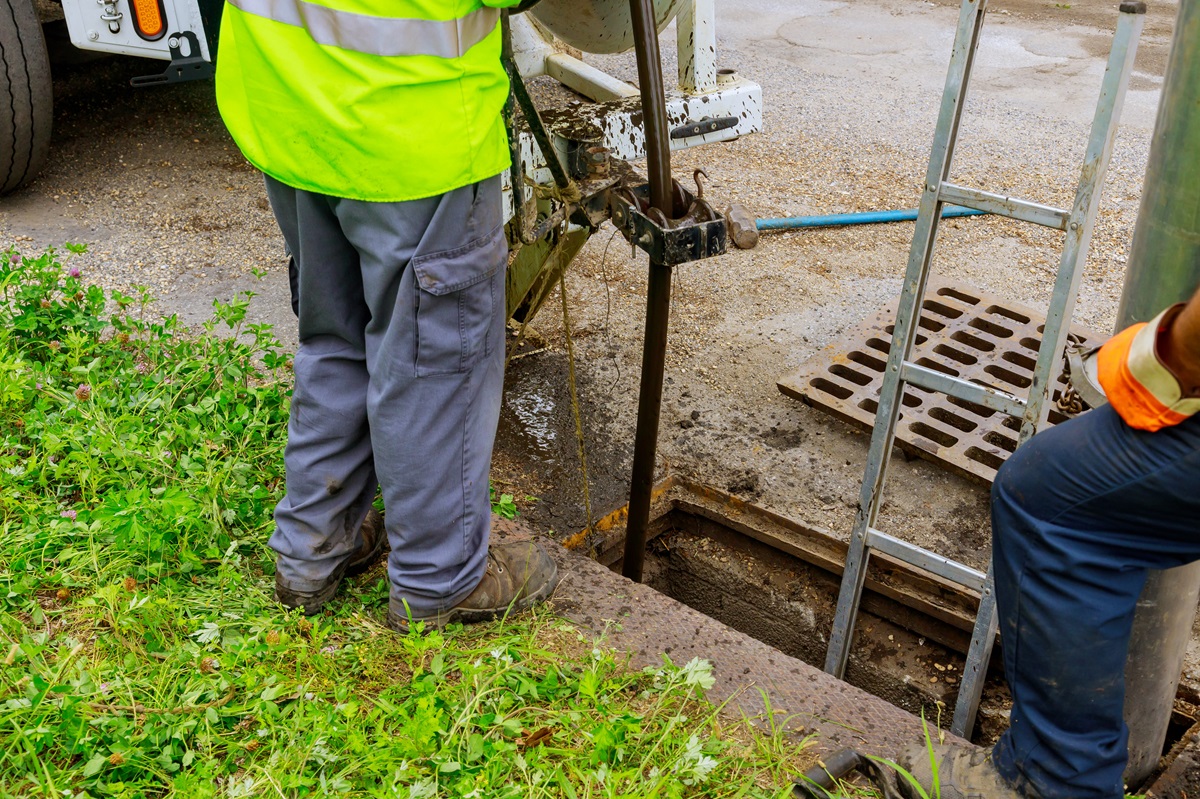
Improved drainage systems can greatly enhance the longevity and effectiveness of retaining walls by reducing hydrostatic pressure and minimizing the risk of soil erosion.
When you implement effective drainage solutions, you manage water and create a stable environment for your landscaping. Proper water management prevents the buildup of excess water behind retaining walls, which can lead to structural failure.
By channeling water away, you protect your investment and guarantee that the soil remains compact and intact. Additionally, these systems can mitigate pooling, reduce maintenance needs, and enhance the aesthetic appeal of your landscape.
Ultimately, improved drainage creates a healthier ecosystem, promoting plant growth while safeguarding your property against water-related damages.
Erosion Control Techniques
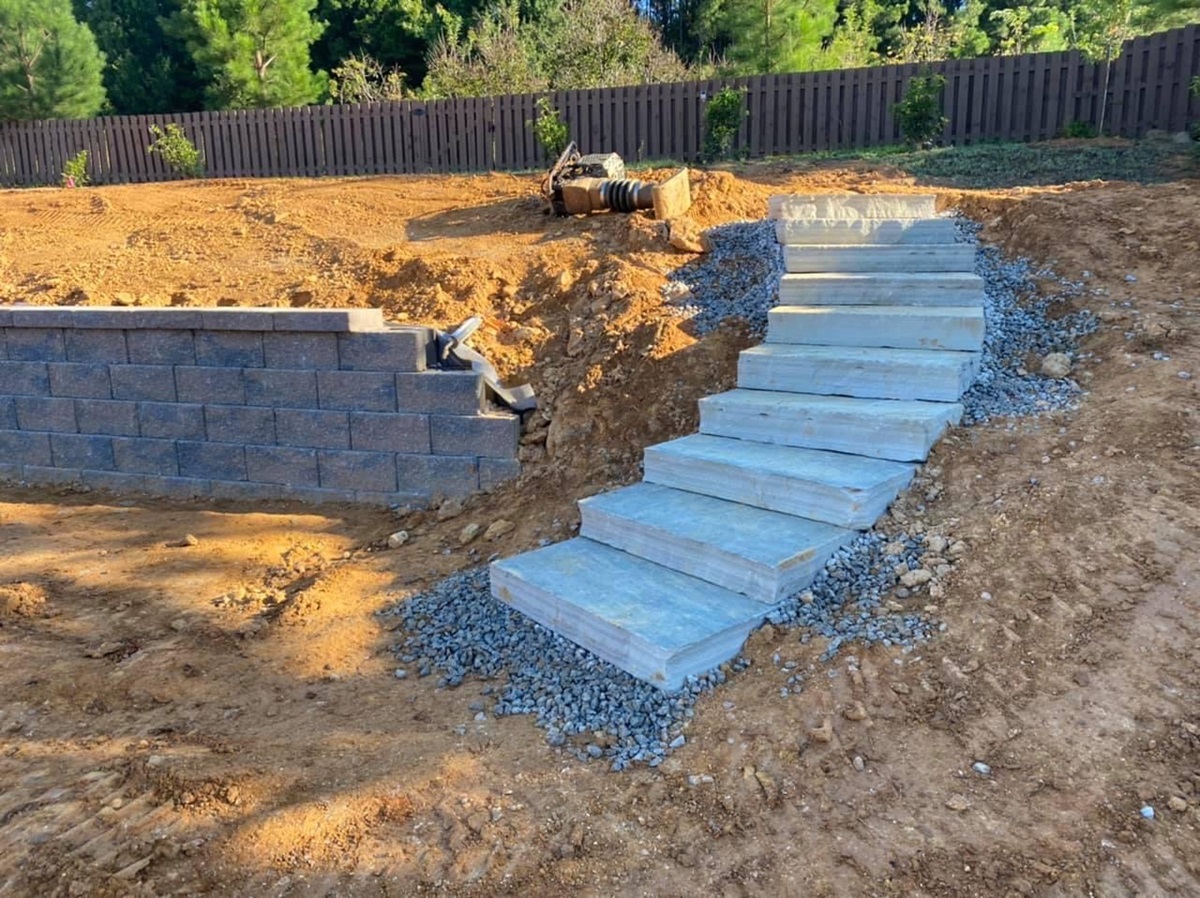
Effective drainage protects retaining walls and serves as a foundation for implementing various erosion control techniques. These techniques can further stabilize soil and prevent landscape degradation. You can explore several methods, including soil stabilization and vegetation strategies, to enhance your landscape’s resilience.
| Technique | Description | Benefits |
|---|---|---|
| Geotextiles | Fabric used to reinforce soil | Prevents erosion, improves drainage |
| Grasses and Cover Crops | Planting vegetation to cover soil | Reduces runoff, promotes root growth |
| Terracing | Creating stepped levels on slopes | Minimizes slope erosion, increases water absorption |
| Retention Basins | Depressions designed to hold runoff water | Improves drainage, reduces flooding |
| Stone Walls | Using stone to create barriers against runoff | Stabilizes soil, adds aesthetic value |
Implementing these techniques can greatly enhance your landscape’s durability against erosion.
Choosing the Right Materials
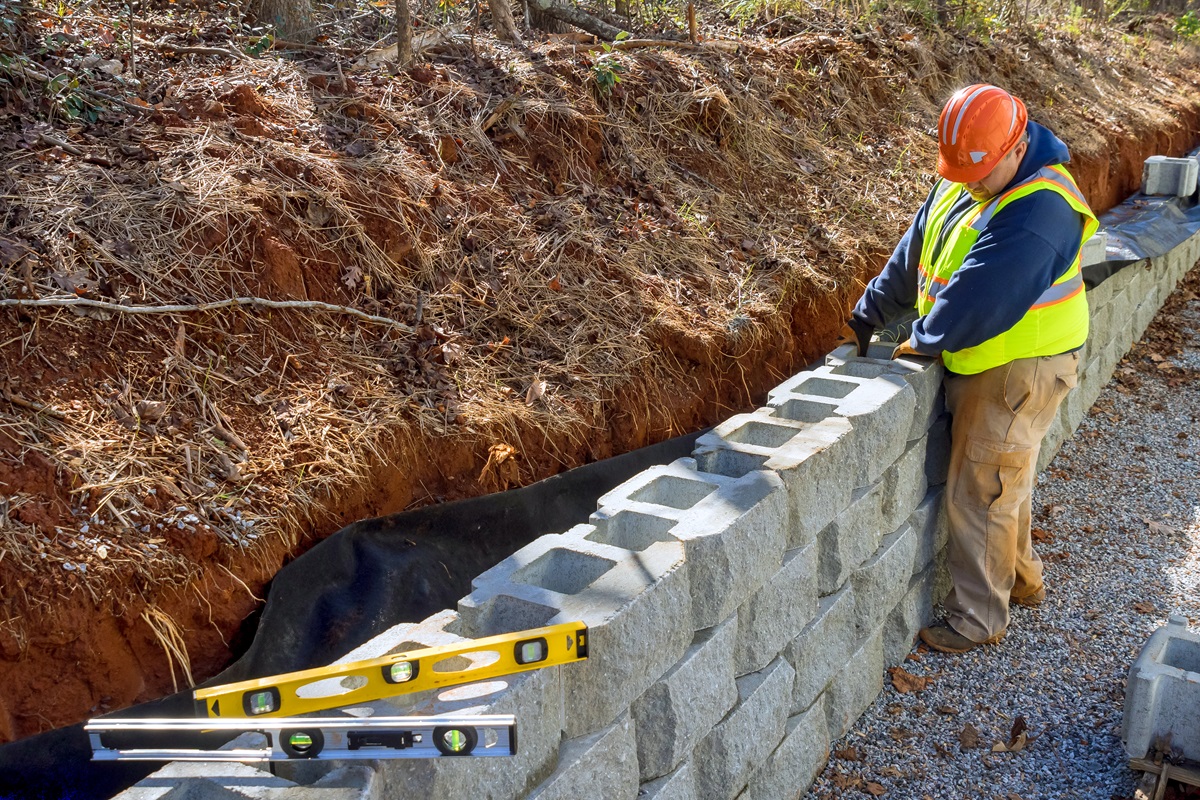
Selecting the right materials for your drainage system is essential, as it directly influences the longevity and stability of your landscape’s infrastructure. You’ll want to prioritize material durability, ensuring your retaining wall can withstand weather variations and soil pressures over time. Concrete and natural stone are excellent choices, offering both strength and resilience.
Moreover, don’t overlook the importance of aesthetic appeal. The materials you choose should complement your landscape’s overall design while providing functionality. For instance, using decorative blocks can enhance visual interest without sacrificing performance.
Maintenance Tips for Longevity
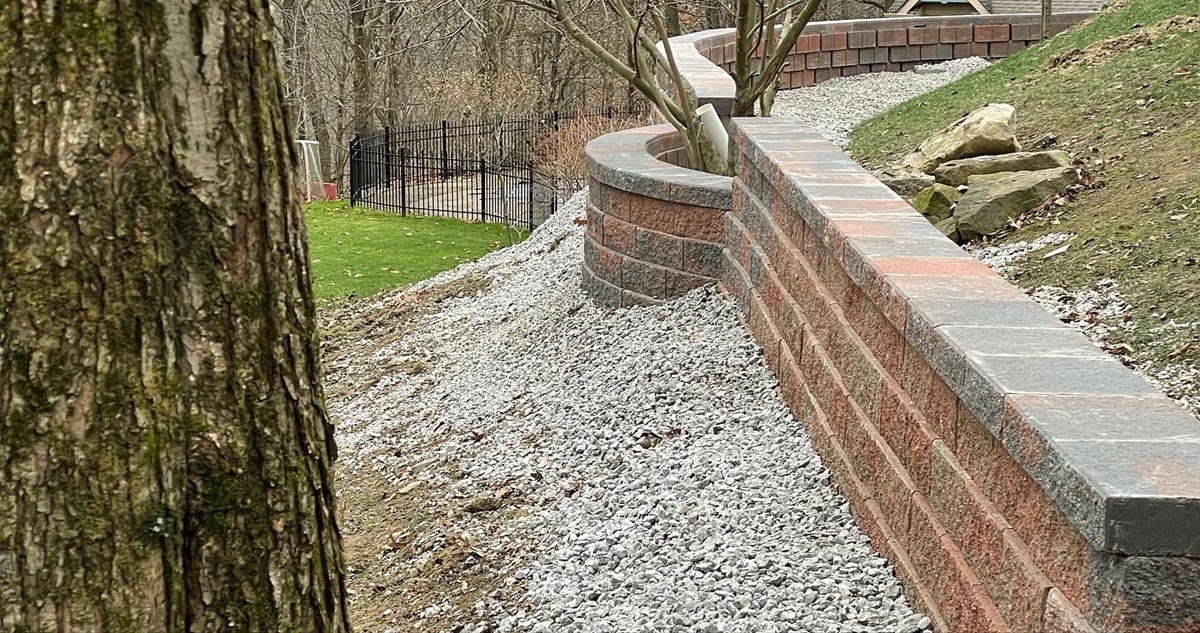
Regular maintenance is key to addressing any issues that may arise from environmental stressors or material wear over time to guarantee the longevity of your retaining wall.
A solid maintenance routine will help prevent costly repairs and guarantee peak performance. Here are three essential tips:
- Regular inspections of the wall’s integrity should be conducted, checking for cracks, bulges, or water pooling that could indicate drainage issues.
- Implement seasonal maintenance by clearing debris and vegetation that could compromise the wall, guaranteeing proper water flow away from the structure.
- Reinforce drainage systems to prevent water pressure buildup behind the wall, which can lead to failure.
Frequently Asked Questions
How Do Retaining Walls Affect Property Value in Zelienople?
Retaining walls enhances property value by adding aesthetic appeal and functionality. They create defined spaces, improve landscaping, and prevent erosion, making your property more attractive to potential buyers in Zelienople’s competitive market.
Can Retaining Walls Be DIY Projects, or Should I Hire Professionals?
When considering retaining walls, weigh DIY challenges against professional benefits. While you might save money with a DIY approach, hiring experts guarantees structural integrity and adherence to local regulations, safeguarding your investment and landscape’s longevity.
What Is the Average Lifespan of a Retaining Wall?
The average lifespan of a retaining wall varies based on the wall materials used. Concrete walls can last 50 years, while wood may only last 20. Choosing durable materials is essential for long-term effectiveness and maintenance.
Are There Local Regulations for Building Retaining Walls in Zelienople?
Yes, there are local regulations for building retaining walls in Zelienople. You’ll need to check local building codes and apply for retaining wall permits to guarantee that your project complies with all necessary standards and requirements.
How Can I Integrate Landscaping With My Retaining Wall Design?
To integrate your landscape effectively with your retaining wall, consider plant selection that complements the wall’s aesthetics. Varying heights and textures create visual interest, ensuring your design harmonizes with surrounding elements for a cohesive look.