
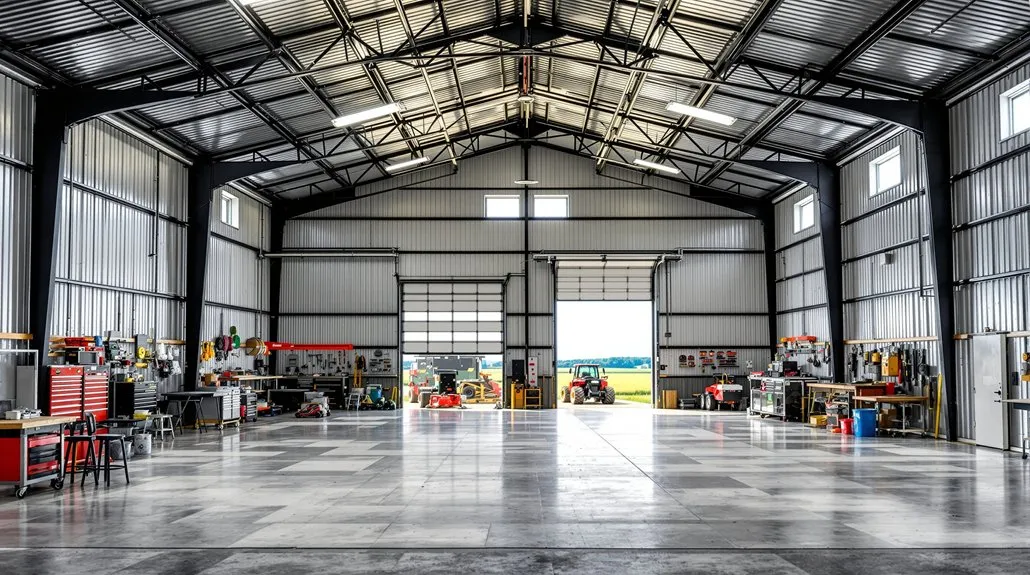
You’ll find pole barns offer unmatched versatility for combining workshop space, storage, and farm functionality at 40-60% less cost than traditional buildings. Focus on wide door openings for equipment access, 220V electrical service, LED lighting every ten feet, and dedicated zones for different activities. Consider climate-controlled areas, wash bays, and multi-level storage systems. Pre-engineered kits with snap-together panels streamline construction while maintaining structural integrity. Explore these extensive design strategies to maximize your investment.
Key Takeaways
- Position electrical outlets every 8 feet with 220V service for heavy equipment and overhead LED lighting, spaced every 10 feet.
- Create dedicated zones for cutting, assembly, and storage with wide sliding doors and built-in workbenches for maximum functionality.
- Install wash bays, maintenance pits, and wide door openings to accommodate tractors, implements, and large farm equipment servicing needs.
- Use multi-level storage systems and flexible partition walls to seasonally reconfigure feed, supplies, and operational requirements.
- Choose pre-engineered pole barn kits with snap-together panels and proper insulation to balance cost-effectiveness with structural integrity.
Essential Planning Considerations Before Building Your Pole Barn
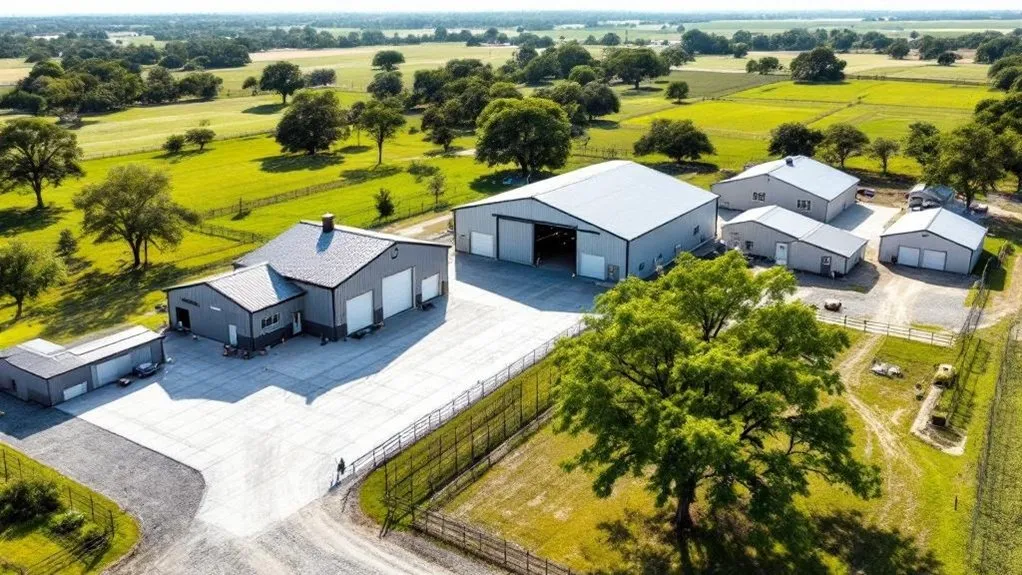
Before you break ground on your pole barn project, you’ll need to address several critical planning elements that can make or break your construction experience.
First, check local zoning laws and obtain necessary building permits. Determine your exact size requirements by calculating storage needs, equipment dimensions, and future growth.
Choose your location carefully, considering drainage, utilities access, and prevailing winds. Establish a realistic budget that includes materials, labor, permits, and site preparation.
Finally, decide on essential features like electrical systems, insulation, ventilation, and door configurations before construction begins.
Workshop-Focused Pole Barn Layouts and Features
When designing a pole barn for workshop use, prioritize functionality over form to create an efficient workspace that maximizes productivity.
Position electrical outlets every eight feet along walls and install 220V service for heavy equipment. Include abundant overhead lighting with LED fixtures spaced every ten feet.
Create dedicated zones for different activities, cutting, assembly, finishing, and storage. Install a concrete floor with proper drainage and consider radiant heating for year-round comfort.
Add large sliding doors for equipment access and plenty of windows for natural light. Include built-in workbenches along perimeter walls for maximum efficiency.
Agricultural Storage Solutions for Equipment and Livestock
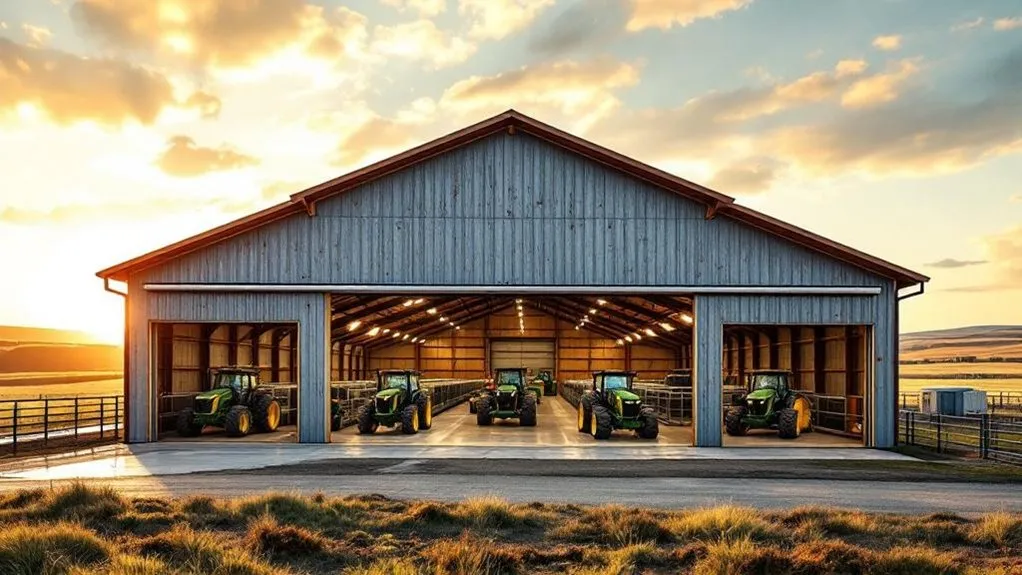
Since agricultural operations require specialized storage for both equipment and livestock, your pole barn design must accommodate vehicles, machinery, feed, and animal housing within a single versatile structure.
You’ll need wide door openings for tractors and implements, plus dedicated areas for hay storage with proper ventilation. Consider incorporating wash bays, maintenance pits, and electrical systems for equipment servicing.
- Multi-level storage systems maximize vertical space for feed bins, seasonal equipment, and supplies while maintaining ground-level access for heavy machinery.
- Flexible partition walls allow you to reconfigure spaces seasonally between livestock housing and equipment storage.
- Climate-controlled zones protect sensitive equipment and provide comfortable livestock areas.
Multi-Purpose Designs That Maximize Functionality
While single-use pole barns serve their purpose, you’ll get far more value from designs that adapt to multiple functions throughout the year and across different seasons of your operation. Smart layouts incorporate movable partitions, overhead storage systems, and flexible door configurations that instantly upgrade spaces.
You’ll maximize your investment by planning zones that shift between workshop, storage, and shelter functions as your needs change seasonally.
Electrical and Lighting Systems for Different Applications
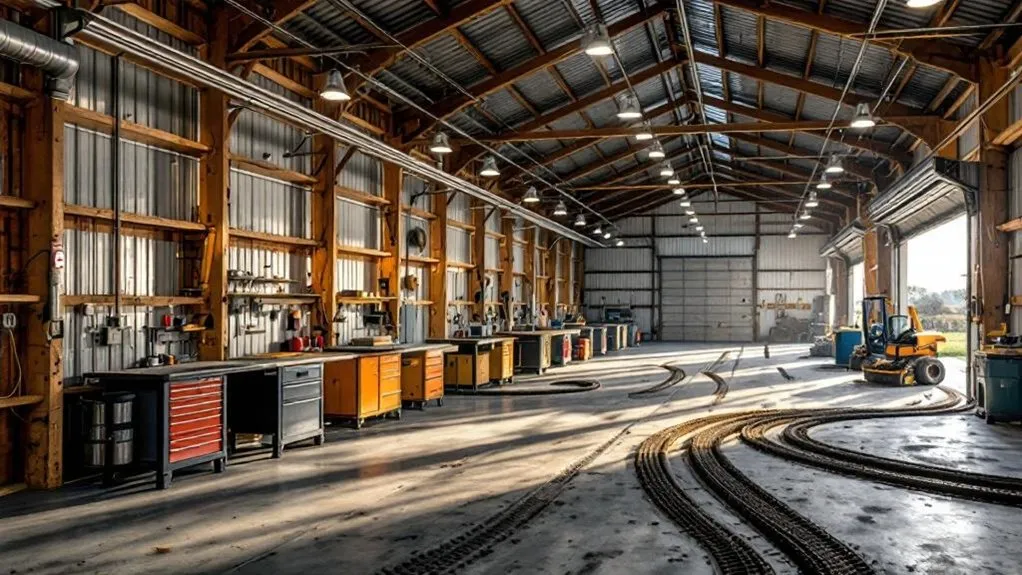
Those flexible spaces you’re designing need electrical systems that can power multiple functions effectively.
You’ll want to plan electrical layouts during the design phase, considering current needs and future expansions. Install adequate circuits for heavy-duty equipment, lighting zones, and general outlets throughout your pole barn.
- Workshop circuits: Install 240V outlets for table saws, welders, and air compressors, plus dedicated 20-amp circuits for power tools
- LED lighting zones: Create separate switches for task lighting, ambient lighting, and security lights to optimize energy efficiency
- Smart electrical panels: Choose panels with room for additional breakers to accommodate future electrical needs
Insulation and Climate Control Options
When temperatures fluctuate throughout the seasons, proper insulation becomes essential for maintaining comfortable conditions in your pole barn. You’ll need to choose between fiberglass batts, spray foam, or rigid board options based on your budget and R-value requirements.
Consider adding ventilation fans and mini-split systems for year-round climate control in your workspace.
Door and Window Configurations for Various Uses
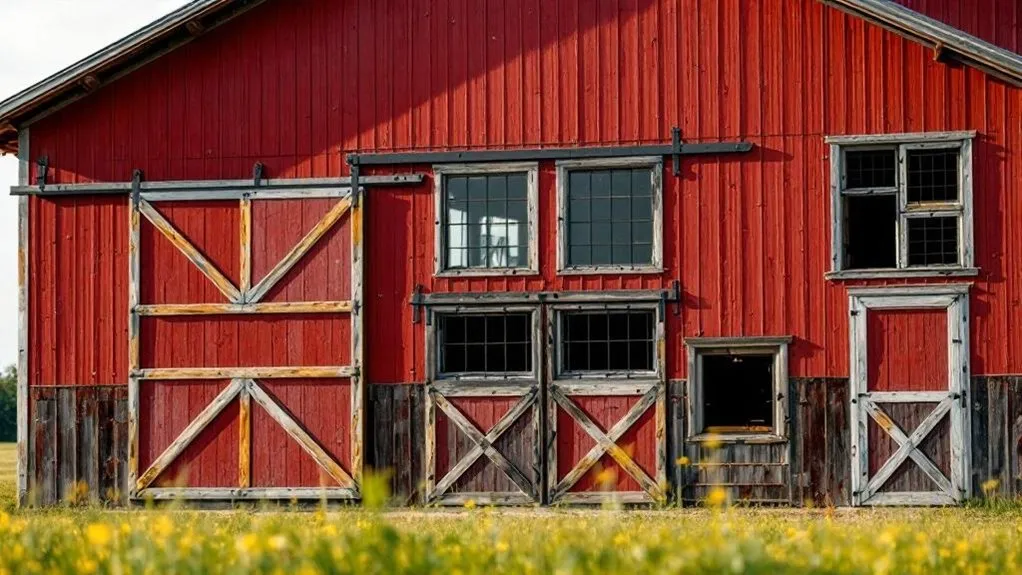
Strategic placement of doors and windows turns your pole barn from a basic structure into a functional space tailored to your specific needs.
You’ll want to take into account traffic flow, equipment access, and natural lighting when planning openings.
For workshops, position windows along the longest wall to maximize daylight while working.
Storage barns benefit from multiple access points and minimal windows to maintain security.
Agricultural uses require wide doors for the movement of machinery and livestock.
- Workshop configuration: Install clerestory windows for consistent overhead lighting and cross-ventilation
- Equipment storage: Choose bi-fold or sliding doors spanning 12-16 feet for large machinery access
- Livestock facilities: Add Dutch doors and cupola windows for animal comfort and airflow management
Interior Organization and Storage Systems
Smart interior layouts maximize every square foot of your pole barn while keeping essential items within easy reach.
Install overhead storage systems using the structural posts to support heavy-duty shelving units. Wall-mounted pegboards and tool racks utilize vertical space efficiently.
Create designated zones for different activities, separate areas for equipment storage, workspace, and supplies. Consider modular shelving systems that you can reconfigure as needs change.
Add rolling tool carts and mobile workbenches for flexibility. Use clear storage bins for visibility and label everything systematically.
Include adequate lighting in storage areas to prevent accidents and improve accessibility when retrieving items.
Foundation Requirements and Site Preparation
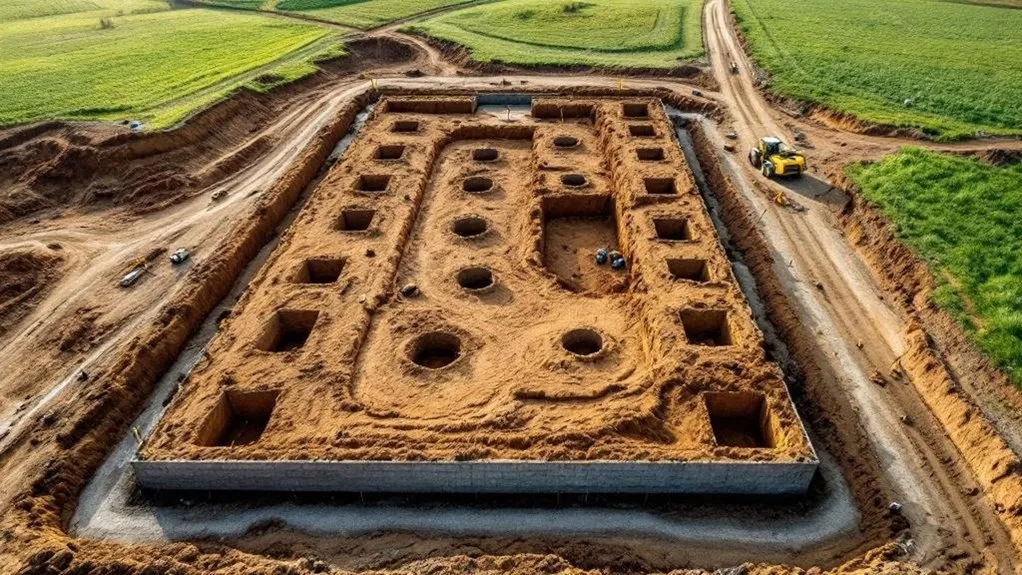
Before you can implement any interior organization system, you’ll need a solid foundation that properly supports your pole barn’s structure and contents.
Site preparation begins with evaluating soil conditions, drainage patterns, and local building codes. You’ll want level ground with adequate water runoff to prevent moisture issues that could compromise your stored items or equipment.
Key foundation considerations include:
- Post depth requirements – Typically 3-4 feet deep, or below the frost line in colder climates
- Concrete footings – Essential for stability and preventing post rotation over time
- Gravel base preparation – Provides drainage and creates a level surface for construction
Cost-Effective Materials and Construction Methods
Once your foundation planning is complete, selecting budget-friendly materials becomes your next priority for keeping construction costs manageable.
Choose pressure-treated lumber for posts and framing to guarantee longevity without premium pricing. Metal siding and roofing offer excellent durability at lower costs than traditional materials. You’ll save considerably by using steel or aluminum instead of wood siding, which requires regular maintenance.
Consider purchasing materials in bulk or during off-season sales. Pre-engineered pole barn kits streamline construction while reducing labor costs.
DIY-friendly components such as snap-together panels and pre-cut lumber help minimize professional installation costs without compromising structural integrity.
Frequently Asked Questions
What Permits and Building Codes Apply to Pole Barn Construction?
You’ll need building permits for most pole barns, though requirements vary by location and size. Check with your local building department first.
You must follow setback rules, height restrictions, and structural codes. Agricultural buildings often have more relaxed requirements than commercial structures.
You’ll typically need site plans, foundation details, and structural drawings. Don’t forget electrical permits if you’re adding power, and consider zoning restrictions that might affect your intended use.
How Long Does Typical Pole Barn Construction Take From Start to Finish?
You’ll typically complete your pole barn construction in 2-6 weeks, depending on size and complexity. A simple 30×40 structure takes about 2-3 weeks, while larger barns with intricate features need 4-6 weeks.
Weather delays can extend timelines considerably. You’ll spend the first week setting posts and framing, followed by the installation of roofing and siding.
If you’re adding electrical, plumbing, or insulation, expect additional time for inspections and specialized work.
Can Pole Barns Withstand Extreme Weather Conditions Like Hurricanes or Tornadoes?
Pole barns can withstand extreme weather when you design them properly, but they’re not tornado-proof.
You’ll need engineered trusses, proper bracing, and quality materials to handle hurricane-force winds.
Standard pole barns aren’t built for extreme conditions, so you’ll want to upgrade with steel framing, reinforced connections, and appropriate wind ratings.
They’ll handle typical storms well, but don’t expect them to survive direct hits from tornadoes without specialized engineering.
What Maintenance Schedule Should I Follow to Keep My Pole Barn?
You should inspect your pole barn every six months, checking for loose bolts, damaged siding, and roof issues.
Clean gutters seasonally and remove debris buildup.
Apply wood preservative to exposed posts every 2-3 years.
Touch up paint annually to prevent rust on metal components.
Check foundation drainage after heavy rains.
Replace worn weatherstripping around doors and windows.
Schedule professional inspections every few years to catch structural problems early.
Are There Financing Options Available Specifically for Pole Barn Construction Projects?
Yes, you’ll find several financing options for pole barn construction.
You can apply for home equity loans, personal loans, or construction loans through banks and credit unions.
Many pole barn contractors offer in-house financing programs with flexible payment plans.
If you’re using it for agricultural purposes, you might qualify for farm credit loans with better rates.
Some manufacturers also partner with financing companies to offer specialized construction loans to their customers.